

Grommets, also called ear tubes or ventilation tubes, are very common in both children and adults. They are usually recommended to help with problems such as glue ear, recurrent ear infections and hearing difficulties. For many families in Melbourne, water is a big part of life, from local swimming lessons to beach holidays along the Victorian coast, so it is natural to feel unsure about what is safe after grommet surgery.
Parents often worry that their child will have to give up swimming lessons or miss school camps that involve pools or the beach. Adults may be concerned about surfing, lap swimming, snorkelling or future scuba diving. These are important questions and it is understandable to want clear, balanced information rather than simply avoiding the water altogether.
Melbourne ENT in St Kilda East, Victoria, provides specialist care for ear, nose and throat conditions in both adults and children. The clinic is led by experienced ENT Surgeons, including Dr Simon Braham and Dr Stephen Kleid, who are Fellows of the Royal Australasian College of Surgeons. They regularly see patients who enjoy water sports and want to protect their ears while maintaining an active lifestyle.
This article explains how grommets work, what they mean for swimming and diving, and how an ENT specialist can help you or your child return to the water safely. It is general information only and does not replace personalised advice from your own doctor or specialist.
What Are Grommets and Why Do They Matter in the Water
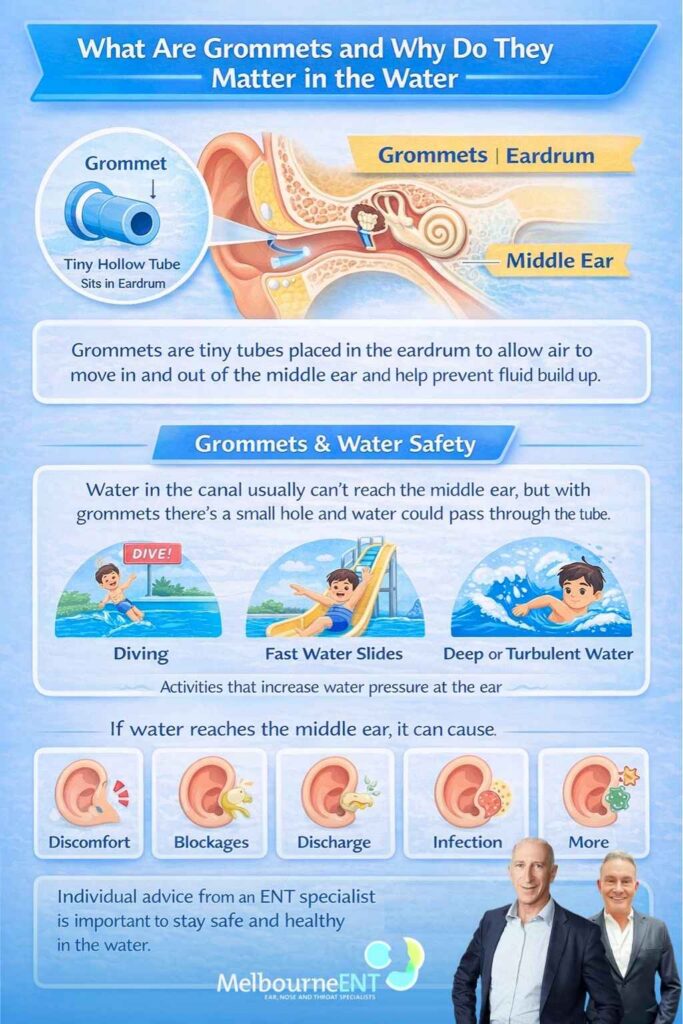
Grommets are tiny hollow tubes that sit in a small opening in the eardrum. They allow air to move freely in and out of the middle ear and help stop fluid from building up behind the eardrum. For many children, grommets make a noticeable difference to hearing, speech development and comfort, especially if they have had many ear infections or persistent glue ear. Adults with chronic middle ear problems may also benefit from grommet surgery.
Grommet insertion is usually a short day procedure under a general anaesthetic. A small cut is made in the eardrum, fluid is removed from the middle ear and the tube is placed in the opening. Over time, as the eardrum heals and the patient grows, the grommet usually works its way out and the small opening in the eardrum closes.
In an ear without grommets, the eardrum forms a solid barrier between the ear canal and the middle ear, so water in the canal during swimming does not normally pass through. With grommets in place, there is a small hole that can, under some conditions, allow water to pass into the middle ear. This is more likely if there is higher pressure at the ear, such as with deep diving, jumping into water from a height, strong waves hitting the side of the head or powerful jets from water slides. Soapy bathwater can also flow more easily through the tube.
If water does reach the middle ear, it may cause discomfort, a blocked feeling, discharge or infection. The risk is not the same for everyone, which is why individual advice from an ENT specialist is important. At Melbourne ENT, Dr Simon Braham and Dr Stephen Kleid assess each patient’s ears and hearing carefully, explain the potential benefits and risks of grommet surgery and provide practical advice about life in and around the water.
Common Concerns About Grommets and Water Sports
Parents and carers often worry that grommets will mean a long period away from swimming lessons. Common questions include whether a child can still attend weekly lessons, whether the ocean is safer than a heated indoor pool and if school activities that involve diving boards or water slides will need to be avoided. Many caregivers are also anxious that a child might feel different or left out if they need earplugs or cannot join all underwater games.
Adults with grommets usually bring a different set of concerns. People who swim laps for fitness want to know if they can keep training without increasing the risk of ear infections. Surfers around Victorian beaches may be unsure about wipeouts and strong waves. Others look forward to snorkelling on holidays and want to understand what is safe. Older teenagers and adults who are already qualified scuba divers, or plan to learn, are often concerned about how long they must wait and whether they can dive at all while grommets are present.
At Melbourne ENT, these questions are a normal part of consultations for patients who have grommets or are considering surgery. Dr Simon Braham and Dr Stephen Kleid focus on providing evidence based, realistic advice that balances ear health with quality of life. They talk through each person’s swimming habits, past ear infections, history of pain with water exposure and future goals, so that decisions are based on more than a simple yes or no.
When Can You Return to the Water After Grommet Surgery
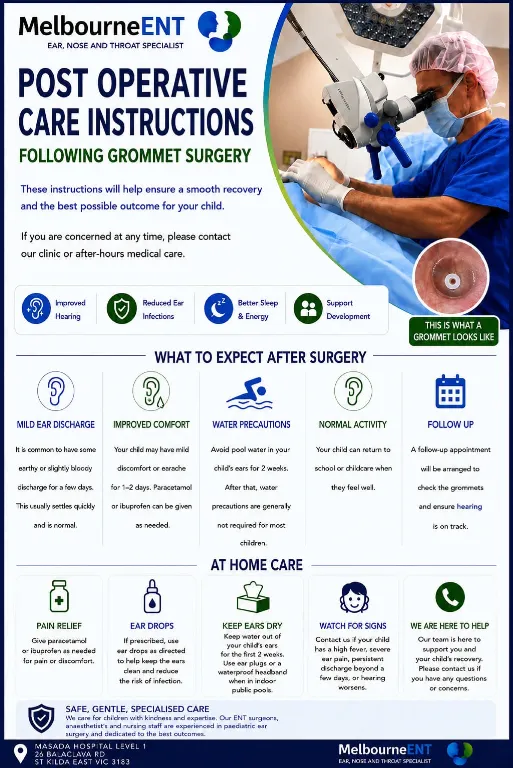
After grommet insertion, most patients go home on the same day. It is common to feel a little tired from the anaesthetic, but pain is usually mild and short lived. For a brief period after the procedure, many surgeons recommend keeping the ears dry. This allows the ear canal to settle and reduces the chance of early infection. During this time, showers can continue as normal, but care should be taken to avoid tipping water directly into the ears.
Swimming is usually paused for a short time, often about a week, although the exact timeframe can vary depending on the individual and the surgeon’s preference. The best approach is to follow the specific instructions provided by the operating ENT specialist and to attend the recommended follow up visit.
As healing progresses, many families notice that children seem to hear more clearly, respond more readily and may have fewer behavioural issues related to hearing. Adults often report less pressure and fewer infections. On examination, ears that are healing well appear dry and comfortable, the grommets are in place and there is no ongoing discharge. When this is the case, your ENT specialist may begin to relax restrictions and allow a gradual return to water activities.
In some situations, it is best to delay swimming for longer. Ongoing ear discharge, persistent pain, a blocked sensation or any other complication should be assessed before returning to water. Patients with other medical conditions, such as immune problems or more complex ear disease, may also require a more cautious approach. In these cases, early review by an ENT surgeon at Melbourne ENT can help identify and treat issues before they become more serious.
Swimming with Grommets: Pools, Beaches and Baths
For many children in Melbourne, regular swimming lessons in heated indoor pools are part of school and early childhood routines. Adults may attend local pools for lap swimming and exercise. With grommets in place, gentle surface swimming in treated pool water is often possible once the ears have healed and the specialist has given permission to return to the water. The main restriction is usually around deep diving, jumping from high blocks and underwater somersaults, which can push water against the eardrum more forcefully.
Surface strokes where the head occasionally dips under water are usually less risky than repeated dives to the bottom of the pool. Some patients are advised to use soft earplugs and perhaps a snug swim cap in public pools, particularly if they have had infections after swimming in the past. At Melbourne ENT, this decision is tailored to each person’s history rather than applied as a strict rule for everyone.
Beaches around Melbourne and along the Victorian coast are popular with families and surfers. Salt water, wave action and currents behave differently from pool water. Surface level play in calm conditions, such as paddling close to shore and gentle swimming between the flags, is often appropriate once the ears are healed and the ENT specialist is comfortable with this. Rough surf, repeated duck dives under breaking waves and bodysurfing directly into large waves can increase pressure on the ears and may make it easier for water to enter the middle ear. These higher impact activities may need to be limited or avoided while the grommets are in place.
Bath time raises separate questions. Soapy bathwater, particularly when a child lies back and submerges their head, can move through small openings more easily. For this reason, some ENT surgeons suggest avoiding deep submersion of the ears in the bath for children with grommets, especially with lots of bubbles or shampoo. Showering is usually less of a problem, as water runs quickly over and away from the ears, and simple steps like avoiding strong jets directly into the ear canal are often enough.
There is no single rule that fits everyone. Some patients never experience any problems with water, while others find that even limited exposure tends to cause discomfort or discharge. At Melbourne ENT, Dr Simon Braham and Dr Stephen Kleid work with patients and families to tailor instructions so that activities are as safe and enjoyable as possible.
Diving and High Pressure Water Activities with Grommets
Diving introduces more intense pressure changes than surface swimming. Entering the water from a height, performing cannonballs and swimming along the bottom of a deep pool all increase the pressure around the ears. For someone with grommets, this may increase the chance that water will be forced through the tube into the middle ear. Because of this, many ENT specialists recommend that children with grommets focus on surface swimming and water safety skills rather than deep diving or repeated high impact jumps. Adults with grommets are often given similar advice until their tubes have come out and the eardrums have healed.
Snorkelling on the surface of calm water is usually gentler on the ears, but many snorkellers enjoy duck diving down to look at fish or reefs. Even a few metres of depth can significantly increase water pressure at the eardrum. With grommets, those pressure changes can make it more likely for water to move through the tube and can interfere with normal pressure equalisation. For this reason, repeated duck dives are often restricted while tubes are present.Surface snorkelling without diving down may sometimes be allowed, but this should always be discussed with the treating ENT specialist beforehand.
Water parks and high speed activities such as wakeboarding and water skiing also present challenges. Slides and rides that end in a forceful entry into a pool, or falls at speed across the water surface, can put considerable stress on the ears. For people with grommets, some of these activities may not be suitable until the tubes have come out, especially those involving rapid entry into deeper water. In other cases, careful choice of rides and the use of well fitting ear protection may allow limited participation. A consultation with Melbourne ENT can help clarify what is appropriate for specific plans.
Scuba diving introduces the greatest ear pressure changes. As a diver descends, the pressure in the surrounding water rises and the pressure in the middle ear must be equalised regularly. If there is a grommet or any other opening in the eardrum, water may enter the middle ear and normal pressure control is disrupted. This can lead to infection, pain, vertigo and, in some cases, more serious barotrauma to the middle or inner ear. For these reasons, scuba diving is generally not recommended while grommets are in place. Most experts prefer that the tubes extrude naturally, the eardrum heals fully and an ENT specialist confirms that the ears are suitable for diving before deeper water activities are considered.
Download Post Operative Care Instructions Brochure
Ear Protection Options and Practical Tips
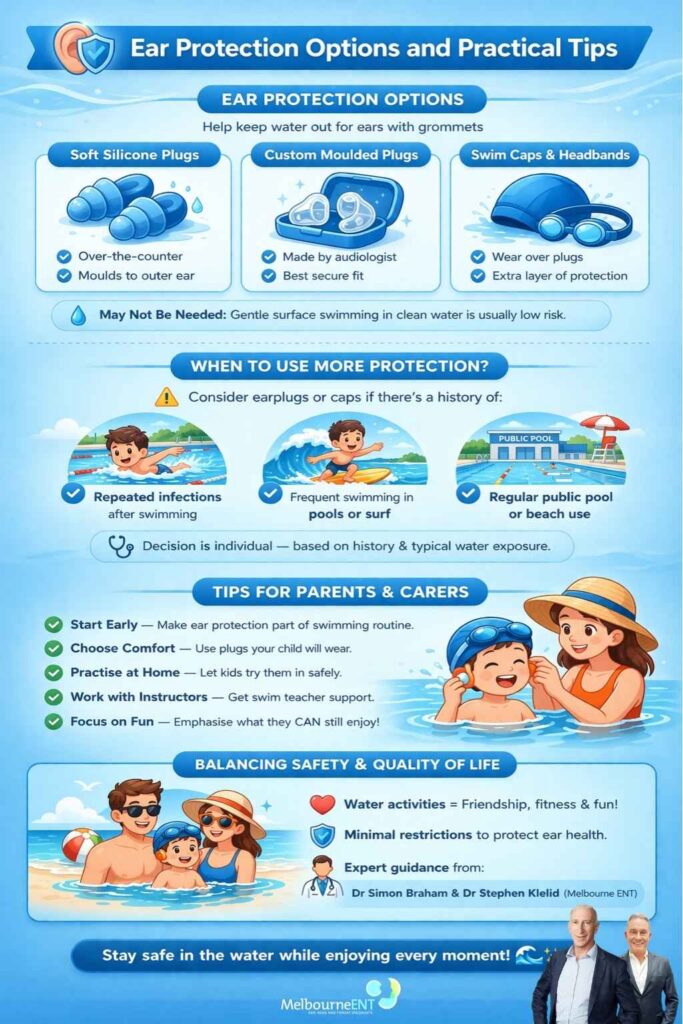
Several options are available to help reduce water entry into the ears for people with grommets. Soft silicone plugs that mould to the outer ear can be bought over the counter and shaped to fit comfortably. Some patients prefer custom moulded plugs made by an audiologist, which are designed specifically for the shape of their ears and can provide a more secure fit. Swim caps or headbands worn over earplugs add an extra layer of protection by helping keep the plugs in place and reducing the amount of water that reaches the ear canal.
In many cases, especially for gentle surface swimming in clean water, routine ear protection may not be essential. However, if a person has had repeated ear discharge or infections after swimming, or if they swim frequently in public pools or surf conditions, more structured protection might be recommended. At Melbourne ENT, the decision to use earplugs or caps is usually made after discussing the patient’s history in detail and considering their typical water exposure.
Parents and carers can help by introducing ear protection gradually and making it a normal part of the swimming routine, alongside goggles and towels. Choosing comfortable plugs, allowing the child to practise putting them in at home and working with swimming instructors can all improve acceptance. It can also be helpful to focus on the many things the child can still do in the water rather than only on restrictions, so that confidence and enjoyment remain central.
Ultimately, decisions about water activities are not only about risk but also about quality of life. For many families, time at the pool or beach is an important part of friendships, fitness and relaxation. Dr Simon Braham and Dr Stephen Kleid understand this and aim to keep restrictions to the minimum necessary to protect ear health, while still allowing children and adults to participate in activities that matter to them.
Warning Signs After Swimming or Diving with Grommets
After any kind of water exposure, it is important to watch for symptoms that suggest water may have entered the middle ear or that an infection is developing. New ear pain, a feeling of pressure or fullness, muffled hearing or a noticeable change in hearing are all early warning signs. Ear discharge, whether clear, cloudy or pus like, is another important indicator that the middle ear may be irritated or infected. In children, increased irritability, difficulty sleeping or pulling at the ear can also signal discomfort. Some people may experience dizziness, vertigo or imbalance if the inner ear is affected.
If any of these symptoms appear after swimming or diving, it is sensible to stop water activities until the ears have been assessed. For mild symptoms, an initial visit to a general practitioner is often appropriate. The GP can examine the ears and decide whether simple treatment is enough or whether referral back to an ENT specialist is needed. In many situations, a prompt review at Melbourne ENT allows early treatment and careful monitoring, which reduces the chance of ongoing problems with hearing or comfort.
Sometimes symptoms suggest a more serious issue that needs urgent care. Sudden, severe ear pain, a marked drop in hearing, ongoing spinning sensation or repeated vomiting are examples where urgent medical review is important. In these cases, emergency departments at major hospitals in Melbourne, such as the Royal Melbourne Hospital or the Royal Victorian Eye and Ear Hospital, may be the most appropriate place to seek help. Patients who attend emergency departments with significant ear symptoms are usually advised to follow up with their regular ENT specialist so that longer term plans can be reviewed.
How Melbourne ENT Supports Patients with Grommets Who Love the Water
Melbourne ENT is a specialist ear, nose and throat clinic based in St Kilda East, caring for both adults and children from throughout Melbourne and regional Victoria. The surgeons, including Dr Simon Braham and Dr Stephen Kleid, have extensive experience in managing ear conditions, grommet surgery and the many practical questions that follow. Both surgeons hold FRACS qualifications and have worked in major hospitals such as the Royal Victorian Eye and Ear Hospital and the Royal Melbourne Hospital. Their background in both public and private settings means they are familiar with a wide range of ear diseases and patient needs.
Consultations at Melbourne ENT involve a detailed history and examination of the ears. For patients with grommets who enjoy water sports, this includes questions about how often they swim, what type of activities they do, whether they have had infections after swimming and what their future goals are. Ear examination and, when needed, hearing tests help build a clear picture of middle ear health. Based on this information, the surgeons discuss suitable activities, timing for return to swimming after surgery and whether protective measures are recommended.
Medicare coverage for grommet surgery and related ENT care is an important consideration for many families. In Australia, Medicare usually provides a rebate for medically indicated consultations with ENT specialists and for procedures such as grommet insertion when they meet specific criteria. The amount covered and any out of pocket costs can vary depending on factors such as private health insurance, the setting in which surgery is performed and individual health fund policies. Staff at Melbourne ENT can provide general information about fees for consultations and surgery and can direct patients to Medicare, their health fund or the hospital for more detailed information about rebates and potential costs.
Ongoing follow up is a key part of care at Melbourne ENT. After grommet surgery, patients are usually reviewed to ensure the tubes are functioning as expected, infections are resolving and hearing has improved. Over time, the surgeons monitor when the grommets fall out and whether the eardrums heal normally. For patients who are keen on water activities, follow up visits are an opportunity to update advice as circumstances change and to plan safely for future swimming, surfing or travel.

FAQs About Diving and Water Sports with Grommets
Can my child become too dependent on earplugs and refuse to swim without them after the grommets come out?
It is possible for some children to feel nervous about swimming without earplugs if they have worn them for a long time. This is usually more about confidence than about the ears themselves. When the grommets have fallen out and the eardrums have healed, your ENT specialist can confirm that normal swimming is safe again. At that point, you can gradually reduce earplug use, starting in shallow water with calm, positive experiences. Swimming instructors can also help reassure your child, and in most cases they adjust quite quickly once they realise their ears remain comfortable.
Is there a difference between chlorinated pools and ocean water if I have grommets?
Both pool and ocean water can be acceptable in certain situations, but they are not exactly the same. Chlorinated pools are treated to reduce germs, which can be helpful, but they often involve more time under water, crowded conditions and activities like jumping and diving. Ocean water is not chlorinated, but many people spend more time at the surface and less time under water. Strong waves and surf zones can put more pressure on the ears, while calmer beaches may be gentler. Your ENT specialist can help you decide which environments are best for you, based on your ear history and how your grommets are performing.
I am training for a triathlon and have grommets. Is it realistic to keep up my swim program?
Many adults with grommets can continue structured training, but it usually involves some adjustments. Long, steady surface laps in a pool are often easier to manage than frequent sprint sets that include deep dives, tumble turns or explosive starts. You may need to consider high quality ear protection, careful monitoring for any symptoms after training and regular check ups to ensure the ears remain healthy. At Melbourne ENT, your surgeon can review your ears, discuss your training schedule and help you plan a program that protects your ear health while keeping you as close to your goals as possible.
Can flying to a holiday destination and then swimming with grommets cause extra problems for my ears?
Flying and swimming affect the ears in different ways. Grommets often make flying more comfortable, because the tube allows air to move more freely and pressure to equalise more easily during take off and landing. Swimming on the holiday is a separate question. If you are planning a trip that combines flights and a lot of water time, it is worth having your ears checked before you go. Your ENT specialist can advise whether your ears are stable enough for both flying and swimming, suggest any precautions such as ear protection in certain environments and give you guidance about what to do if symptoms arise while you are away.
Is it safe for my child with grommets to participate in school swimming carnivals or surf lifesaving programs?
School swimming carnivals and junior surf lifesaving often include energetic activities such as racing dives, deep water practice and rescue drills. These can increase the pressure on the ears compared with regular swimming lessons. Safety will depend on how stable your child’s ears are, the type of grommets, and exactly what is involved in the program. Sometimes children can participate in modified ways, such as focusing on surface events or land based training until their ENT specialist is confident that higher pressure activities are safe. A letter from Melbourne ENT outlining suggested limits can help schools or clubs make appropriate adjustments.
If I have grommets and also get swimmer’s ear, does that change what I can do in the water?
Swimmer’s ear is an infection of the skin in the ear canal, while grommets sit in the eardrum and relate to the middle ear. If you are prone to both problems, you may need a more cautious approach. Protecting the ear canal from prolonged moisture, gently drying the outer ear after swimming and avoiding cotton buds or other objects in the ear can be particularly important. Your ENT specialist may recommend specific drops at certain times or more structured limits on your time in the water until both the canal and middle ear are stable. The plan can be adjusted over time as your ears improve.
How long after my grommets fall out should I wait before returning to diving or more intense water sports?
Once grommets have fallen out, the small hole in the eardrum usually closes on its own. Only after the eardrum has fully healed and hearing has stabilised should you consider returning to higher pressure activities such as diving or forceful water sports. The timing varies from person to person. An examination at Melbourne ENT can confirm whether the grommets are out, the eardrums are fully intact and the middle ear is healthy. Your surgeon can then provide specific guidance on when and how to reintroduce deeper dives, water slides or, if appropriate, future scuba training.
Medical References
- The impact of receiving ventilation tubes (grommets) in early childhood on long-term language outcomes – https://rainestudy.org.au/research-paper/the-impact-of-receiving-ventilation-tubes-grommets-in-early-childhood-on-long-term-lang
- GROMMETS – for Adults and Children CRITERIA BASED ACCESS (NHS BSW ICB) – https://bsw.icb.nhs.uk/wp-content/uploads/sites/6/2026/02/BSW-ICB-CP045-Grommets-in-Adults-Children.pdf
- Grommets – Mesh Guides (medical education) – http://www.meshguides.org/guides/node/1118
- Grommets – Healthdirect (Australian government health service) – https://www.healthdirect.gov.au/grommets
- Grommets for glue ear in children – HWE Clinical Guidance (NHS) – https://www.hweclinicalguidance.nhs.uk/clinical-policies/grommets-for-glue-ear-in-children/
- Otitis media with effusion in under 12s | Guidance – NICE (National Institute for Health and Care Excellence) – https://www.nice.org.uk/guidance/ng233/chapter/Recommendations
- Prospective long-term follow-up after grommet insertion: Hearing outcomes and parent-reported functional health outcomes – ScienceDirect – https://www.sciencedirect.com/science/article/pii/S0165587624002969
Taking the Next Step
Grommets are a common and effective treatment for selected ear conditions in both children and adults. Having grommets does not necessarily mean giving up swimming or water sports forever. For many people, gentle surface swimming in clean water can continue once the ears have healed, provided this is in line with advice from their ENT specialist. Activities that involve higher pressure or more forceful water impact, such as deep pool diving, repeated duck dives, water slides and scuba diving, usually require more caution and may be restricted while tubes are in place.
It may be helpful to arrange a consultation at Melbourne ENT if you or your child has grommets and you are unsure about what is safe in the water, if you notice pain, discharge or hearing changes after swimming or if you are planning future activities such as diving or intensive water sports. An individual assessment can help clarify the best approach for your situation and reduce worry about making the wrong choice.
If you live in Melbourne or regional Victoria and would like specialist advice about grommets, ear health and water activities, you can contact Melbourne ENT in St Kilda East to arrange an appointment with Dr Simon Braham or Dr Stephen Kleid. The team can discuss your concerns, examine your ears and provide guidance that is tailored to your needs. For more information or to organise a consultation, visit the website.
Further Reading
- Read more about Otitis Media With Effusion (OME)
- Read more about Ear Ache
- Read more about Sudden Hearing Loss – An Otologic Emergency
- Read Melbourne ENT’s Blog on Middle Ear Aeration Methods: How Can They Help?
- Read Melbourne ENT’s Blog on How to Use Hydrogen Peroxide Ear Drops
Download Ear Tube Journey with Dr Braham

Nasal Obstruction in Children – When ENT Assessment Is Needed
A blocked nose is common in childhood. Many children experience nasal congestion during colds, allergy…
How Past Nasal Trauma in Kids Impacts Breathing Later in Life
Childhood nose injuries are common. A fall in the playground, a knock during sport, a…
How ENT Specialists Diagnose Glue Ear Before Recommending Grommets
Glue ear is a common ear condition that can affect hearing, communication, learning, and quality…