

Understanding Septal Deviation and Septoplasty Surgery
Septoplasty is a functional nasal procedure that may be considered when a deviated septum is contributing to blocked nasal breathing. The nasal septum is the internal wall of cartilage and bone that separates the left and right nasal passages. When this structure is bent, crooked, or displaced, it can narrow the nasal airway and make it harder to breathe through one or both sides of the nose.
At Melbourne ENT, Dr Stephen Kleid and Dr Simon Braham assess patients with nasal obstruction, suspected deviated septum, turbinate enlargement, sinus symptoms, snoring concerns, and other ear, nose and throat conditions. Because a blocked nose can have several causes, treatment recommendations are based on careful assessment rather than symptoms alone. Septoplasty may be suitable for some patients, while others may benefit from medical treatment, allergy management, turbinate treatment, sinus assessment, or another approach.
At A Glance: Septoplasty In Melbourne
Septoplasty is usually performed to improve nasal airflow where septal deviation is a significant contributor to obstruction. It is generally considered a functional procedure rather than a cosmetic procedure. Standard septoplasty does not usually aim to change the outside appearance of the nose, although some patients may need a different or combined procedure if nasal shape, support, or valve narrowing is also contributing to breathing difficulty.
The information below is a general guide only. Your own treatment plan, recovery, costs, and expected outcome may differ depending on your nasal anatomy, medical history, symptoms, and whether other nasal or sinus conditions are present. Your ENT surgeon will explain what applies to your situation after consultation and examination.
At A Glance:
- Procedure: Septoplasty.
- Purpose: To address nasal obstruction related to a deviated septum.
- Goal: To improve nasal airflow where septal deviation is contributing to blockage.
- Anaesthetic: Usually performed under general anaesthetic.
- Hospital Stay: Often performed as day surgery, depending on the patient and planned procedure.
- Recovery: Varies between patients, especially if combined procedures are performed.
- May Be Combined With: Turbinoplasty, sinus surgery, septorhinoplasty, or nasal valve treatment where clinically appropriate.
- Suitability: Requires assessment by an ENT surgeon.
Why Is One Side Of My Nose Always Blocked?
A blocked nose on one side is a common reason people seek ENT assessment. Some people notice that one nostril feels blocked most of the time, while others find the blockage changes from side to side. This can affect sleep, exercise, concentration, and general comfort. A deviated septum is one possible cause, especially when the blockage is persistent or follows a previous nasal injury.
However, a one-sided blocked nose does not automatically mean that septoplasty is needed. The nose contains several structures that influence airflow, including the septum, turbinates, nasal valves, sinus openings, and nasal lining. Swelling from allergy, rhinitis, or sinus inflammation can also make an existing septal deviation feel worse. An ENT assessment helps identify which factors are contributing and whether septoplasty is likely to be helpful.
A one-sided or persistent blocked nose may be related to:
- A deviated nasal septum.
- Enlarged turbinates inside the nose.
- Allergy, hay fever, or chronic rhinitis.
- Sinus inflammation or nasal polyps.
- Nasal valve narrowing.
- Previous nasal trauma or injury.
- A combination of structural and inflammatory causes.
What Is A Deviated Septum?
The nasal septum is the internal structure that divides the left and right nasal passages. It is made of cartilage at the front and bone further back. Ideally, the septum sits close to the middle, allowing air to move through both sides of the nose with minimal obstruction.
A deviated septum occurs when this internal wall is bent, crooked, or displaced. It may develop naturally during growth, occur after injury, or be associated with previous nasal surgery or trauma. Many people have some degree of septal deviation, but not everyone has symptoms. Surgery is generally considered only when the deviation is contributing to troublesome nasal obstruction or related functional problems.
A deviated septum can:
- Narrow one or both nasal passages.
- Contribute to a feeling of blocked nasal breathing.
- Make one side of the nose feel consistently more restricted.
- Be associated with turbinate enlargement or nasal valve narrowing.
- Occur after previous nasal trauma.
- Be present without causing major symptoms.
- Require assessment before deciding whether treatment is needed.
What Symptoms Can A Deviated Septum Cause?
A deviated septum may contribute to nasal obstruction, especially when the bend narrows one side of the nose. Some patients describe difficulty breathing through one nostril, needing to breathe through the mouth, or feeling more congested during sleep or exercise. Symptoms can be more noticeable when there is also inflammation from allergy, rhinitis, or sinus disease.
It is important to avoid assuming that every blocked nose is caused by the septum. Similar symptoms can occur with turbinate enlargement, sinus conditions, nasal polyps, nasal valve collapse, or swelling of the nasal lining. Your surgeon will consider these possibilities during assessment.
Symptoms that may be associated with septal deviation include:
- One-sided or uneven nasal blockage.
- Difficulty breathing through the nose.
- Mouth breathing, especially at night.
- Reduced comfort during exercise.
- Recurrent congestion.
- Crusting or dryness in some patients.
- Snoring or disturbed sleep where nasal obstruction contributes.
- Sinus symptoms in selected cases.
What Is Septoplasty, And How Can It Help Nasal Airflow?
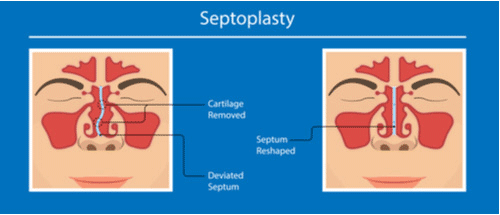
Septoplasty is surgery to correct a deviated nasal septum. During the procedure, selected areas of bent cartilage or bone may be repositioned, reshaped, or removed to improve the internal nasal airway. The aim is to reduce obstruction caused by septal deviation while preserving appropriate support for the nose.
Septoplasty does not treat every cause of nasal blockage. If symptoms are mainly due to allergy, inflammation, turbinate enlargement, sinus disease, or nasal valve collapse, additional or alternative treatment may be needed. Your surgeon will explain which factors appear relevant in your case and whether septoplasty is likely to address the main cause of obstruction.
Septoplasty may help by:
- Reducing internal narrowing caused by a deviated septum.
- Improving airflow through the affected nasal passage.
- Making nasal breathing more comfortable in selected patients.
- Improving access for other nasal procedures where clinically required.
- Addressing one structural contributor to nasal obstruction.
- Supporting a broader treatment plan when multiple nasal issues are present.
How Do I Know If I Need Septoplasty?
You may wonder whether septoplasty is needed if your nose is frequently blocked, if one side feels harder to breathe through, or if nasal obstruction affects sleep or exercise. The answer depends on the cause of the blockage. Symptoms alone are not enough to decide whether surgery is appropriate.
Septoplasty may be considered when examination confirms that a deviated septum is contributing significantly to nasal obstruction. Your surgeon will also consider whether non-surgical treatment may help and whether other nasal or sinus problems are present. The decision should be based on the severity of symptoms, examination findings, treatment options, and your individual circumstances.
Septoplasty may be discussed if you have:
- Persistent nasal obstruction affecting daily comfort.
- One-sided blockage that corresponds with septal deviation.
- Nasal obstruction after previous injury or trauma.
- Limited improvement after appropriate non-surgical treatment.
- Septal deviation affecting access for other nasal procedures.
- Symptoms that match examination findings.
- A clear understanding of the risks, benefits, and alternatives.
Is Septoplasty The Same As Rhinoplasty?
Septoplasty and rhinoplasty are different procedures, although they are sometimes discussed together. Septoplasty is usually performed inside the nose to correct the septum and improve nasal airflow. Rhinoplasty changes the external shape or structure of the nose and may be performed for cosmetic, functional, or reconstructive reasons.
A combined procedure, called septorhinoplasty, may be considered when both internal breathing function and external nasal structure need to be addressed. This may be relevant after trauma, with nasal valve narrowing, or where nasal shape and support affect airflow. Your surgeon will explain whether septoplasty alone is suitable or whether another procedure should be considered.
The difference is:
- Septoplasty: Corrects the internal nasal septum.
- Rhinoplasty: Changes the external shape or structure of the nose.
- Septorhinoplasty: Addresses both function and nasal structure.
- Turbinoplasty: Reduces enlarged turbinates contributing to blockage.
- Sinus Surgery: Treats selected sinus disease and is separate from septoplasty.
- Nasal Valve Treatment: May be considered if the sidewall of the nose contributes to obstruction.
Can Septoplasty Help With Snoring Or Sleep?
Nasal blockage can contribute to mouth breathing and may worsen snoring in some people. If a deviated septum is contributing to nasal obstruction, septoplasty may improve nasal airflow and make nasal breathing more comfortable during sleep for selected patients.
Septoplasty is not a standalone treatment for obstructive sleep apnoea and is not guaranteed to improve snoring. Snoring and sleep apnoea can involve several parts of the airway, including the soft palate, tonsils, tongue base, jaw position, and airway tone during sleep. If sleep apnoea is suspected, further assessment may be recommended.
What Happens At My Septoplasty Consultation?
A septoplasty consultation is used to understand your symptoms, examine your nose, and identify the likely causes of obstruction. Your surgeon may ask how long the blockage has been present, whether it affects one side or both sides, whether symptoms vary, and whether you have had previous nasal injury or surgery.
The consultation may include nasal examination and, where clinically indicated, nasal endoscopy. Your surgeon will discuss whether septoplasty, another treatment, or no surgery is appropriate. The consultation should also include discussion of risks, recovery, alternatives, likely costs, and realistic expectations. You should have the opportunity to ask questions before making a decision.
Your consultation may include discussion of:
- Nasal blockage, congestion, crusting, nosebleeds, or sinus symptoms.
- Allergy, rhinitis, asthma, snoring, or sleep-related symptoms.
- Previous nasal injury, trauma, or surgery.
- Previous use of nasal sprays, rinses, or allergy treatment.
- Nasal examination and possible nasal endoscopy.
- Surgical and non-surgical treatment options.
- Expected recovery, risks, limitations, and costs.
Who Performs Septoplasty At Melbourne ENT?
Septoplasty consultations and surgery at Melbourne ENT are provided by qualified ENT surgeons. Dr Stephen Kleid and Dr Simon Braham assess and manage nasal obstruction, deviated septum, sinus disease, snoring concerns, and related ENT conditions as part of their practice.
Dr Stephen Kleid has more than 40 years of ENT experience, including work in head and neck surgery, sleep apnoea, cochlear implants, and broader ENT care. Dr Simon Braham trained in Melbourne, New York, and Boston, and has a special interest in sinus and nasal conditions, snoring, and sleep apnoea surgery. Your surgeon will discuss diagnosis, treatment options, risks, alternatives, and recovery before any decision about surgery.
At Melbourne ENT:
- Dr Stephen Kleid and Dr Simon Braham provide ENT assessment and treatment.
- Consultations focus on diagnosis and treatment planning.
- Surgical recommendations are based on individual clinical assessment.
- Patients are encouraged to ask questions before deciding on treatment.
- Risks, alternatives, recovery, and expected limitations are discussed before surgery.
- Care may involve coordination with other health professionals where appropriate.
What Happens During Septoplasty Surgery?

Septoplasty is usually performed through the nostrils. In a standard septoplasty, there is usually no external incision. The surgeon lifts the internal lining of the septum and corrects selected areas of bent cartilage or bone while preserving appropriate support for the nose.
The exact technique depends on the location and severity of the septal deviation. Internal splints or dressings may be used in selected cases. If septoplasty is combined with turbinoplasty, sinus surgery, or septorhinoplasty, the operation and recovery may be different. Your surgeon will explain the planned procedure before surgery.
During septoplasty:
- The procedure is usually performed under general anaesthetic.
- The surgeon works inside the nose.
- Bent cartilage or bone may be repositioned, reshaped, or partly removed.
- The internal lining of the septum is preserved where possible.
- Internal splints may be used in selected cases.
- Additional procedures are only performed where planned and consented.
- The exact technique depends on your anatomy and diagnosis.
What Is Recovery Like After Septoplasty?
Recovery after septoplasty varies between patients. It is common to feel congested or blocked in the early recovery period, even after the septum has been corrected. This can be due to swelling, crusting, healing tissues, internal splints, or dressings. Some patients also notice mild bleeding, blood-stained discharge, pressure, or tenderness.
Your surgeon will provide instructions specific to your procedure. These may include nasal care, activity restrictions, follow-up appointments, and advice about returning to work, exercise, and normal routines. Recovery may be different if septoplasty is combined with turbinoplasty, sinus surgery, or septorhinoplasty.
During recovery, patients may experience:
- Nasal congestion or a blocked feeling.
- Mild bleeding or blood-stained discharge.
- Crusting or dryness inside the nose.
- Temporary discomfort, pressure, or tenderness.
- Reduced sense of smell while swelling is present.
- Gradual change in nasal airflow as swelling settles.
- The need for follow-up cleaning or review in some cases.
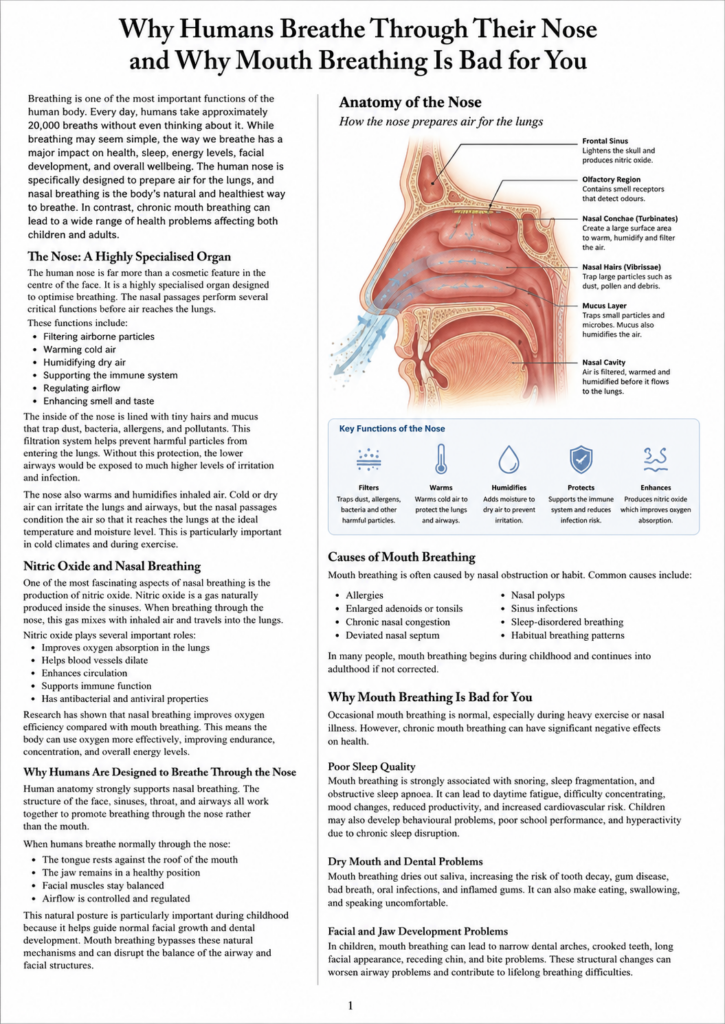
Download The Benefits of Breathing Through Your Nose Brochure
What Are The Risks Of Septoplasty?
All surgery has risks, including septoplasty. Your surgeon will discuss the risks that are relevant to your anatomy, medical history, and planned procedure. Understanding the potential benefits, limitations, alternatives, and risks is an important part of informed consent.
Most patients recover without major complications, but problems can occur. Some patients may continue to experience nasal obstruction after surgery, particularly if other issues such as allergy, turbinate enlargement, sinus disease, nasal valve narrowing, scarring, or inflammation are also present. Further treatment or revision surgery is occasionally required.
- Bleeding, infection, or delayed healing.
- Ongoing or recurrent nasal obstruction.
- Septal perforation, which is a hole in the septum.
- Crusting, dryness, adhesions, or scarring inside the nose.
- Change in smell or altered nasal sensation.
- Numbness of the upper teeth, lip, or nose.
- Anaesthetic risks.
- Need for further treatment or revision surgery.
How Much Does Septoplasty Cost In Melbourne?
The cost of septoplasty in Melbourne varies depending on the surgeon’s fee, anaesthetist’s fee, hospital fees, Medicare eligibility, private health insurance, and whether other procedures are performed at the same time. A consultation is required before accurate fee information can be provided.
If septoplasty is medically indicated, a Medicare item number may apply where relevant criteria are met. Private health insurance coverage depends on your policy, level of cover, waiting periods, and hospital arrangements. The Melbourne ENT team can provide item number and fee information after consultation so you can check with your insurer.
Costs may depend on:
- Whether septoplasty is performed alone or with another procedure.
- Surgeon, anaesthetist, and hospital fees.
- Medicare item number eligibility.
- Private health insurance cover and policy exclusions.
- Any remaining out-of-pocket costs.
- Whether additional procedures such as turbinoplasty or sinus surgery are planned.
- The hospital and anaesthetic arrangements for your procedure.
Septoplasty Before And After Photos
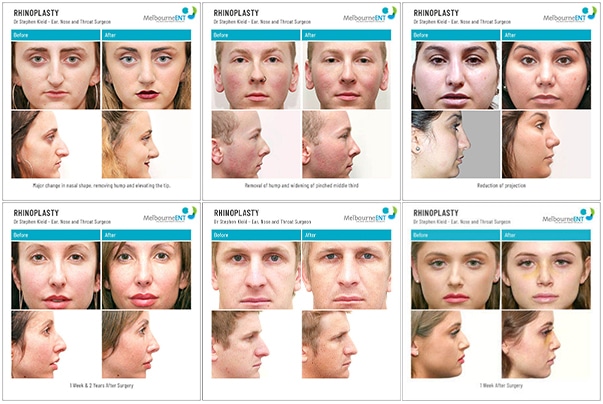
Septoplasty Before and After Gallery
See more of Dr Stephen Kleid’s previous nose surgery patients before and after surgery
Before-and-after photos are often less useful for septoplasty than they are for cosmetic nasal surgery. Septoplasty is usually performed inside the nose and is mainly intended to improve function, so the change may not be visible externally.
If external nasal shape is also being addressed, the procedure may be septorhinoplasty or rhinoplasty rather than septoplasty alone. Any image examples should be clearly labelled and interpreted carefully, because individual outcomes vary. Cosmetic-style image examples should not be used to imply that septoplasty alone changes the outside appearance of the nose.

Septoplasty FAQs
Can a deviated septum get worse over time?
A deviated septum does not usually keep bending on its own in adulthood, but symptoms can become more noticeable if allergy, rhinitis, sinus inflammation, or turbinate enlargement develops. An ENT assessment can help identify whether the septum or another factor is contributing to worsening blockage.
Why does my blocked nose feel worse when I lie down?
Lying down can increase blood flow and swelling in the nasal lining, which may make existing narrowing feel more obvious. If a deviated septum is present, this can make one side feel more blocked at night.
Can septoplasty help me use CPAP more comfortably?
Septoplasty may improve nasal airflow in selected patients where septal deviation contributes to obstruction, which may make nasal breathing more comfortable. CPAP comfort can depend on several factors, so sleep-related treatment should be discussed with your ENT surgeon or sleep physician.
Can a deviated septum cause headaches?
A deviated septum is not always the cause of headaches, and headaches can have many explanations. In some patients, nasal obstruction, sinus disease, or contact points inside the nose may be considered during ENT assessment.
Will septoplasty help if nasal sprays do not work?
Nasal sprays may help inflammation or allergy, but they do not straighten a deviated septum. If symptoms persist despite appropriate medical treatment, your ENT surgeon may assess whether septal deviation is a significant contributor.
Can septoplasty affect my voice?
Septoplasty does not usually change the voice significantly, but some patients notice temporary changes in nasal resonance while swelling or congestion settles. Persistent voice concerns should be discussed with your surgeon.
Can I have septoplasty if I have allergies?
Having allergies does not automatically exclude septoplasty, but allergy may continue to cause congestion after surgery. Your surgeon may recommend ongoing allergy or rhinitis management alongside any surgical treatment.
Why might I still feel blocked after septoplasty?
Early blockage can occur due to swelling, crusting, splints, or healing tissue. Longer-term obstruction may relate to allergy, turbinate enlargement, nasal valve narrowing, sinus disease, scarring, or incomplete resolution of the original problem.
Can septoplasty be done if I have had previous nasal surgery?
Previous nasal surgery can make assessment and planning more complex, but it does not always prevent further treatment. Your surgeon will review your history, examine the nose, and discuss whether revision or alternative treatment is appropriate.
Is septoplasty different for someone who has broken their nose before?
Previous nasal trauma can affect the septum, nasal bones, and nasal valve support. In some cases, septoplasty alone may be suitable, while others may need consideration of septorhinoplasty or additional structural treatment.
Medical References
- Carrie S, O’Hara J, Fouweather T, Homer T, Rousseau N, Rooshenas L et al. Clinical effectiveness of septoplasty versus medical management for nasal airways obstruction: multicentre, open label, randomised controlled trial BMJ 2023; https://www.bmj.com/content/383/bmj-2023-075445
- Carrie S, Fouweather T, Homer T, O’Hara J, Rousseau N, Rooshenas L, Bray A, Stocken DD, Ternent L, Rennie K, Clark E, Waugh N, Steel AJ, Dooley J, Drinnan M, Hamilton D, Lloyd K, Oluboyede Y, Wilson C, Gardiner Q, Kara N, Khwaja S, Leong SC, Maini S, Morrison J, Nix P, Wilson JA, Teare MD. Effectiveness of septoplasty compared to medical management in adults with obstruction associated with a deviated nasal septum: the NAIROS RCT. Health Technol Assess. 2024 Mar;28(10):1-213. https://pmc.ncbi.nlm.nih.gov/articles/PMC11017631/
- Septoplasty for nasal obstruction due to a deviated nasal septum in adults: a systematic review — Rhinology https://www.rhinologyjournal.com/Rhinology_issues/manuscript_1806.pdf
What Should I Know Before Deciding On Septoplasty?
Deciding on septoplasty should involve a balanced discussion of possible benefits, risks, alternatives, and limitations. Surgery may be helpful for selected patients, but it is not the right option for everyone with nasal obstruction.
Your surgeon should explain what the procedure is intended to address and what it may not address. You should also feel comfortable asking questions and taking time to consider your options before proceeding. A good decision is based on diagnosis, realistic expectations, and an understanding of both surgical and non-surgical choices.
Before deciding, consider:
- Whether the cause of your nasal obstruction has been clearly explained.
- Whether non-surgical options are appropriate.
- Whether other nasal or sinus issues are contributing.
- Whether you understand the risks and recovery process.
- Whether you understand likely fees and possible out-of-pocket costs.
- Whether septoplasty alone is suitable or whether another procedure is being considered.
How Do I Book A Septoplasty Consultation In Melbourne?
To discuss nasal obstruction, a suspected deviated septum, or difficulty breathing through the nose, you can contact Melbourne ENT to arrange a consultation with Dr Stephen Kleid or Dr Simon Braham. A consultation can help determine whether septoplasty or another nose treatment option may be appropriate.
When booking, ask whether a referral is needed and what information you should bring. If you have private health insurance, it may also be helpful to bring your membership details so item number and fee information can be discussed after your assessment.
Further Reading
- Read about Melbourne ENT’s Procedure Page Airway Rhinoplasty Melbourne
- Read about Melbourne ENT’s Procedure Page Revision Rhinoplasty Melbourne