

Nose and sinus conditions can significantly affect breathing, sleep quality, exercise tolerance, concentration, and overall quality of life. Rhinology is the specialised area of Ear, Nose and Throat (ENT) medicine focused on diagnosing and managing disorders affecting the nose, nasal passages and paranasal sinuses. Common rhinological conditions include chronic sinusitis, nasal obstruction, deviated nasal septum, enlarged turbinates, nasal polyps, recurrent sinus infections, allergy-related nasal symptoms and structural abnormalities affecting airflow.
At Melbourne ENT in East St Kilda, Dr Simon Braham MBBS (Hons), FRACS provides comprehensive assessment and management of a wide range of nose and sinus conditions in both adults and children. Treatment recommendations are based on a detailed evaluation of symptoms, examination findings, medical history and individual treatment goals. Depending on the diagnosis, management may include medical therapies, lifestyle modifications, ongoing monitoring or surgical intervention.
Many patients seeking assessment from an ENT surgeon in Melbourne report symptoms such as persistent nasal congestion, difficulty breathing through the nose, recurrent sinus infections, facial pressure, postnasal drip, snoring or sleep disturbance. These symptoms can arise from a variety of underlying causes, making accurate diagnosis an essential part of treatment planning.
At Melbourne ENT, each patient receives an individualised assessment to determine the most appropriate management approach. Not all patients are suitable candidates for surgery, and alternative treatment options may be available depending on the diagnosis. A consultation is required before any treatment recommendations can be made.
What Is Rhinology?
Understanding Nose and Sinus Conditions
Rhinology is a subspecialty of otolaryngology (ENT medicine) that focuses on conditions affecting the nose, nasal cavity and sinuses. The nose is responsible for warming, humidifying and filtering inhaled air while also contributing to normal breathing and the sense of smell. The sinuses are interconnected air-filled spaces within the facial bones that drain into the nasal passages through small openings.
When these structures become inflamed, blocked, infected or structurally narrowed, symptoms can develop that affect breathing, sleep and overall wellbeing. Rhinological disorders may be acute, chronic, inflammatory, infectious, allergic or structural in nature.
Conditions commonly managed by a rhinology specialist include:
- Chronic rhinosinusitis
- Recurrent sinus infections
- Deviated nasal septum
- Nasal obstruction
- Enlarged turbinates
- Nasal polyps
- Allergic rhinitis
- Nasal valve collapse
- Postnasal drip
- Smell disorders
- Nasal trauma
- Structural nasal abnormalities
A comprehensive assessment by an ENT surgeon helps identify the underlying cause of symptoms and guides treatment recommendations.
What Is the Goal of Rhinology Treatment?
The goals of rhinology treatment vary between patients and depend on their symptoms, anatomy and treatment objectives.
Potential treatment goals may include:
- Improving nasal breathing
- Reducing nasal obstruction
- Improving sinus drainage
- Managing chronic inflammation
- Reducing recurrent infections
- Improving airflow during sleep
- Addressing structural abnormalities
- Improving nasal function
- Supporting long-term symptom management
Where cosmetic concerns coexist with functional issues, treatment planning may also include discussion of appearance-related objectives. However, treatment recommendations are tailored to the individual and depend on the underlying diagnosis.
Why Might Rhinology Treatment Be Recommended?
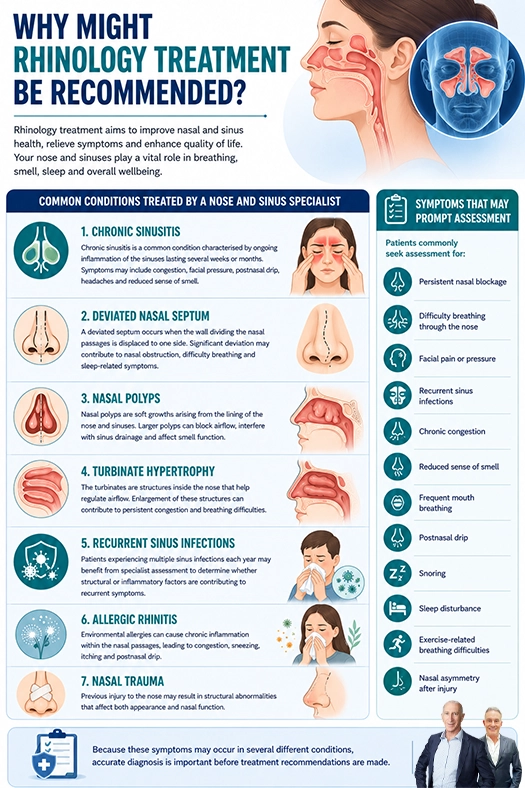
Common Conditions Treated by a Nose and Sinus Specialist
✓ Chronic Sinusitis
Chronic sinusitis is a condition characterised by ongoing inflammation of the nose and sinuses lasting 12 weeks or longer. Symptoms may include congestion, facial pressure, postnasal drip, headaches and reduced sense of smell.
✓ Deviated Nasal Septum
A deviated septum occurs when the wall dividing the nasal passages is displaced to one side. Significant deviation may contribute to nasal obstruction, difficulty breathing and sleep-related symptoms. In selected patients, septoplasty may be considered to address structural obstruction related to the septum.
✓ Nasal Polyps
Nasal polyps are soft growths arising from the lining of the nose and sinuses. Larger polyps can block airflow, interfere with sinus drainage and affect smell function.
When chronic sinus disease, nasal polyps or persistent sinus obstruction do not respond adequately to medical management, functional endoscopic sinus surgery (FESS) may be considered depending on the diagnosis.
✓ Turbinate Hypertrophy
The turbinates are structures inside the nose that help regulate airflow. Enlargement of these structures can contribute to persistent congestion and breathing difficulties. In selected patients with persistent nasal obstruction related to enlarged turbinates, turbinoplasty may be considered to reduce turbinate size and improve the nasal airway.
✓ Recurrent Sinus Infections
Patients experiencing multiple sinus infections each year may benefit from specialist assessment to determine whether structural or inflammatory factors are contributing to recurrent symptoms.
✓ Allergic Rhinitis
Environmental allergies can cause chronic inflammation within the nasal passages, leading to congestion, sneezing, itching and postnasal drip.
✓ Nasal Trauma
Previous injury to the nose may result in structural abnormalities that affect both appearance and nasal function.
Symptoms That May Prompt Assessment
Patients commonly seek assessment for:
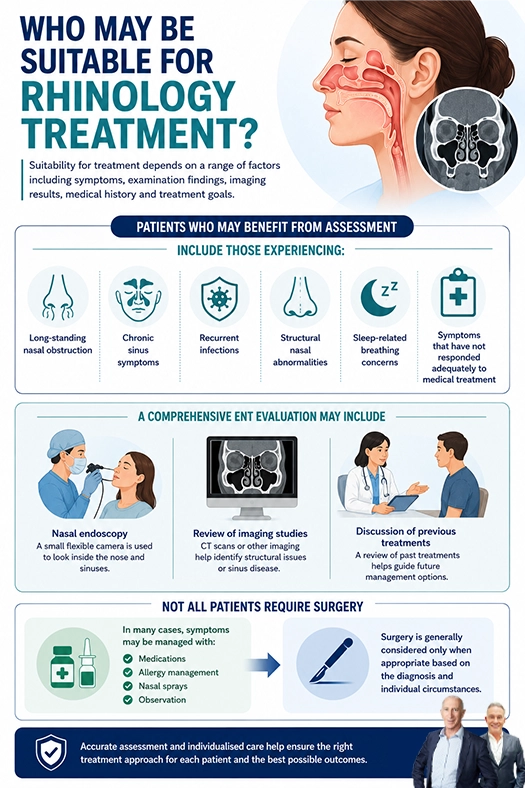
- Persistent nasal blockage
- Difficulty breathing through the nose
- Facial pain or pressure
- Recurrent sinus infections
- Chronic congestion
- Reduced sense of smell
- Frequent mouth breathing
- Postnasal drip
- Snoring
- Sleep disturbance
- Exercise-related breathing difficulties
- Nasal asymmetry after injury
Because these symptoms may occur in several different conditions, accurate diagnosis is important before treatment recommendations are made.
Who May Be Suitable for Rhinology Treatment?
Suitability for treatment depends on a range of factors including symptoms, examination findings, imaging results, medical history and treatment goals.
Patients who may benefit from assessment include those experiencing:
- Long-standing nasal obstruction
- Chronic sinus symptoms
- Recurrent infections
- Structural nasal abnormalities
- Sleep-related breathing concerns
- Symptoms that have not responded adequately to medical treatment
A comprehensive ENT evaluation may include nasal endoscopy, review of imaging studies and discussion of previous treatments.
Not all patients require surgery. In many cases, symptoms may be managed with medications, allergy management, nasal sprays or observation. Surgery is generally considered only when appropriate based on the diagnosis and individual circumstances.
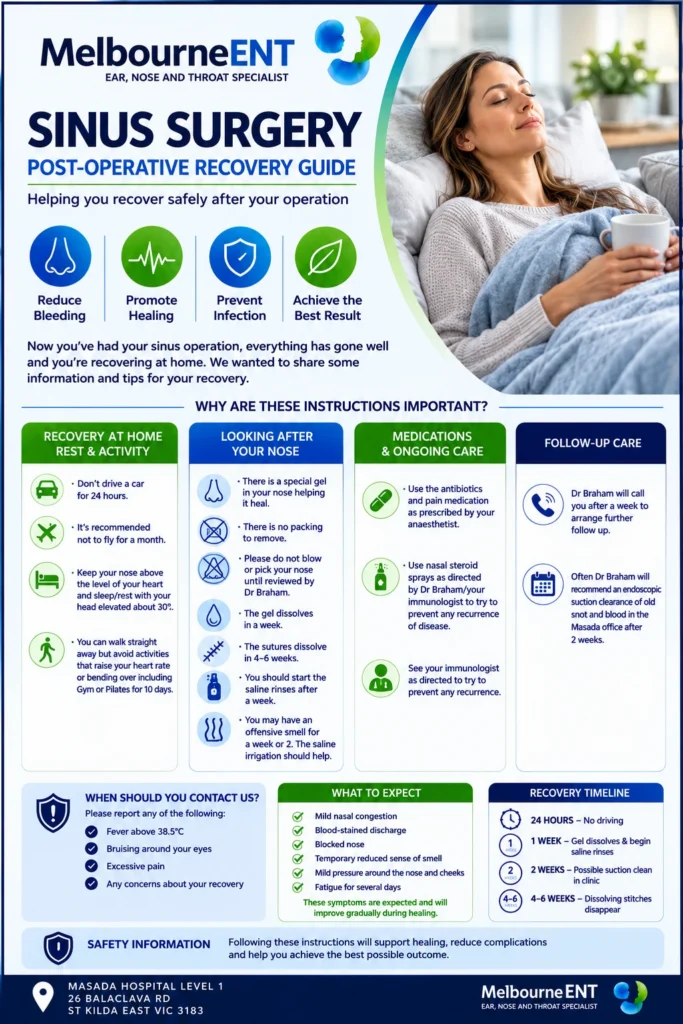
Download Sinus Surgery Post-operative Recovery Brochure
Consultation and Assessment Before Treatment
A thorough consultation forms the foundation of effective rhinology care.
During your appointment with Dr Simon Braham, discussion may include:
- Current symptoms
- Duration of symptoms
- Previous treatments
- Allergy history
- Sleep-related concerns
- Medical conditions
- Previous surgery
- Treatment goals
Examination typically includes a comprehensive ENT assessment and may involve nasal endoscopy to provide detailed visualisation of the nasal passages and sinus openings.
Additional investigations may include:
- CT scan of the sinuses
- Allergy assessment
- Sleep study
- Review of previous imaging
- Relevant blood tests
Following assessment, treatment options, risks, benefits, alternatives and recovery considerations can be discussed.

FAQs About Rhinology
Why can I breathe well through my nose during the day but struggle at night?
Nasal symptoms can sometimes become more noticeable when lying down due to changes in blood flow, nasal congestion, allergies, or underlying structural issues. An ENT assessment may help identify whether anatomical factors or inflammatory conditions are contributing to nighttime breathing difficulties.
Can chronic sinus problems affect my sense of smell?
Yes. Conditions such as chronic sinusitis, nasal polyps and ongoing nasal inflammation may affect the ability to smell. The extent of symptoms varies between individuals and depends on the underlying cause.
What is the difference between nasal congestion and nasal obstruction?
Nasal congestion is often caused by inflammation, infection or allergies affecting the lining of the nose. Nasal obstruction may occur when there is a structural narrowing of the nasal passages, such as a deviated septum or enlarged turbinates. Some patients experience a combination of both.
Why do sinus symptoms sometimes persist despite medication?
While medications can be effective for many patients, symptoms may persist if underlying structural abnormalities, chronic inflammation, nasal polyps or other contributing factors are present. Further assessment may help determine whether additional treatment options should be considered.
Can nose and sinus conditions contribute to poor sleep quality?
Some nasal and sinus disorders may affect airflow through the nose, potentially contributing to snoring, mouth breathing, sleep disruption or difficulty breathing comfortably during sleep. A comprehensive assessment can help identify possible contributing factors.
Is imaging always required for nose and sinus conditions?
Not always. The need for imaging depends on the symptoms, examination findings and suspected diagnosis. In some cases, a CT scan of the sinuses may provide additional information to assist with diagnosis and treatment planning.
Can more than one nose or sinus condition occur at the same time?
Yes. It is common for patients to have multiple contributing factors, such as allergies, a deviated septum, turbinate enlargement and chronic sinus inflammation occurring together. Identifying all contributing conditions helps guide an appropriate treatment plan.
Medical References
- Editorial: Recent advances in rhinology 2024 – Frontiers in Allergy –
https://pubmed.ncbi.nlm.nih.gov/41573057/ - Chronic rhinosinusitis and cognition: a systematic review and meta-analysis – Rhinology journal –
https://rhinologyjournal.com/Current.php - Predictors for development of chronic rhinosinusitis in transplant recipients – American Journal of Rhinology and Allergy (Mayo Clinic) – https://www.mayoclinic.org/medical-professionals/otolaryngology/news/research-fellow-project-focuses-on-predictors-of-chronic-rhinosinusitis-in-transplant-recipients.aac-20654
- Epigenetic Modifications are Associated with mRNA and Cytokine Expression Changes in Chronic Rhinosinusitis: A Multiomics Study from the United States – Frontiers in Allergy – https://www.frontiersin.org/journals/allergy/articles/10.3389/falgy.2025.1606255/abstract
- Development and validation of the Sinonasal Endoscopic Score (SiNES) for chronic rhinosinusitis – Rhinology journal – https://rhinologyjournal.com/OpenAccess.php
Why Choose Melbourne ENT for Rhinology Care?
Dr Simon Braham MBBS (Hons), FRACS is an ENT Surgeon and Otolaryngologist with extensive experience in the assessment and management of nose and sinus conditions affecting both adults and children.
Having completed advanced ENT training in Australia and further studies in facial plastic surgery in New York and Boston, Dr Braham has a particular interest in conditions affecting the upper airway, nose and sinuses.
At Melbourne ENT, patients receive:
- Comprehensive ENT assessment
- Detailed diagnostic evaluation
- Individualised treatment planning
- Discussion of risks and alternatives
- Evidence-based care
- Ongoing follow-up support
Located in East St Kilda, Melbourne ENT provides convenient access to specialist nose and sinus assessment for patients throughout Melbourne and Victoria.
Schedule a Consultation with Melbourne ENT
To determine whether rhinology treatment may be appropriate for your symptoms, anatomy and medical history, arrange a consultation with Dr Simon Braham at Melbourne ENT. Following a comprehensive assessment, treatment options, expected outcomes, risks, recovery considerations and alternative approaches can be discussed. Melbourne ENT is conveniently located at Level 1, 26 Balaclava Road, East St Kilda VIC 3183. To book an appointment or make an enquiry, please contact the clinic on (03) 9038 1311 or visit the contact for further information.
Further Reading From Melbourne ENT
- Read Melbourne ENT Page about Chronic Rhinosinusitis Melbourne
- Read Melbourne ENT Page about Nasal Congestion Melbourne
- Read Melbourne ENT Procedure Page about Turbinoplasty – Enlarged Turbinate Surgery
- Read Melbourne ENT Procedure Page about Septo-Rhinoplasty
- Read Melbourne ENT Procedure Page about Nasal Valve Dysfunction