

Mouth tumours, also known as oral cavity tumours, range from minor benign growths to serious cancers that require prompt and carefully planned treatment. Cancer surgery is often central to managing these conditions. The aims of treatment are to remove the tumour, control or eradicate disease where possible, and to protect key functions such as speech, swallowing, chewing and appearance as much as the clinical situation allows.
At Melbourne ENT in St Kilda East, Victoria, patients with suspected or confirmed mouth tumours are assessed and managed by Dr Stephen Kleid, ENT and Head & Neck Surgeon (FRACS). He has many years of experience in the diagnosis and surgical treatment of head and neck tumours, including cancers of the mouth, throat, thyroid and salivary glands. Dr Simon Braham, ENT surgeon (FRACS), also consults at Melbourne ENT and provides care across a wide range of ENT and related procedures. Cancer surgery for mouth tumours is primarily managed by the head and neck oncology arm of the practice, often in close collaboration with multidisciplinary cancer centres when this is in the patient’s best interests.
This procedure page is focused on medical and cancer surgery, not cosmetic surgery. The information is designed to help patients and their families understand what mouth tumour surgery involves, who may benefit from assessment, what to expect around the time of cancer surgery and how recovery and follow up are usually structured.
It is general information only and does not replace advice from your own doctor or specialist.
What Is Mouth Tumour Surgery
Mouth tumour surgery, sometimes referred to as oral cavity cancer surgery, is the term used for operations that remove abnormal tissue from the mouth. These abnormalities can include benign tumours, pre cancerous changes and established cancers. Not every ulcer or lump in the mouth is serious, but some can progress or spread. Cancer surgery plays a key role in treating malignant tumours and some pre cancerous or uncertain lesions, helping to control disease locally and reduce the risk of further spread.
The oral cavity includes the lips, the front two thirds of the tongue, the floor of mouth (under the tongue), the upper and lower gums, the inner cheek lining and the hard palate at the roof of the mouth. Tumours can arise in any of these areas. The most common type of malignant mouth tumour is squamous cell carcinoma, which develops from the lining of the mouth, although other tumour types, including salivary gland tumours (like adenoids cystic carcinoma) and less common cancers, may also occur.
Cancer surgery for mouth tumours has several overlapping aims. From an oncological perspective, the goal is to remove the tumour with a margin of surrounding healthy tissue and to manage lymph nodes in the neck if there is a risk that they contain cancer cells. From a functional perspective, surgery is carefully planned to preserve or reconstruct structures that are important for speaking, swallowing, chewing, breathing and facial expression. From a broader health perspective, cancer surgery can relieve pain, help control bleeding, reduce the risk of infection and give patients the best chance of long term disease control or cure when that is achievable.
In some cases surgery is the main treatment, particularly for early stage cancers. In others it forms part of a combined approach that can include radiotherapy and chemotherapy. More complex cancers may require reconstructive procedures performed in conjunction with a reconstructive team at a major head and neck cancer centre. Your surgeon will discuss which pathway is most appropriate for your particular situation.
Who Needs It (Candidates For Mouth Tumour Surgery)
People are usually considered for specialist assessment and possible mouth tumour surgery when they develop changes in the mouth that do not resolve or that raise concern on clinical examination. Typical reasons for referral include a sore or ulcer in the mouth that has not healed after two to three weeks, a firm or enlarging lump in the tongue, gums or cheek, a persistent red or white patch on the lining of the mouth, unexplained bleeding, difficulty chewing or swallowing, a feeling that something is stuck in the mouth or throat, or a lump in the neck that does not settle. Sometimes the first sign is a neck lump representing lymph node involvement from a primary oral cavity tumour that is small or not easily visible.
Dentists and dental hygienists often detect early changes during routine check ups, and general practitioners refer patients when symptoms are persistent or atypical. People who smoke or use other forms of tobacco, drink alcohol heavily, chew betel nut, have significant sun exposure to the lips, have poor oral hygiene or have a history of head and neck cancer are at higher risk and may benefit from early specialist review if something looks or feels unusual. However, mouth tumours can also occur in people without obvious risk factors, so new or unexplained symptoms should always be taken seriously.
After a detailed assessment and investigation, cancer surgery may be recommended in a number of situations. Surgery is often advised if a biopsy confirms malignancy, particularly when the tumour is localised and potentially resectable. It may also be recommended for benign tumours that are enlarging, causing pain, interfering with function or showing concerning features. Some pre cancerous lesions that carry a higher risk of progression may be removed surgically to reduce future cancer risk. In other cases, especially where lesions are clearly benign, small and stable, careful observation with regular review may be appropriate.
It is important to remember that many mouth ulcers and minor lesions are not cancer and may be related to trauma, infection, irritation or other common conditions. Nonetheless, persistent or unexplained symptoms warrant evaluation by a health professional. Early diagnosis can allow for simpler cancer surgery, may reduce the need for extensive reconstruction and can improve functional and oncological outcomes.
Benefits Of Mouth Tumour Surgery
The potential benefits of mouth tumour cancer surgery relate both to control of disease and to quality of life. The exact benefits for each person depend on the size, location and stage of the tumour, the type of operation required, any additional treatments and the person’s overall health.
One of the major goals of cancer surgery is local disease control. Removing the primary tumour with an adequate margin of surrounding tissue reduces the chance that cancer cells are left behind at the site. When indicated, treating the lymph nodes in the neck at the same time can lower the risk of regional spread. For many early stage oral cavity cancers, surgery alone may provide a realistic chance of cure. For more advanced cancers, surgery combined with radiotherapy and sometimes chemotherapy can help achieve better disease control and may extend survival.
Another important benefit of surgery is symptom relief. Mouth tumours can cause significant pain, especially when ulcerated or when they interfere with movement of the tongue or jaw. They may bleed, become infected, produce bad breath, make it difficult to wear dentures or cause embarrassment because of visible changes. By removing or debulking the tumour, cancer surgery can reduce pain, lessen bleeding, improve the ability to chew and swallow and allow people to speak and interact more comfortably.
Cancer surgery is also planned with the aim of protecting vital structures and functions as much as possible. Treating tumours at an earlier stage may mean that less tissue has to be removed and that key structures such as the jawbone, major nerves and larger portions of the tongue can be preserved. This can lead to better outcomes for speech, swallowing and appearance, and may make reconstruction simpler. Even in larger operations, modern techniques seek to maintain symmetry and function, and reconstructive methods are used to restore the lining of the mouth and underlying support where needed.
Beyond the physical aspects, successful treatment can make a significant difference to emotional wellbeing. Many people report a sense of relief once cancer surgery has been completed and the treatment plan is underway. With appropriate rehabilitation, support and follow up, patients often return to work, family roles and social activities, even if they need to make some adjustments. It is important to keep expectations realistic, as cancer surgery cannot guarantee a particular outcome, and some changes to function and appearance may be long lasting. Your surgeon will discuss what is achievable in your specific case.
Consultation For Mouth Tumour Surgery
The process usually begins with a referral to Melbourne ENT from your general practitioner, dentist or another specialist. A referral is recommended and is necessary for you to receive a Medicare rebate for your consultation.
At your first appointment, Dr Kleid will take a detailed medical history. He will ask about your current symptoms, such as pain, bleeding, difficulty chewing or swallowing, changes in speech, weight loss, bad breath or the presence of any lumps in the mouth or neck. The timing and progression of these symptoms are important. He will also ask about your smoking history, alcohol intake, oral hygiene, previous dental work, past illnesses, medications, allergies, any previous surgeries and whether you have had any cancers or radiotherapy in the past. This information helps build a clear picture of your overall health and risk profile and is essential for planning safe cancer surgery if it is required.
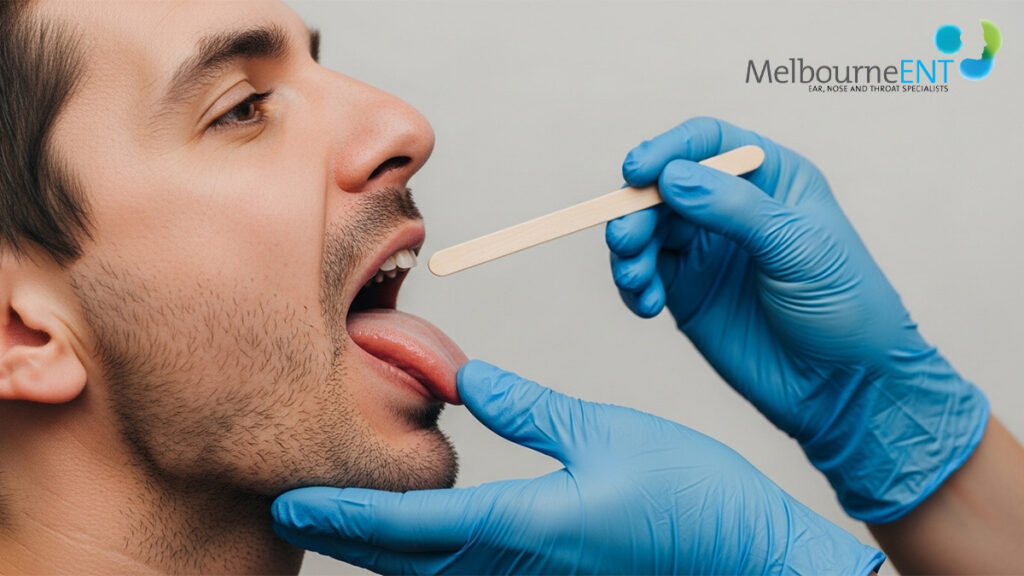
A careful examination of the mouth and head and neck region follows. The lips, gums, tongue, floor of mouth, cheeks and palate are inspected under good light. The tissues are gently palpated to feel for firmness, thickening or ulceration. The tongue is moved to allow a full view of the floor of mouth. The back of the throat may be examined with a small mirror or a flexible endoscope. The neck is examined systematically to check for enlarged lymph nodes or other masses. This examination is usually well tolerated and provides crucial information about the extent of any disease.
If you have already had tests such as a biopsy, ultrasound, CT scan, MRI or PET scan, these results will be reviewed and explained. If further investigations are needed, they can be arranged. A biopsy is generally required if a suspicious lesion has not yet been sampled, because microscopic analysis is the only reliable way to confirm or exclude cancer. Imaging helps assess how deeply a tumour has invaded, whether it is close to important structures and whether there is evidence of spread to lymph nodes or beyond the oral cavity.
Once adequate information is available, Dr Kleid will discuss the findings with you in clear language. He will explain whether the lesion appears benign, pre cancerous or malignant, what further tests may be required, and whether cancer surgery is recommended. The discussion includes the role of surgery in relation to other treatments such as radiotherapy or chemotherapy, the potential benefits, the possible risks and complications, and the likely impact on speech, swallowing, diet and appearance. You are encouraged to ask questions, to bring a family member or trusted friend for support and to take time to consider options where clinically appropriate. Decisions are made together, with an emphasis on shared decision making.
Dr Kleid set up the Head and Neck Multi-disciplinary Meeting at Peter MacCallum Cancer Centre in 1989, where all of their cancer cases are reviewed and discussed in detail, by their teams of Surgeons, Radiation Oncologists and Medical Oncologists. The scans and pathology are double-checked by our experts, and treatment options discussed – giving patients multiple 2nd opinions.
How Is Mouth Tumour Surgery Performed
Mouth tumour cancer surgery is tailored to each individual. The stage and location of the tumour, its size and depth, involvement of nearby structures, presence of lymph node disease, previous treatments and the general health of the patient all influence the surgical plan.
Surgery is almost always performed under general anaesthesia. Smaller and more localised lesions may be treated in a private hospital setting, with a short stay of one or two nights or occasionally as day surgery. Larger or more complex cancers, especially those requiring extensive resection and reconstruction, are often managed in partnership with a tertiary head and neck cancer centre. In these situations, a broader team is involved, including reconstructive surgeons, anaesthetists, intensive care staff and allied health specialists.
For early or limited tumours, surgery may be performed entirely through the mouth. The surgeon removes the lesion along with a cuff of healthy tissue around it to reduce the risk that microscopic tumour cells remain. The resulting defect can often be closed directly with sutures. In some cases, a small local flap of tissue from nearby inside the mouth or a skin graft may be used to cover the area. If there is concern about lymph node spread based on clinical examination or imaging, a selective neck dissection may be performed at the same time. This involves making an incision in the neck, lifting the skin and carefully removing lymph nodes and fatty tissue from defined regions that drain the mouth.
For more advanced or deeply invasive cancers, surgery may be more involved. Operations such as partial glossectomy remove part of the tongue, while others remove portions of the floor of mouth, inner cheek lining, gum or hard palate. If the tumour has affected the jawbone, part of the mandible or maxilla may need to be removed. Neck dissection is more likely to be required in these circumstances. A reconstructive procedure is usually necessary to restore the lining of the mouth and, where needed, the underlying bone or soft tissue. Reconstruction methods range from local flaps and skin grafts to complex free tissue transfers, in which tissue from another part of the body is transplanted along with its blood vessels, which are joined to vessels in the neck using microsurgical techniques.
All tissue removed during surgery is sent to a pathologist. Under the microscope, the pathologist confirms the diagnosis, measures the tumour, assesses whether the margins are clear of cancer and examines any lymph nodes that have been removed. These findings determine the pathological stage of the cancer and help guide further management. In some cases, the surgeon may also receive rapid feedback during the operation so that additional tissue can be removed if margins appear close or involved. After surgery, the final pathology report is discussed with you and, if appropriate, with a multidisciplinary head and neck cancer team. This may lead to recommendations for post operative radiotherapy or chemoradiotherapy to reduce the risk of recurrence.
Recovery After Mouth Tumour Surgery
Recovery after mouth tumour cancer surgery is quite individual and depends on the extent of the operation, the specific structures involved, whether reconstruction has been carried out, your general health and whether additional treatments are required. It is helpful to think about recovery in stages, from the immediate post operative period in hospital through to longer term adjustment at home.
For smaller procedures, such as excision of a small lesion without neck dissection, the hospital stay may be relatively short. You may experience soreness and swelling in the mouth, difficulty with very hot or spicy foods and some minor bleeding or oozing early on. Most people start with a soft or pureed diet and gradually reintroduce more solid foods as comfort allows. Stitches in the mouth often dissolve on their own. You will usually be given instructions about gentle mouth rinses, tooth brushing techniques and avoiding trauma to the healing area. Fatigue is common and it is sensible to allow time for rest.
For more extensive operations, recovery is more complex. In the first few days after major cancer surgery you may be monitored in a high dependency or intensive care area, especially if a free flap reconstruction has been performed. Nurses and doctors will check your airway, pain levels, wounds and any drains regularly. Swelling of the tongue, floor of mouth and neck is expected and gradually subsides. Pain is managed with regular medications, which may be given intravenously or by mouth.
Eating and drinking can be challenging after large mouth operations. Many patients begin with fluids and then move to a liquid or pureed diet, guided by the surgical and allied health teams. A feeding tube is sometimes needed to provide adequate nutrition while the mouth heals or while it is not safe to swallow. A dietitian works closely with you to plan meals, supplements and gradual progression. Maintaining good nutrition is important for wound healing, immune function and energy levels.
Speech changes are also common, particularly after surgery involving the tongue, floor of mouth or palate. Some sounds may be more difficult to articulate, and speech may be less clear or more effortful. A speech pathologist will assess your speech and swallowing and provide exercises and strategies to help. With time, practice and support, many people experience significant improvement, although some permanent changes are possible.
Once you leave hospital, you will continue to recover at home. It is important to avoid smoking and to limit or avoid alcohol, as these can impair healing and increase the risk of future cancers. You should avoid heavy lifting, strenuous exercise and activities that place strain on the neck or jaw until your surgeon advises that it is safe to resume them. Gentle walking and light activity are usually encouraged. You will have follow up appointments to check healing, remove any remaining sutures or drains, discuss pathology results and plan any further treatment, such as radiotherapy. Time away from work can vary from one to two weeks for minor operations to several weeks or longer after major cancer surgery, especially if radiotherapy is required.
In the longer term, regular follow up appointments are an essential part of head and neck cancer care. These visits allow your surgeon to monitor for recurrence, identify any new lesions early, and help manage long term effects such as dry mouth, stiffness of the jaw or neck, dental issues, changes in taste and emotional or social challenges. Support from your general practitioner, dentist, allied health professionals and, where needed, psychological or social work services can help with the broader aspects of living well after cancer surgery.
Risks And Complications Of Mouth Tumour Surgery
All surgical procedures carry some risk, and mouth tumour cancer surgery is no exception. Understanding these risks helps you make an informed decision and prepares you for what to expect during and after treatment. The particular risks that apply to you will depend on your medical history, the location and size of the tumour, the type of cancer surgery and reconstruction planned and whether you will receive radiotherapy or chemotherapy.
General risks of surgery and anaesthesia include bleeding, infection, delayed wound healing, blood clots in the legs or lungs and reactions to medications or anaesthetic agents. Serious complications are uncommon but can occur. Modern anaesthetic techniques and careful monitoring are used to reduce these risks, and your general health is assessed beforehand to ensure that surgery is as safe as possible.
Specific risks related to surgery in the mouth and neck include pain, swelling and bruising in the early period. Numbness or altered sensation of the tongue, lips, chin, face or neck is common, particularly after neck dissection, and may be temporary or long term. Some patients experience altered taste or a persistent feeling of dry mouth, especially if salivary glands have been removed or if radiotherapy is given. Jaw stiffness or trismus can develop, making it difficult to open the mouth widely. This may require exercises, physiotherapy and ongoing attention.
Changes in speech and swallowing are important potential outcomes. Depending on which structures are removed and how much tissue is involved, speech may become less clear, and certain sounds may be more challenging to produce. Swallowing can be affected, and some people may experience coughing when drinking, difficulty moving food around the mouth or a sensation that food is sticking. Speech pathology input is central to managing these changes and helping you adapt. Many people improve over time, but some long term differences may remain.
After neck dissection there may be visible scarring, which usually fades to some extent over time but does not disappear completely. Neck and shoulder stiffness or weakness can occur if muscles or nerves are affected. Physiotherapy and specific exercises can be very helpful in improving movement and comfort.
One of the most significant concerns after cancer surgery is recurrence of disease, either at the original site, in the neck or elsewhere in the body. Even when surgery and any additional treatments are carried out to a high standard and pathology results are encouraging, there is still a risk that cancer can return. This is why careful staging, appropriate use of radiotherapy or chemotherapy and regular follow up are so important. If recurrence is detected, further treatment options will be discussed.
Rare but serious complications can include significant bleeding, airway problems, wound breakdown, infection of reconstructive flaps, injury to nerves controlling movement or sensation of the face, tongue or shoulder, and issues related to feeding tubes or tracheostomy tubes where these are used. Your surgeon will explain the more relevant risks for your particular procedure and will answer any questions so that you feel as informed as possible before deciding whether to proceed.
Cost Of Mouth Tumour Surgery
The cost of mouth tumour cancer surgery varies between patients and depends on many factors. These include the complexity and duration of the operation, whether neck dissection and reconstruction are required, the hospital where the surgery is performed, whether intensive care or a longer hospital stay is needed, and the involvement of other specialists such as anaesthetists and reconstructive surgeons. Additional investigations, pathology tests, imaging and allied health appointments also contribute to the overall cost of care.
For patients treated in the private system, there are commonly separate components to the cost. These may include professional fees for the surgeon, assistant surgeon if required and anaesthetist, as well as hospital charges such as theatre fees, accommodation costs and fees for intensive care or high dependency care. Pathology laboratories and imaging providers may bill separately. Medicare and private health insurance benefits can offset parts of these costs, but there are often out of pocket expenses that the patient will need to pay.
Before you decide to proceed with elective cancer surgery in the private sector, the team at Melbourne ENT can provide a written estimate of the surgeon’s and, where possible, other anticipated fees. This estimate outlines the likely Medicare rebates and, if applicable, the expected contributions from your private health fund, so you can gain a clearer sense of any gap payments. It is important to understand that estimates are based on the planned procedure and that sometimes the exact requirements can only be fully known during surgery, which may alter the final costs.
For more detailed information about fee structures, it is helpful to review the costs or fees information available from Melbourne ENT and to speak directly with the practice staff. They can guide you on how to contact your private health insurer to clarify your level of cover, any excess, co payments, exclusions or waiting periods, and to confirm what proportion of hospital and medical fees is likely to be covered.
Medicare Coverage And Insurance
In Australia, many procedures related to head and neck oncology, including mouth tumour surgery, are associated with Medicare item numbers. These item numbers apply to specific services such as biopsy of suspicious lesions, excision of malignant tumours, neck dissection and some reconstructive procedures. When a service has an item number, Medicare pays a scheduled rebate. However, the presence of an item number does not mean that every cost is fully covered.
For eligible patients treated as public patients in a public hospital, hospital and medical costs are generally covered. In this situation, you are treated by a team, and you may not be able to choose your individual surgeon. The pathway through the public system usually involves referral to a head and neck cancer service, where care is coordinated within a multidisciplinary framework.
For patients having surgery in a private hospital, Medicare typically pays a portion of the surgeon’s and anaesthetist’s fees, while the private health insurer contributes additional benefits according to the level of cover and the terms of the policy. Private health insurance often covers some or all of the hospital theatre and accommodation charges. Despite these contributions, there is frequently a gap between the combined Medicare and fund benefits and the actual fees charged. This gap becomes the out of pocket amount that the patient pays. The size of the gap depends on the procedures performed, the health fund policy, any hospital agreements, excess or co payments and whether the surgeon charges above the scheduled benefit.
Some private health insurance policies include exclusions or restrictions for particular types of surgery or for pre existing conditions, and some require waiting periods before benefits are fully available. For this reason, it is very important to contact your health fund before planned admissions wherever possible. Providing them with the proposed Medicare item numbers can help them give you accurate information about what will and will not be covered.
The staff at Melbourne ENT can assist by outlining which item numbers are expected to apply to your planned cancer surgery and by explaining how estimates of costs and rebates are prepared. While they cannot give definitive information about your health fund’s rules, they can help you ask the right questions so that you can make financial decisions with as much clarity as possible.
Why Choose Your Surgeon
Selecting a surgeon and a team to manage mouth tumour cancer surgery is an important and often personal decision. Training, experience, familiarity with head and neck oncology, communication style and the ability to work closely with multidisciplinary teams all influence the quality of care and the overall experience for the patient.
Dr Stephen Kleid is an ENT and Head & Neck Surgeon with extensive experience in the assessment and surgical management of head and neck tumours, having extra sub-specialist training in the surgery in Florida in 1986, and having done this sort of surgery since then, continually updating his techniques, and teaching young surgeons.
He completed his medical degree at Melbourne University and then undertook comprehensive surgical training across several major Melbourne hospitals. He subsequently completed fellowship training in ENT and head and neck tumour surgery, focusing on cancers of the mouth, throat and other head and neck structures. Throughout his career he has been involved in patient care, teaching and research related to head and neck oncology.
Through his work in both private practice and the public hospital system, Dr Kleid is familiar with the full range of care pathways available to patients in Victoria. This includes understanding which cancers can be appropriately managed with cancer surgery in the private setting and which are better treated, or co managed, within tertiary multidisciplinary head and neck cancer centres. This dual perspective helps ensure that patients receive care in the most suitable environment for their particular condition.
At Melbourne ENT, the emphasis is on clear communication and patient centred care. Time is taken to explain the diagnosis in understandable terms, to outline the role of cancer surgery and any additional treatments, and to discuss the potential effects on day to day life. Where appropriate, your case may be discussed with a broader team of specialists, such as radiation oncologists, medical oncologists, radiologists, pathologists, speech pathologists and dietitians, to ensure that all aspects of care are considered. The aim is to provide treatment that is evidence based, thoughtful and tailored to your clinical needs, while recognising your values and preferences.
FAQs About Mouth Tumour Surgery
Will I be able to enjoy my favourite foods again after mouth tumour surgery?
For many people it is possible to return to a varied and enjoyable diet, although it may take time and some modifications. In the early period after cancer surgery you may need softer or pureed foods and may be asked to avoid very hot, sharp or spicy items while the tissues heal. Changes in taste, saliva and tongue movement can make some foods feel different or less appealing at first. With guidance from a dietitian and careful experimentation, many patients discover new ways to prepare meals, find alternative textures and flavours they enjoy and gradually regain confidence with eating in private and social settings.
Could mouth tumour surgery change the way I sound on the phone to other people?
It is possible that your voice or speech may sound different, especially if the tongue, floor of mouth or palate are involved in the surgery. Some people notice that family or friends pick up changes more easily when they speak on the phone, because visual cues such as facial expression and lip reading are absent. Speech pathology input is often very helpful in this situation. Exercises, targeted practice and strategies can strengthen certain movements, improve articulation and help you feel more comfortable communicating both in person and over the phone.
What happens if the pathology report after surgery shows more cancer than the original biopsy suggested?
Occasionally the final pathology report reveals that a tumour is larger, deeper or more involved than the initial biopsy indicated. This does not necessarily mean that the biopsy was incorrect, but rather that the full specimen has provided more detailed information. If this occurs, your surgeon will explain the findings carefully, including how they affect the stage of the cancer and the assessment of risk. The report may lead to recommendations for additional treatment, such as radiotherapy or chemoradiotherapy, or closer follow up. The aim is always to use the best available information to plan the safest and most effective next steps.
Is it normal to feel anxious about the cancer coming back even when all the tests look clear?
It is very common to feel ongoing concern about recurrence, even when follow up examinations and scans are reassuring. Many people describe a rise in anxiety in the days or weeks leading up to review appointments or when they notice minor symptoms in the mouth or neck. Talking openly with your treating team about these feelings is important. Psychological support, counselling or peer support through head and neck cancer groups can be very helpful. Understanding the planned surveillance schedule, knowing which symptoms to report promptly and having trusted clinicians to contact can make the uncertainty more manageable.
Will mouth tumour surgery affect how I clean my teeth and see my dentist in the future?
Your approach to oral hygiene may need to change, at least for a period of time. Immediately after surgery you will be given instructions about suitable mouth rinses, how to brush gently without disturbing the surgical area and which parts of the mouth to avoid while they heal. Long term, good dental care is especially important because treatment and dry mouth can increase the risk of tooth decay and gum disease. It is important to inform your dentist about your diagnosis and the details of your cancer surgery and any radiotherapy, so that they can adapt examinations and treatments accordingly and monitor the mouth and jaw carefully over time.
Can lifestyle changes after surgery really make a difference to my long term outlook?
Lifestyle changes can make a meaningful contribution alongside medical and surgical treatment. Stopping smoking, reducing or avoiding alcohol, protecting the lips from excessive sun exposure, maintaining excellent oral hygiene and following recommendations about diet and physical activity all support overall health and may reduce the risk of further cancers. These changes also improve wound healing, cardiovascular health and day to day wellbeing. Your treating team can direct you to resources and services such as smoking cessation programs, nutrition advice and exercise programs if these would be helpful.
How involved can my family or support person be in appointments and decision making about surgery?
Family members or close friends can play an important role during assessment, treatment and recovery. With your consent they can attend consultations, help you remember information, ask practical questions that you may not have thought of and provide emotional support. Many patients find it particularly helpful to bring a support person to appointments when results are being discussed or when decisions about cancer surgery and other treatments are being made. Ultimately the decision to proceed with surgery is yours, but involving people you trust can help you feel more supported and can make complex information easier to process.
Next Steps And Appointments
If you have a mouth ulcer, lump, patch or other change that has not settled within a few weeks, or if you are experiencing persistent mouth pain, difficulty swallowing, unexplained bleeding, bad breath or a lump in the neck, it is important to have these symptoms assessed. Many causes of these problems are minor, but some are more serious and may require timely investigation and cancer surgery.
The usual first step is to see your general practitioner or dentist. If they are concerned about the appearance of a lesion or the persistence of symptoms, they can provide a referral to Dr Stephen Kleid at Melbourne ENT for further evaluation. A referral is required in order to claim a Medicare rebate for your specialist consultation.
Melbourne ENT, St Kilda East, Victoria provides specialist assessment and management of ENT and head and neck conditions, including mouth tumours and oral cavity cancers. For more information or to arrange an appointment with Dr Stephen Kleid, you can contact the rooms directly or visit the practice website’s related pages to learn more.
This information is general and does not take into account your personal medical history. Decisions about cancer surgery and other treatments should always be made in discussion with your treating doctors, after careful consideration of the potential benefits, risks and alternatives in your particular circumstances.