
A deviated septum can affect both adults and teenagers, but the symptoms are not always experienced in the same way. Some adults live with nasal blockage for years before seeking help, while teenagers may first notice problems during sport, sleep or after a nasal injury.
For patients in Melbourne and surrounding areas, understanding these differences can help guide the right ENT assessment and treatment plan. In some cases, a deviated septum is only one part of the problem. Other issues, such as enlarged turbinates, allergies, sinus disease or nasal valve narrowing, can also affect breathing.
This is where Functional Rhinoplasty may be considered. Functional Rhinoplasty focuses on improving nasal airflow and support, rather than changing appearance alone. It may be suitable when structural issues in the nose are contributing to persistent breathing difficulty.
At Melbourne ENT in St Kilda East, Victoria, Dr Simon Braham, ENT and Head & Neck Surgeon, and Dr Stephen Kleid, ENT and Head & Neck Surgeon, assess adults and younger patients with nasal obstruction, deviated septum symptoms, snoring and related ENT concerns.
Understanding a Deviated Septum
✓ What is the nasal septum?
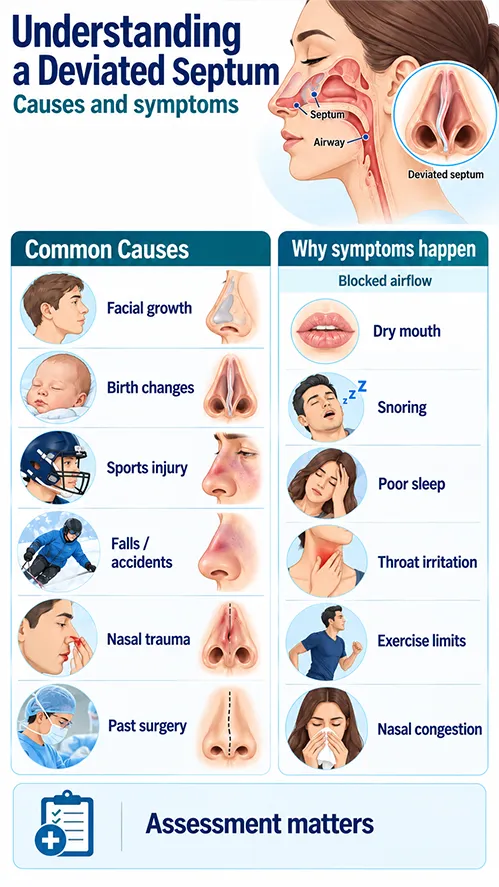
The nasal septum is the internal wall that separates the left and right sides of the nose. It is made from cartilage at the front and bone further back. When the septum is straight, air can usually move more evenly through both nasal passages.
A deviated septum occurs when this wall is bent, twisted or shifted to one side. Some people are born with a septal deviation. Others develop one during facial growth or after an injury.
Common causes include:
- Natural facial development
- Birth-related changes
- Sporting injuries
- Falls or accidents
- Previous nasal trauma
- Prior nasal surgery
A mild deviation may cause no symptoms. A more significant deviation can narrow the airway and make nasal breathing difficult.
✓ Why does a deviated septum cause symptoms?
A deviated septum can reduce airflow through one or both sides of the nose. When nasal breathing becomes restricted, patients may start breathing through the mouth, especially during sleep or exercise.
This can lead to:
- Dry mouth
- Snoring
- Restless sleep
- Throat irritation
- Reduced exercise tolerance
- Ongoing nasal congestion
Symptoms may worsen during colds, hay fever or sinus infections. When the nasal lining becomes swollen, even a moderate septal deviation can feel much more obstructive.
Why Symptoms Can Be Different at Different Ages
✓ Growth and facial development
Teenagers are still growing. Their nasal cartilage, facial bones and airway structures may continue to develop throughout adolescence. This means septal deviation in teenagers needs careful assessment before treatment decisions are made.
Adults usually have fully developed nasal structures. Their symptoms may be more long-standing and predictable. Some adults seek treatment after years of blocked breathing, snoring or sinus pressure.
At Melbourne ENT, assessment is tailored to the patient’s age, symptoms, anatomy and lifestyle.
✓ Lifestyle differences
Teenagers may notice symptoms during school sport, swimming, running or team activities. Parents may also notice mouth breathing, noisy sleep or daytime tiredness.
Adults may notice symptoms more during:
- Sleep
- Work
- Exercise
- Travel
- Periods of stress or fatigue
- Allergy seasons
These lifestyle differences can influence how symptoms are recognised and when patients seek help.
Common Deviated Septum Symptoms in Adults
✓ Persistent nasal blockage
Adults often describe a blocked nose that has been present for years. It may affect one nostril more than the other, or it may alternate between sides.
Some adults say they can never breathe properly through the nose. Others only notice it at night, during exercise or when they have a cold.
✓ Sleep-related symptoms
A deviated septum can contribute to poor sleep quality. Adults may experience:
- Snoring
- Dry mouth on waking
- Restless sleep
- Morning tiredness
- Daytime fatigue
- Difficulty using nasal breathing during sleep
Nasal obstruction is not the only cause of snoring or sleep apnoea, but it can be an important contributing factor. Dr Simon Braham, ENT and Head & Neck Surgeon, has a special interest in snoring and sleep-related breathing concerns.
✓ Sinus and nasal problems
Adults with a deviated septum may also experience sinus-related symptoms, especially when other conditions are present.
These may include:
- Facial pressure
- Headaches
- Postnasal drip
- Recurrent sinus infections
- Reduced sense of smell
- Thick nasal mucus
A detailed ENT assessment can help determine whether the symptoms are caused by septal deviation, sinus disease, allergies or a combination of factors.
✓ Impact on quality of life
Long-term nasal obstruction can affect daily life. Adults may feel tired, frustrated or limited during exercise. Some rely on nasal sprays for temporary relief.
At Melbourne ENT, patients are assessed carefully to identify the underlying cause of obstruction and whether treatment such as septoplasty, turbinoplasty, sinus surgery or Functional Rhinoplasty may be appropriate.
Common Symptoms in Teenagers
✓ Breathing difficulties during sport
Teenagers may first notice nasal obstruction during physical activity. They may feel they cannot get enough air through the nose when running, swimming or playing sport.
This can lead to:
- Mouth breathing during exercise
- Reduced stamina
- Noisy breathing
- Early fatigue
- Avoidance of physical activity
These symptoms should not always be dismissed as low fitness. A structural nasal issue may be contributing.
✓ Mouth breathing
Mouth breathing is a common sign of nasal obstruction in teenagers. It may happen during the day, at night, or both.
Parents may notice that their teenager:
- Sleeps with their mouth open
- Wakes with a dry mouth
- Breathes noisily
- Snores
- Seems tired despite sleeping
Mouth breathing can have several causes, including allergies, enlarged adenoids, turbinate swelling or a deviated septum.
✓ Sleep and learning
Poor nasal breathing can affect sleep quality. When teenagers do not sleep well, they may struggle with concentration, energy and mood.
A teenager with nasal obstruction may experience:
- Restless sleep
- Snoring
- Morning tiredness
- Daytime fatigue
- Difficulty concentrating at school
Because teenage sleep can be affected by many factors, a thorough ENT assessment is important.
✓ After a sporting injury
Nasal injuries are common during adolescence. Contact sport, falls and accidental knocks can all affect the septum.
Sometimes the outside of the nose looks normal, but the septum inside is bent. In other cases, both the internal airway and external structure are affected.
Persistent blockage after a nasal injury should be assessed, especially if symptoms do not improve after swelling settles.

Download Nasal Cautery Surgery Brochure
When Is It More Than Just a Deviated Septum?
✓ Other causes of nasal obstruction
A deviated septum is not always the only reason for blocked nasal breathing. Many patients have more than one contributing factor.
Other causes can include:
- Enlarged turbinates
- Allergic rhinitis
- Chronic sinusitis
- Nasal valve narrowing
- Nasal polyps
- Adenoid enlargement in younger patients
- Previous nasal trauma
This is why accurate diagnosis is essential before choosing treatment.
✓ Why accurate diagnosis matters
Different causes require different treatments. Allergy-related swelling may improve with medication. Enlarged turbinates may need medical treatment or turbinoplasty. Nasal valve collapse may require a structural approach such as Functional Rhinoplasty.
At Melbourne ENT, Dr Simon Braham, ENT and Head & Neck Surgeon, assesses the nose, airway and symptoms carefully. This may include nasal examination, nasal endoscopy and imaging when required.
Understanding Functional Rhinoplasty
✓ What is Functional Rhinoplasty?
Functional Rhinoplasty is nasal surgery designed to improve breathing by correcting structural problems that restrict airflow.
It may address:
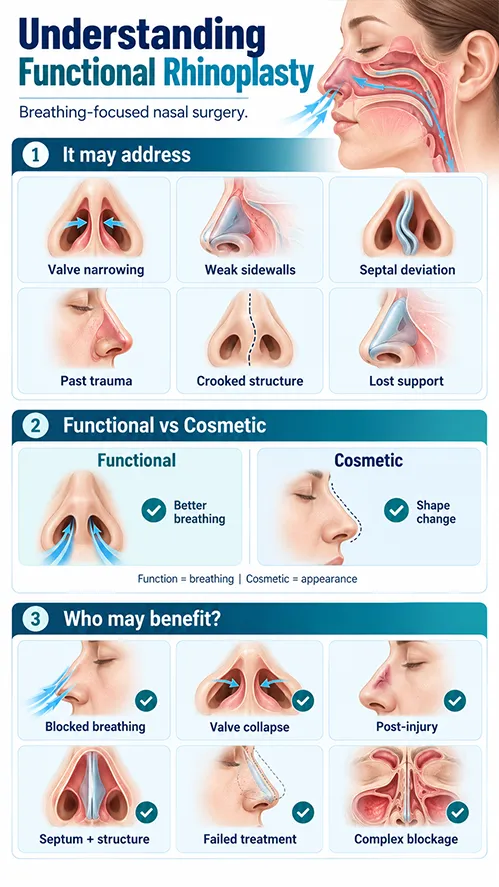
- Nasal valve narrowing
- Weak nasal sidewalls
- Septal deviation
- Previous trauma
- Crooked nasal structure
- Loss of nasal support
The main goal is to improve nasal function and airflow. Appearance may change in some cases, but the primary purpose is better breathing.
✓ How Functional Rhinoplasty differs from cosmetic rhinoplasty
Functional Rhinoplasty is performed to improve nasal breathing. Cosmetic rhinoplasty is performed mainly to change appearance.
Some patients have both functional and appearance-related concerns, especially after trauma. However, Functional Rhinoplasty is focused on restoring airflow, improving structure and supporting long-term nasal function.
✓ Who may benefit from Functional Rhinoplasty?
Functional Rhinoplasty may be suitable for adults or selected teenagers with persistent nasal obstruction caused by structural problems.
Patients who may benefit include those with:
- Long-term blocked nasal breathing
- Nasal valve collapse
- Breathing difficulty after nasal injury
- A deviated septum with external structural issues
- Failed improvement after medical treatment
- Obstruction not fully explained by septal deviation alone
At Melbourne ENT, treatment recommendations are personalised. Some patients may need septoplasty only. Others may benefit from turbinoplasty, sinus treatment, septorhinoplasty or Functional Rhinoplasty.
Treatment Options for Adults and Teenagers
✓ Non-surgical treatment
Not every deviated septum requires surgery. If inflammation, allergies or swelling are contributing to symptoms, non-surgical treatment may be recommended first.
Options may include:
- Saline rinses
- Nasal steroid sprays
- Antihistamines
- Allergy management
- Avoidance of triggers
- Monitoring symptoms over time
These treatments cannot straighten the septum, but they may reduce swelling and improve comfort.
✓ Surgical treatment
When symptoms are significant and structural obstruction is confirmed, surgery may be considered.
Surgical options may include:
- Septoplasty to straighten the nasal septum
- Turbinoplasty to reduce enlarged turbinates
- Sinus surgery when chronic sinus disease is present
- Functional Rhinoplasty to improve structural airflow
- Septorhinoplasty when both septal and nasal framework issues are involved
Treatment depends on the cause and severity of obstruction. Medical treatment may help where allergy or inflammation contributes, while structural problems may sometimes require procedures such as septoplasty or other functional nasal surgery. See our Deviated Septum and Septoplasty pages for detailed treatment information.
Medicare Coverage for Functional Nasal Surgery in Australia
Medicare rebates may apply to some medically indicated nasal procedures where relevant MBS criteria are met. Eligibility depends on the procedure and individual circumstances. See our ENT Medicare Item Numbers page for current information.
Why Specialist Assessment Matters
✓ Individual treatment planning
Every patient’s nose is different. Two people may both have a deviated septum, but their symptoms and treatment needs may be completely different.
Age also matters. Teenagers may still be growing, while adults usually have stable nasal anatomy. This can influence the timing and type of treatment recommended.
Dr Simon Braham, ENT and Head & Neck Surgeon, holds appointments at the Royal Victorian Eye and Ear Hospital and Masada Private Hospital. Together with Dr Stephen Kleid, ENT and Head & Neck Surgeon, he provides specialist ENT care through Melbourne ENT for patients across Melbourne and Victoria.

FAQs About How Deviated Septum Symptoms Vary Between Adults and Teenagers
Can a teenager have a severely deviated septum without realising it?
Yes. Many teenagers adapt to restricted nasal breathing without recognising it as abnormal. They may breathe through the mouth, avoid nasal breathing during sport or assume their symptoms are due to allergies.
Parents may be the first to notice noisy breathing, snoring, tiredness or mouth breathing during sleep.
Why does my nose feel blocked even though it looks straight from the outside?
The outside of the nose does not always show what is happening inside. A person can have a significant internal septal deviation, enlarged turbinates or nasal valve narrowing even if the nose appears straight.
A nasal examination can help identify the true cause of the blockage.
Can a deviated septum make one side of my nose feel blocked one day and the other side the next?
Yes. The nose naturally alternates airflow between sides through a process called the nasal cycle. If a deviated septum is present, this normal cycle can make blockage feel more noticeable or change sides.
Is it possible for a deviated septum to affect exercise even if everyday breathing feels normal?
Yes. During exercise, the body needs more airflow. Even mild narrowing inside the nose may become noticeable during sport or high-intensity activity.
This is common in teenagers and active adults.
Why do some people with a deviated septum never need treatment?
Not every deviated septum causes symptoms. Many people have mild septal deviation without breathing problems, sleep disturbance or sinus issues.
Treatment is usually considered when symptoms affect breathing, sleep, daily activities or quality of life.
Could ongoing mouth breathing change the way a child or teenager feels during the day?
Yes. Persistent mouth breathing may contribute to dry mouth, poor sleep, fatigue and difficulty concentrating.
Because mouth breathing can have several causes, a full ENT assessment is important before deciding on treatment.
Does Functional Rhinoplasty only help people who have had a broken nose?
No. Previous nasal trauma is one reason Functional Rhinoplasty may be considered, but it is not the only one.
Some people have naturally narrow nasal passages, weak nasal valves or structural issues that restrict airflow without any history of injury.
Medical References
- Assessment of symptomatically deviated nasal septum by objective and subjective methods https://pmc.ncbi.nlm.nih.gov/articles/PMC11904164/
- Nasal septal deviation: A comprehensive narrative review https://pmc.ncbi.nlm.nih.gov/articles/PMC9736816/
- Deviated septum – Symptoms & causes https://www.mayoclinic.org/diseases-conditions/deviated-septum/symptoms-causes/syc-20351710
- Deviated septum – Diagnosis & treatment https://www.mayoclinic.org/diseases-conditions/deviated-septum/diagnosis-treatment/drc-20351716
- Deviated septum – Septal deviation [PubMed abstract] https://pubmed.ncbi.nlm.nih.gov/41126710/
- Deviated nasal septum a risk factor for the occurrence of chronic rhinosinusitis https://pmc.ncbi.nlm.nih.gov/articles/PMC9650940/
- Does degree of nasal septal deviation measured with CT correlate with symptoms and quality of life? https://pmc.ncbi.nlm.nih.gov/articles/PMC9701915/
Supporting Better Breathing at Every Age
A deviated septum can affect adults and teenagers differently. Adults may experience long-term nasal blockage, poor sleep, snoring, sinus pressure or reduced exercise tolerance. Teenagers may present with mouth breathing, noisy sleep, tiredness at school or difficulty breathing during sport.
The right treatment depends on the cause of obstruction. Some patients improve with medical management. Others may benefit from septoplasty, turbinoplasty, sinus treatment, Functional Rhinoplasty or septorhinoplasty.
For patients in Melbourne, Victoria and surrounding areas, Melbourne ENT offers specialist assessment for deviated septum symptoms, nasal obstruction and functional breathing concerns.
If you or your child is experiencing ongoing nasal blockage, breathing difficulty, snoring or symptoms after a nasal injury, book a consultation with Dr Simon Braham or Dr Stephen Kleid at Melbourne ENT in St Kilda East.
Visit the website to learn more about assessment and treatment options or to arrange an appointment.
Further Reading
- Read Melbourne ENT’s Procedure Page on Latera Nasal Implant Melbourne
- Read Melbourne ENT’s Procedure Page on Revision Rhinoplasty Melbourne
- Read Melbourne ENT’s Resource on Getting a Nasendoscopy Before Your Rhinoplasty and Why You Need It
- Read Melbourne ENT’s Resource on Sinus CT Scan Before Nose Surgery
- Read Melbourne ENT’s Blog about Should You Have a Teen Nose Job? – A Nose Surgery Guide for Teenagers & Parents
- Read Melbourne ENT’s Blog about How CT Scans and Nasal Endoscopy Assess Nasal Airway Problems
- Read Melbourne ENT’s Blog about Common Nose Problems That Nose Surgery May Help