
Can poor night time breathing affect behaviour and learning?
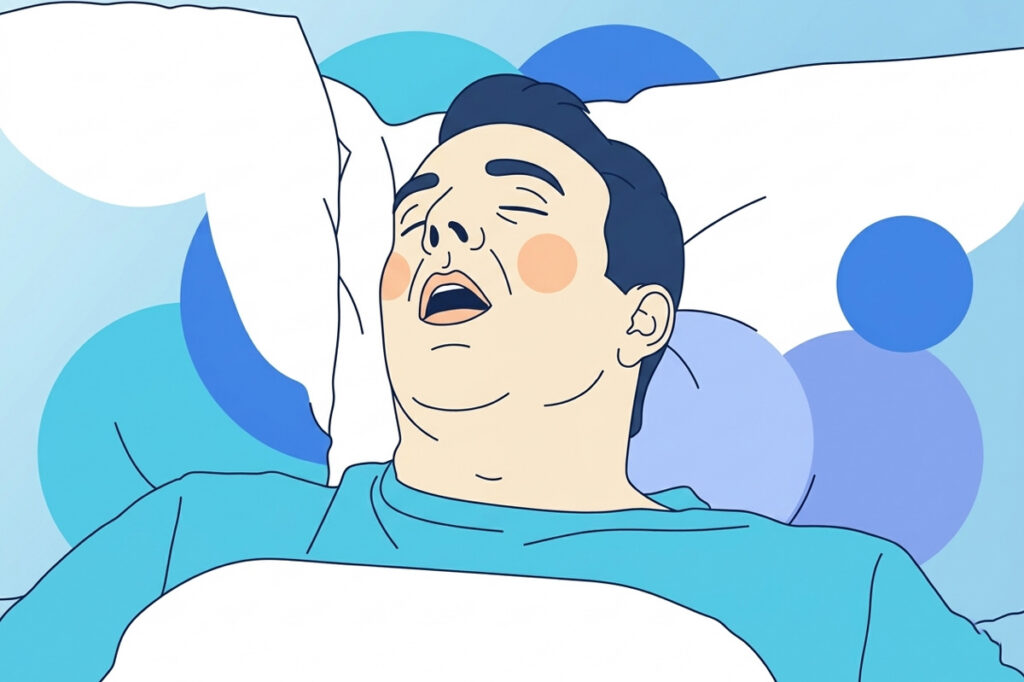
Yes. Poor night time breathing, including snoring and sleep disordered breathing, can disrupt deep sleep. Over time, this may affect concentration, behaviour, emotional regulation and learning in both children and adults.
It is confronting to watch a child who has always been bright, curious and engaged suddenly struggle at school, become more emotional, or seem constantly “on the go”. Adults can experience a similar puzzle in a different way, noticing creeping brain fog, irritability or exhaustion even when they think they are getting enough sleep.
For some families in Melbourne and across Victoria, an important part of this story is poor night time breathing. Snoring and sleep disordered breathing, including obstructive sleep apnoea, can quietly disrupt sleep for months or years. When breathing is affected at night, the brain may not get the deep, restorative rest it needs. Over time, this can influence behaviour, learning, mood and day to day functioning.
At Melbourne ENT in St Kilda East, Victoria, Dr Simon Braham, ENT and Head & Neck Surgeon and Facial Plastic Surgeon, sees many children and adults with snoring and sleep related breathing problems. His focus is on understanding the airway, assessing how it may be affecting sleep, and discussing evidence based treatment options in a calm, practical way.
This article explains how poor night time breathing can be linked with behaviour and learning issues, what signs to watch for, and how an ENT specialist can help. It is general information only and does not replace individual medical advice. You should always discuss your own situation with your GP or another suitably qualified health professional.
What We Mean by Poor Night Time Breathing
Poor night time breathing is more than the occasional snore when someone has a cold. Doctors use the term sleep disordered breathing to describe a spectrum that stretches from simple snoring through to obstructive sleep apnoea.
Primary or simple snoring involves noisy breathing during sleep without obvious pauses. Sleep disordered breathing covers broader problems where airflow is partly blocked and sleep becomes fragmented. At the more severe end is obstructive sleep apnoea (OSA), in which the airway repeatedly narrows or collapses, and breathing briefly reduces or stops. These episodes can happen many times a night, often without the person realising.
In children, this is often called sleep disturbed breathing. Enlarged tonsils and adenoids are common contributors in this age group. In adults, other factors – such as excess tissue around the neck, structural narrowing in the nose, or reduced muscle tone during sleep – can also play a role.
There are many reasons why the airway may not stay open as it should during sleep. Some people have a naturally narrow nasal passage or a deviated septum. Others live with persistent nasal congestion from allergies. Children may have large tonsils and adenoids that shrink only slowly with age. In older teens and adults, weight, muscle tone, jaw position and certain medical conditions can also contribute.
At Melbourne ENT, part of the assessment is to work out which of these anatomical and medical factors are relevant for each patient. Understanding the cause helps guide whether medical management, lifestyle measures, surgery, or a combination of approaches is likely to be helpful.
How Poor Night Time Breathing Affects the Brain and Behaviour
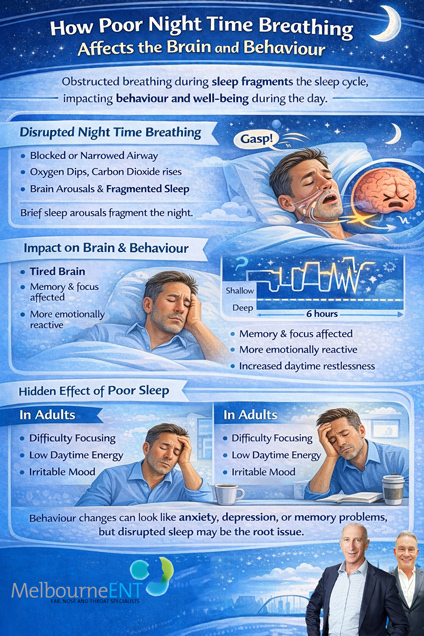
When the airway is repeatedly narrowed or blocked during sleep, breathing becomes more effortful. The body has to work harder to pull air into the lungs. Oxygen levels can dip slightly and carbon dioxide may rise. Crucially, the brain is nudged out of deeper stages of sleep again and again as it responds to each breathing event.
These brief arousals are often not remembered the next morning, but they fragment the night. Time spent in deep, restorative sleep and dreaming sleep can be reduced. Over weeks and months, this can affect concentration, memory, emotional balance and daytime energy.
Children may not look obviously tired. Instead, many become more active and restless, almost as though they are “fighting the fatigue”. Teachers might see a child who talks constantly, struggles to sit still, rushes through work, or seems to forget instructions moments after hearing them. School reports can shift from “happy and settled” to “easily distracted” or “not achieving to potential”. It is understandable that parents and teachers may wonder about ADHD or other learning difficulties, and sometimes these are part of the picture. However, the quality of sleep and the ease of breathing at night also deserve close attention.
Adults often present differently. They may describe a dull headache on waking, difficulty focusing on tasks, needing more coffee than they used to, or feeling uncharacteristically irritable. Partners might complain about loud snoring or notice long pauses in breathing followed by a gasp. In busy lives, it is easy to blame everything on stress or getting older, but sleep disordered breathing is one possible contributor that is worth exploring.
Signs of Night Time Breathing Problems in Children
Children rarely come out and say, “My breathing feels blocked when I lie down” or “I think my sleep is fragmented”. Their bodies and behaviours do the talking instead.
At night, parents might notice loud, regular snoring that continues even when the child is well. The child may toss and turn, sleep in unusual positions with the head tipped back or the neck extended, or breathe mainly through the mouth. Some children pause in their breathing for a few seconds and then gasp or snort as they resume. Night sweats, heavy sweating around the head and neck, and bed wetting in an older child can all be subtle clues. Mornings may start with a dry mouth, sore throat or complaint of a headache.
During the day, the picture can be equally striking. A child who used to manage school comfortably may become more forgetful, lose instructions, or take much longer to complete tasks. Some seem endlessly fidgety and on the move, while others zone out and appear dreamy. Emotional control can fray. Meltdowns over small issues, quick tempers, or a lower tolerance for frustration are common stories parents share during consultations.
It is not always easy to know when to worry. Occasional snoring with a cold is common and usually not concerning. However, regular loud snoring, especially when combined with changes in behaviour or learning, deserves attention. If you have noticed several of these patterns for months rather than weeks, it is reasonable to talk with your GP. Many families in Melbourne and regional Victoria find it helpful to jot down observations from home and school before that appointment.
Night Time Breathing Problems in Adults
Adults tend to become aware of sleep disordered breathing when someone else mentions it. Partners often describe loud snoring that can be heard through walls, or episodes where breathing seems to stop for a few seconds before restarting with a gasp. Some adults wake repeatedly through the night, unsure why, and find it hard to settle back to sleep.
The daytime consequences can be subtle at first. You might notice that concentrating on reading, spreadsheets or detailed tasks feels harder than it used to. Long meetings or drives become a battle to stay alert. Small issues at work or at home provoke bigger emotional reactions. Many people describe feeling flat or less resilient, but struggle to pinpoint a single cause.
Because mood, stress and physical health all influence each other, it makes sense to approach this thoughtfully. Mentioning snoring, unrefreshing sleep or morning headaches to your GP allows them to consider whether a sleep study, ENT review or other assessment is sensible. Poor sleep is not always due to breathing problems, but when snoring or observed pauses are part of the story, they should not be ignored.
When To See a GP or ENT Specialist in Melbourne
A good starting point is to ask yourself a few simple questions. Is snoring loud and regular rather than occasional? Have you, your partner or your child had obvious pauses in breathing or gasping episodes during sleep? Have there been noticeable changes in behaviour, school performance, mood or concentration that seem out of character or persistent?
If the answer to several of these is yes, booking an appointment with your GP is a sensible next step. Your GP can take a detailed history, examine the nose, throat and chest, and consider other causes of tiredness such as iron deficiency, thyroid problems or mental health conditions. They may recommend trialling treatment for allergies, adjusting medications that affect sleep, or organising a sleep study.
If there are signs that the anatomy of the nose, tonsils, adenoids or throat might be playing a major role, your GP may decide to refer you to an ENT surgeon such as Dr Simon Braham at Melbourne ENT. A referral is necessary to see an ENT specialist in a private clinic. Patients are commonly seen from St Kilda East and the surrounding suburbs, but also from across metropolitan Melbourne and regional Victoria.
Assessment at Melbourne ENT: What To Expect
Many people feel anxious before seeing a specialist because they are not sure what will happen. At Melbourne ENT, consultations with Dr Simon Braham are designed to be thorough but approachable. The first part of the visit usually involves a detailed discussion about your symptoms. For children, this includes questions about night time breathing, snoring, restless sleep and any observed pauses, as well as how things are going at school and at home. For adults, work performance, driving safety and mood are important topics. Previous treatments, medical conditions and medications are also reviewed.
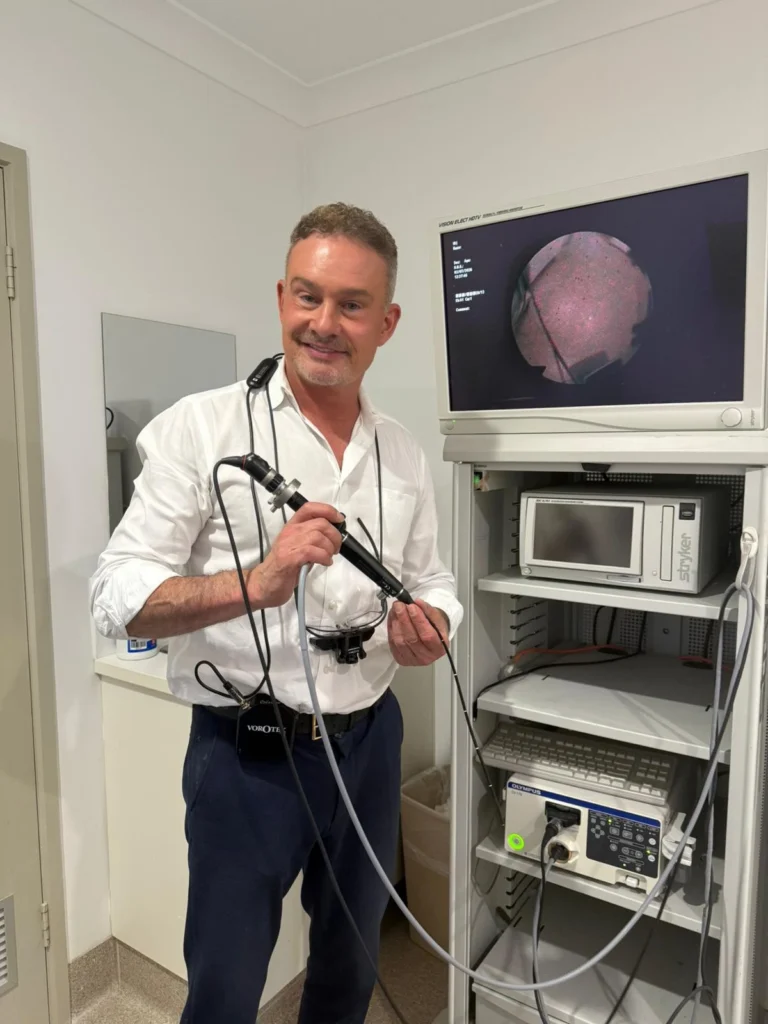
A careful examination of the ears, nose and throat follows. The nose is checked for congestion, narrowing or deviation of the septum. The mouth and throat are examined to assess tonsil size, soft palate shape and tongue position. In some cases, particularly in older children and adults, a small flexible camera may be passed through the nose to look more closely at the back of the nose and throat. This is done gently and usually takes only a few minutes, but it can provide very valuable information.
Depending on what is found, Dr Braham may suggest further investigations. These can include sleep studies to measure breathing and oxygen levels overnight, or more detailed assessments of nasal and sinus anatomy. The team at Melbourne ENT has strong links with major hospitals including the Royal Victorian Eye and Ear Hospital, Royal Melbourne Hospital and Masada Private Hospital, and plans investigations based on current, evidence-based guidelines.
Treatment Options for Children
Treatment is always tailored to the individual child. Not every child who snores will need an operation. For some, the main focus is on improving nasal airflow and managing allergies. Nasal sprays, antihistamines or other medications may be used where appropriate, alongside practical steps such as reducing exposure to smoke and creating a calm, predictable bedtime routine. Mild cases may be monitored over time, with regular review of sleep and school progress.
Surgery is considered when there is clear evidence that enlarged tonsils or adenoids, or significant structural blockage in the nose, are contributing to disturbed breathing and affecting quality of life. Common procedures include tonsillectomy, adenoidectomy, or both together, to remove obstructing tissue. In selected children with nasal blockage due to structural issues, nasal surgery may be discussed.
As an ENT and Head & Neck Surgeon, Dr Simon Braham takes time to explain the rationale for any recommended procedure, along with the potential benefits, risks and expected recovery. All surgery carries risks, and results vary between individuals. Parents are supported to ask questions and to take the time they need to decide what feels right for their child.
Many families describe improvements in snoring, sleep quality and daytime behaviour after appropriate treatment, but it is important to keep expectations realistic. If learning or emotional difficulties have been present for a long time, children may still benefit from extra support at school or from allied health professionals, even once their sleep has improved.
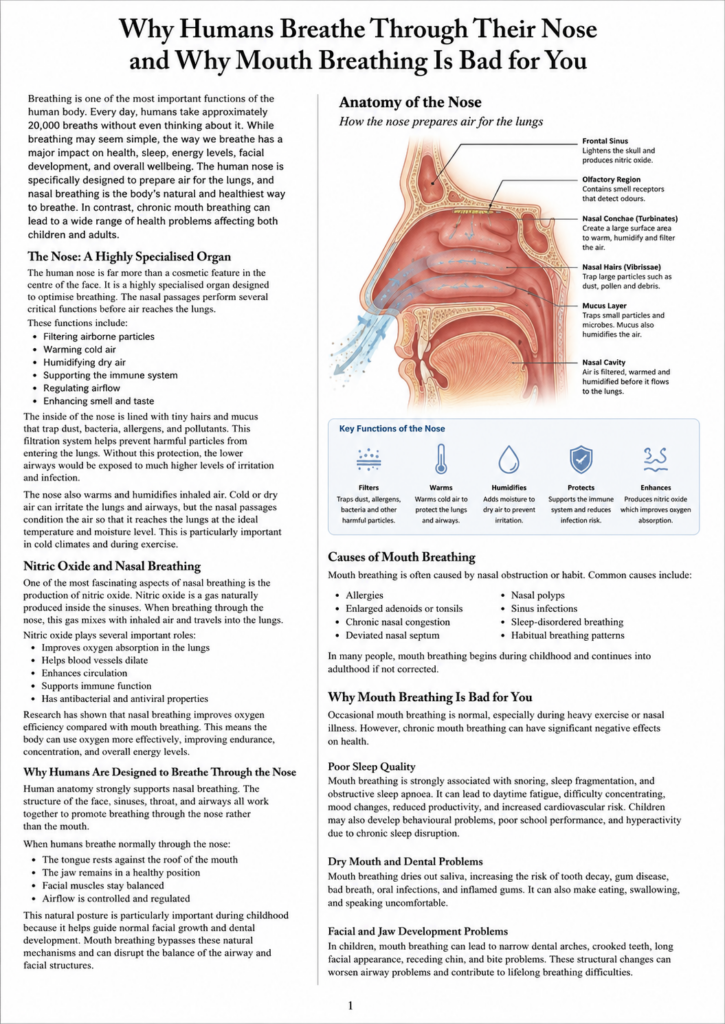
Download The Benefits of Breathing Through Your Nose Brochure
Treatment Options for Adults

For adults, the first step is often to address lifestyle and medical factors that may be making sleep disordered breathing worse. Achieving and maintaining a healthy weight where appropriate, reducing alcohol in the evening, and reviewing sedative medications with a GP can all make a meaningful difference for some people. Positional strategies, such as avoiding sleeping flat on the back if snoring is much worse in that position, may also help in select cases.
When obstructive sleep apnoea is more significant, therapies such as Continuous Positive Airway Pressure (CPAP) can be very effective. CPAP uses gentle air pressure delivered through a mask to keep the airway open during sleep. In some patients with mild to moderate sleep apnoea, oral appliances made by specially trained dental practitioners can reposition the jaw and help increase airway space. These options are usually coordinated by sleep physicians and dentists, with input from the ENT surgeon where anatomical issues are involved.
In situations where structural narrowing in the nose or throat plays a major role, surgery may be considered. Procedures such as septoplasty to straighten a deviated septum, turbinate reduction to ease nasal blockage, or selected soft tissue procedures aimed at snoring can be helpful in carefully chosen patients. As a Facial Plastic Surgeon as well as an ENT specialist, Dr Simon Braham brings detailed knowledge of nasal and facial anatomy to this planning. Once again, any surgical option is balanced carefully against non-surgical alternatives, and all potential risks and benefits are discussed openly. For adults whose tongue base narrows the airway during sleep, coblation tongue channelling may be one option.
Behaviour, Learning and Emotional Support Alongside Medical Care
Breathing and sleep are important, but they are only part of the bigger picture. Behaviour, learning and emotional well-being are influenced by family life, school or work environment, physical health, genetics and personality. For children, the best outcomes often come when medical care and educational support work hand in hand.
After addressing night time breathing problems, many children still benefit from tailored help in the classroom. This might involve seating changes, extra prompts, modified workloads or small group teaching. Psychologists, speech pathologists and occupational therapists may play valuable roles, particularly if specific learning disorders, language difficulties or sensory issues are present.
Adults may also need support beyond medical treatment. Fatigue, mood changes and relationship strain can take time to settle. Talking therapies, workplace adjustments and lifestyle changes can all contribute to recovery. At Melbourne ENT, the focus is on collaborating with GPs and other health professionals so that each person’s care is coordinated rather than fragmented.
Why Choose Melbourne ENT and Dr Simon Braham
Choosing where to seek specialist care is an important decision. Melbourne ENT, based in St Kilda East, is dedicated to ear, nose, throat and head and neck surgery with a strong emphasis on functional, medically focused care.
Dr Simon Braham is an ENT and Head & Neck Surgeon and Facial Plastic Surgeon with extensive experience in paediatric ENT, nasal and sinus surgery, and procedures for snoring and sleep apnoea. He works in both the private and public sectors in Melbourne, including roles at major hospitals such as the Royal Victorian Eye and Ear Hospital.
Patients at Melbourne ENT can expect a thorough assessment, clear explanations and an individualised plan. Non-surgical and medical options are considered whenever appropriate, and surgery is only recommended when it is likely to offer meaningful benefit. Throughout, the aim is to improve breathing, support better sleep, and help children and adults function as well as possible at school, work and home.

FAQs About Behaviour and Learning Problems Linked to Poor Night Time Breathing
Could my child’s behaviour look like ADHD when the real issue is poor night time breathing?
Yes. Some children who sleep poorly because of snoring or sleep disordered breathing show behaviour that looks very similar to ADHD. They may be restless, impulsive, easily distracted or struggle to sit still, especially at school. This does not mean that every child with these behaviours has a breathing problem, or that ADHD is never present. Sleep and airway issues are simply one important part of the picture. If you are concerned, it is sensible to discuss both sleep and behaviour with your GP, who may then refer to an ENT specialist such as Dr Simon Braham at Melbourne ENT, as well as other clinicians if needed.
If my child snores but seems happy and energetic, could there still be an impact on learning?
It is possible. Some children with poor night time breathing appear bright and energetic during the day, but still have subtle difficulties with attention, planning or memory. Over time this can affect how easily they keep up with reading, maths or more complex school work. Teachers might notice that the child is capable but inconsistent. A careful assessment that includes questions about snoring, sleep quality and school progress can help your GP and, if needed, an ENT surgeon work out whether night time breathing is part of the problem.
Can behaviour or learning problems continue even after treatment for snoring or sleep apnoea?
Yes. Many families report positive changes in sleep, mood and attention after appropriate treatment, but results vary from person to person. Some children and adults continue to need support for learning or mental health concerns, even when their breathing at night has improved. Behaviour and school performance are influenced by many factors, including sleep, family life, classroom environment and individual learning styles. At Melbourne ENT, treatment is focused on giving the airway and sleep the best chance to improve, while working in partnership with GPs and other health professionals when additional support is needed.
Is it helpful to record my child sleeping before I see an ENT specialist?
Short videos taken on a phone can be very helpful. A brief recording of your child snoring, mouth breathing or pausing in their breathing can give your GP and the ENT specialist a clearer idea of what is happening at night. It is usually best to capture a typical night rather than a one off when they are unwell. You can bring these recordings, along with school reports or behaviour notes, to your appointment with Dr Simon Braham at Melbourne ENT in St Kilda East.
Could screen time or late bedtimes be the only reason for my child’s behaviour, instead of a breathing issue?
Screen time, irregular sleep schedules and caffeine can definitely affect behaviour and learning, and are worth addressing. However, they do not rule out the possibility of a breathing problem during sleep. A child can have both poor sleep habits and underlying airway obstruction. Your GP can help you improve bedtime routines and, at the same time, decide whether an ENT assessment is appropriate. At Melbourne ENT, the focus is on understanding the whole picture rather than assuming there is only one cause.
If I snore loudly but feel fine during the day, should I still be worried about my thinking or mood long term?
Some adults who snore loudly report very few daytime symptoms, while others notice fatigue, poorer concentration or changes in mood. Loud or long standing snoring can still be a marker of increased strain on the airway during sleep. Over time this may affect cardiovascular health and, for some people, cognitive function. It is reasonable to mention snoring to your GP even if you feel well. Your GP can decide whether you need further tests or a referral to an ENT specialist such as Dr Simon Braham at Melbourne ENT to check for structural or nasal issues that could be contributing.
If my child grows out of snoring, will any learning or behaviour issues automatically resolve?
Some children do appear to snore less as they grow, especially if their tonsils and adenoids were relatively large in early childhood. In some cases, behaviour and school performance improve at the same time, but this is not guaranteed. If difficulties with learning, attention or mood have been present for a long time, they may need separate support, even if breathing at night improves. Early assessment with your GP and, where appropriate, with an ENT specialist at Melbourne ENT gives you the best chance to identify and address problems while your child is still developing. If you are unsure, speak with your GP and visit the website for more information about referral pathways.
Medical References:
- Management of primary snoring in adults: A scoping review examining interventions, outcomes and instruments used to assess clinical effects – Sleep Medicine Reviews
https://pubmed.ncbi.nlm.nih.gov/38889620/ - Is There Any Relationship Between Primary Snoring and Carotid Intima-Media Thickness – (Journal via PMC)
https://pmc.ncbi.nlm.nih.gov/articles/PMC12787156/ - Soft Palate and Pharyngeal Surgery for the Treatment of Primary Snoring – (Journal via PMC)
https://pmc.ncbi.nlm.nih.gov/articles/PMC12295699/ - Atomoxetine plus oxybutynin for symptomatic snoring and airflow limitation – Journal of Clinical Sleep Medicine
https://pubmed.ncbi.nlm.nih.gov/40471069/ - Annual review of advances in sleep-disordered breathing 2025 – Zhonghua Jie He He Hu Xi Za Zhi
https://pubmed.ncbi.nlm.nih.gov/41629100/ - Effectiveness of the Er:YAG Laser in Snoring Treatment Based on Systematic Review and Meta-Analysis Results – Journal of Clinical Medicine
https://pmc.ncbi.nlm.nih.gov/articles/PMC12194654/ - Clinical Effectiveness of Nasal Dilators in Sleep-Disordered Breathing – (Journal via PMC)
https://pmc.ncbi.nlm.nih.gov/articles/PMC12761343/
Taking The Next Step
If you are worried that snoring or poor night time breathing may be affecting behaviour, learning or mood in yourself or your child, you do not need to work it out alone. A simple conversation with your GP is often the best place to start. Take note of what you have seen at night and during the day, and consider bringing school reports, workplace feedback or short sleep recordings to your appointment.
If your GP believes an ENT assessment would be helpful, they can provide a referral to Dr Simon Braham at Melbourne ENT in St Kilda East, Victoria. There, you can discuss your concerns in detail, have your or your child’s airway carefully assessed, and explore suitable treatment options.
To learn more about services, locations and the team at Melbourne ENT, speak with your GP and visit Melbourne ENT.
Further Reading
- Read more about Breathing Problems for Adults Melbourne
- Read more about Tonsil Stones Melbourne – Also Known As Tonsilloliths
- Read more about Sleep Disturbance Melbourne
- Read Melbourne ENT’s Blog on Using the STOP-BANG Questionnaire to assess Sleep Apnoea & OSA
- Read Melbourne ENT’s Blog on Narrow Nostril Surgery for Nasal Airway & Breathing Issues
- Read Melbourne ENT’s Blog on Difficult Breathing? – Understanding Nasal Congestion and Its Causes