


Many people in Melbourne and across Victoria live with a combination of hay fever symptoms and repeated sinus flares. What can start as a blocked or itchy nose often progresses to facial pressure, headaches, disturbed sleep and a general sense of feeling unwell. For some, these issues are seasonal and linked to pollen, while for others symptoms seem to appear all year round and slowly erode quality of life at work, at school and at home.
Melbourne is particularly well known for its variable weather and strong pollen seasons. On some days the air can be full of grass and tree pollen, while at other times smoke, pollution and cold air irritate an already sensitive nose. When the lining of the nose is swollen and inflamed, the narrow openings of the sinuses can easily become blocked. This is one of the reasons that allergies and sinus flares are so closely connected.
Melbourne ENT, based in St Kilda East, is a specialist clinic dedicated to ear, nose and throat care for adults and children. The team regularly sees patients who feel as if they constantly have a cold, who have had repeated courses of antibiotics or who are simply tired of living with a blocked or painful nose. Dr Simon Braham, ENT and Head & Neck Surgeon at Melbourne ENT, provides comprehensive assessment and management of nasal and sinus concerns, including problems that are driven or worsened by allergies.
This article explains how allergies trigger sinus flares, outlines practical steps you can take to reduce symptoms and describes when it may be helpful to see an ENT specialist such as Dr Simon Braham at Melbourne ENT. It is designed as general information only and cannot replace a consultation with your own doctor, but it can help you understand the options available and what to expect from specialist care in Melbourne.
How Allergies Trigger Sinus Flares
✓ The Nose, Sinuses And Breathing
The nose and sinuses form part of a single connected system. Air enters through the nostrils, passes over the turbinates inside the nose where it is warmed and filtered, and then flows towards the back of the nose and down into the throat and lungs. Around the nose and eyes are air filled spaces called the sinuses. These spaces are lined with a thin mucous membrane that produces mucus to trap dust, pollen, germs and other particles. Tiny hairs known as cilia move the mucus towards small drainage openings that lead back into the nose.
When the nose and sinuses are healthy, this system works quietly in the background. Breathing feels easy, the sense of smell is clear and there is very little awareness of mucus. Good sinus function supports comfortable sleep, exercise and day to day activity, and most people rarely think about how complex the system is until something goes wrong.
✓ What Happens In An Allergy Flare
Allergic rhinitis, often called hay fever, occurs when the immune system reacts strongly to otherwise harmless substances such as pollen, dust mites, animal dander or mould spores. In someone with allergies, exposure to these triggers causes the immune system to release chemical mediators like histamine. This leads to swelling of the nasal lining, increased mucus production and irritation of nerve endings that cause itch and sneezing.
As the lining swells, the already narrow drainage openings from the sinuses into the nose can become partially or completely blocked. Mucus then becomes trapped inside the sinuses. Pressure builds up and the area can feel painful or heavy. Some people experience aching in the cheeks or forehead, pain between or behind the eyes, and headaches that are worse when bending forward. If bacteria grow in this trapped mucus, a sinus infection can develop and symptoms become more intense.
✓ Why Melbourne And Victoria Can Be Challenging
For many people, living in Melbourne or elsewhere in Victoria adds an extra layer of difficulty when it comes to allergy control. Spring and early summer can bring high grass and tree pollen, especially in suburbs with large parks, gardens and open spaces. On windy days, pollen can travel significant distances and affect people well away from its source. Sudden changes in weather, strong temperature shifts and thunderstorms can also provoke symptoms in individuals with sensitive airways.
City living adds other irritants such as traffic pollution, industrial emissions and smoke from wood heaters. These factors do not cause allergies on their own, but they can irritate the nasal lining, making it more reactive and more likely to swell when allergens are present. Across Victoria, people who spend a lot of time outdoors for work or recreation may notice that symptoms peak after these exposures, particularly during peak pollen seasons.
Recognising Allergy-Related Sinus Symptoms
✓ Common Nasal Allergy Symptoms
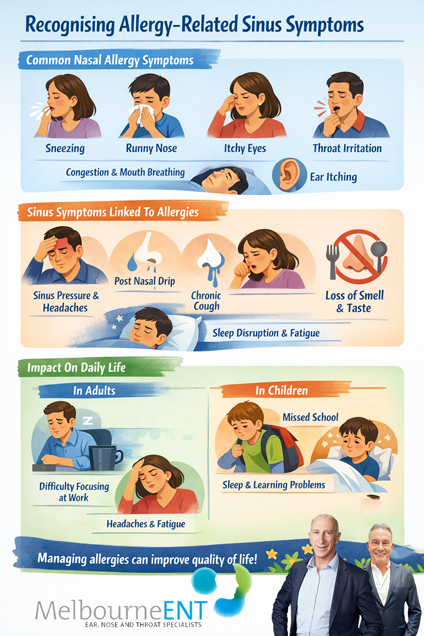
Allergy related nasal symptoms tend to follow a familiar pattern. Many people experience frequent sneezing, an itchy nose and a clear watery runny nose shortly after exposure to their triggers. Others notice an itchy or tickling sensation in the back of the throat, repeated throat clearing, or irritation of the ears. The nose may become congested to the point where breathing through the mouth becomes a habit, especially at night.
In some individuals the eyes are also affected. Itching, redness, watering and a gritty sensation in the eyes can occur together with nasal symptoms. These features are often more noticeable outdoors or in specific environments, which can provide a clue about the triggers involved.
✓ Sinus Symptoms Linked To Allergies
When allergies start to involve the sinuses, the picture can change. Instead of just sneezing and itch, there may be a sense of pressure or fullness in the cheeks, forehead or around the eyes. Some people describe a dull ache or heaviness that worsens when leaning forward, bending or lying flat. Headaches can become frequent, and there may be thick mucus coming from the nose or dripping down the back of the throat, known as post nasal drip.
Post nasal drip often leads to frequent throat clearing, a persistent dry cough or a sore throat, especially first thing in the morning. Sleep may be disrupted by difficulty breathing through the nose, and snoring or mouth breathing can become more prominent. Over time, the sense of smell may be reduced and food may taste less enjoyable.
✓ Impact On Daily Life For Adults And Children
The impact of ongoing allergy and sinus symptoms should not be underestimated. Adults may find it difficult to focus at work when they are constantly congested or in pain, and tiredness from poor sleep can make even simple tasks feel like a burden. Headaches and facial pressure can limit social activities and exercise, and some people feel self conscious about constantly sniffing or blowing their nose.
Children with allergy related sinus problems may be irritable or seem persistently unwell. They may miss school due to repeated infections, struggle with concentration in class or become reluctant to participate in sport. Parents often report that their child snores, sleeps with their mouth open or wakes unrefreshed despite a reasonable bedtime. For families, these issues can be a source of worry and frustration, particularly when symptoms keep returning despite multiple visits to the doctor.
Identifying Your Allergy Triggers In Melbourne
✓ Pollen And Seasonal Triggers
One of the first steps in managing allergy related sinus flares is understanding when and where symptoms occur. In Melbourne and throughout Victoria, many individuals notice that symptoms worsen in particular seasons, most often during spring and early summer when grass and tree pollen levels are high. Spending time in parks, gardens, on sports fields or near freshly mown grass can set off sneezing, itching and congestion within minutes.
Keeping a simple record of symptoms can be very helpful. Noting the time of day, the location and what you were doing when symptoms appeared can reveal patterns. If symptoms flare predominantly on fine, windy days in certain months, pollen is likely to be part of the problem. If they persist throughout the year, other triggers may also be playing a role.
✓ Year-Round Triggers At Home And Work
For many people, exposure at home or at work contributes to ongoing symptoms. Dust mites live in bedding, carpets and soft furnishings and thrive in warm, humid conditions. They are a very common trigger for nasal allergies in both children and adults. Pets can also be a source of symptoms, particularly cats and dogs. Allergic reactions are usually due to proteins in dander, saliva or urine rather than fur itself, so even short haired animals can cause problems.
Indoor mould is another important trigger. Bathrooms, laundries and kitchens that are poorly ventilated can develop visible mould or hidden growth in damp areas. Some workplaces expose individuals to dust, fumes, chemicals or strong odours, all of which can irritate the nasal lining. When allergy and irritant exposures combine, the nasal lining can remain swollen for long periods, increasing the risk of sinus blockage and infection.
✓ When To Seek Help Identifying Triggers
If symptoms are frequent, severe or difficult to control, it is worthwhile seeking medical advice. A general practitioner can help identify likely triggers based on the pattern of symptoms and may recommend treatments, environmental strategies or referral for further assessment. In some cases, formal allergy testing may be considered to clarify which allergens are significant.
At Melbourne ENT, Dr Simon Braham frequently sees patients referred because of recurrent allergy and sinus problems. Part of the initial assessment involves understanding the environments the patient lives and works in, the timing of symptoms and any previous response to treatment. Where appropriate, Melbourne ENT may work in collaboration with GPs and allergy services to ensure that significant triggers are recognised and addressed as part of an overall management plan.
Everyday Strategies To Reduce Exposure And Sinus Flares
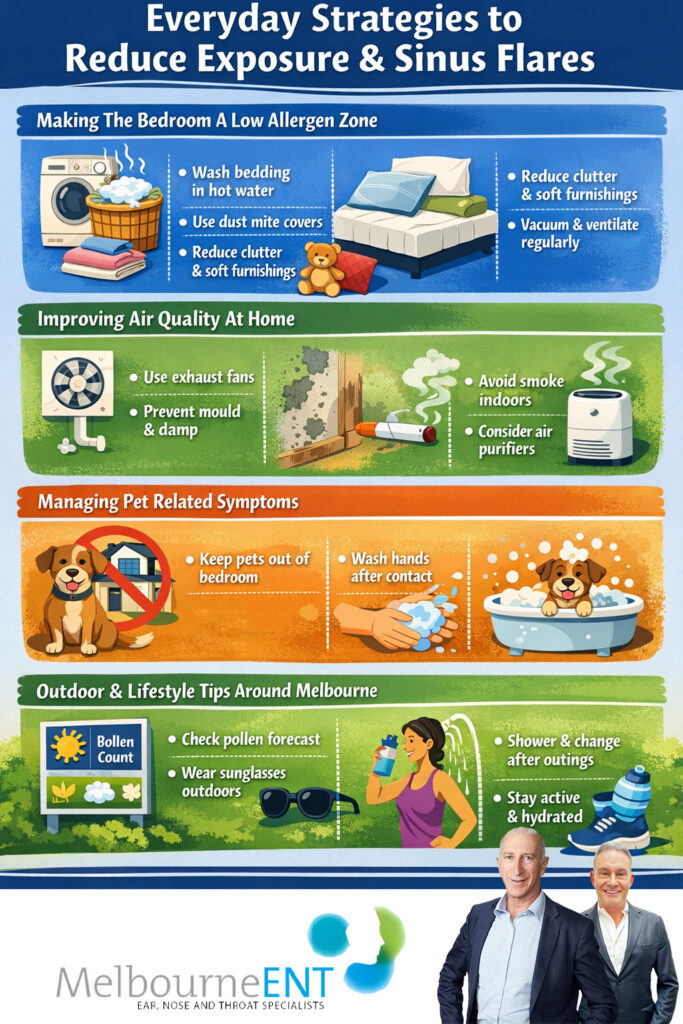
✓ Making The Bedroom A Low Allergen Zone
Because many hours are spent in the bedroom, creating a low allergen environment in this space can make a noticeable difference. Regularly washing sheets and pillowcases in hot water can reduce dust mite levels. For some individuals, using dust mite covers on mattresses and pillows is helpful, particularly when advised by a doctor or allergy specialist. Reducing the number of soft toys, cushions and heavy curtains can decrease surfaces where dust collects.
Maintaining a clean and uncluttered bedroom is a simple but effective strategy. Regular vacuuming with an appropriate filter and wiping down surfaces can help minimise allergen build up. Good ventilation is also useful, provided outdoor pollen levels are not extremely high at the time. These measures rarely remove symptoms entirely, but they can lessen the volume of allergen exposure overnight and support other treatments.
✓ Improving Air Quality At Home
Throughout the home, attention to air quality and moisture can reduce triggers. Bathrooms and kitchens benefit from exhaust fans that remove steam and reduce condensation, limiting the growth of mould. Leaks and damp areas should be repaired promptly. In some homes, dehumidifiers are recommended in persistently damp rooms, although this is best discussed with a health professional who understands your specific circumstances.
Avoiding indoor smoking is important for everyone in the household. Tobacco smoke irritates the lining of the nose and sinuses and can worsen both allergies and infections. Where possible, limiting exposure to smoke from wood fires or outdoor burning can also be beneficial. For some individuals, room air filters with appropriate filters may have a role, although these should be considered alongside other measures rather than as a stand alone solution.
✓ Managing Pet Related Symptoms
Pets are beloved members of many households, and it is understandable that families are reluctant to make major changes. Nevertheless, there are practical steps that can reduce exposure for those with pet related allergies. Keeping pets out of the bedroom and off the bed can significantly lower the amount of dander in the sleeping environment. Washing hands after patting or playing with animals, and changing clothes that are covered in fur or dander, can also help.
Bathing pets may reduce allergen levels for short periods, although this should be done safely and with appropriate products. Decisions about longer term management of pet related allergies are often emotional and complex. Discussing options with a GP or specialist, including the team at Melbourne ENT, can help families find a balance between symptom control and their relationship with their animals.
✓ Outdoor And Lifestyle Tips Around Melbourne
In a city like Melbourne, where outdoor life is a big part of work and recreation, it is not realistic to avoid pollen and other triggers completely. However, a few habits can reduce the overall burden. Checking local pollen forecasts during known high risk seasons can help individuals plan activities. On days with very high pollen counts or strong winds, limiting time outdoors, particularly in grassy areas, may be sensible for those with severe symptoms.
Wearing sunglasses outdoors can reduce eye exposure to pollen. After spending time outside, showering and changing clothes helps remove pollen from hair and skin. This is particularly useful in the evening, before going to bed, so that pollen collected during the day is not transferred to sheets and pillows. Supporting general health through good hydration, regular exercise and adequate sleep can also assist the body in coping with allergic inflammation, although these factors do not replace targeted treatments.
Medical Management: Treatments To Calm Allergies And Protect The Sinuses
✓ Working With Your GP And Pharmacist
Medical treatment for allergies and sinus problems should always be guided by a qualified health professional. A GP can help confirm that symptoms are likely due to allergic rhinitis and sinus involvement rather than other conditions, and can advise on medicines that are safe and appropriate. This is particularly important for young children, pregnant or breastfeeding women, and individuals with multiple medical conditions or regular medications.
Pharmacists also play an important role. They can explain the differences between over the counter products, advise on correct use and identify potential interactions with other medicines. Seeking advice rather than self prescribing many different products can reduce the risk of side effects and improve the chances that a chosen treatment will be effective.
✓ Non Sedating Antihistamines
Non sedating antihistamines are commonly used for allergy control. These medicines work by blocking the effects of histamine, one of the chemical mediators released during an allergic reaction. They can reduce sneezing, nasal itch, runny nose and eye symptoms in many people. For seasonal allergies, some individuals take antihistamines regularly during their worst months, while others use them when they know they will be exposed to a trigger.
Although they are generally well tolerated, antihistamines can have side effects and may not be appropriate for everyone. It is important to follow the recommended dose for age and to check with a doctor or pharmacist before using them in children or together with other regular medicines. For individuals with significant nasal obstruction or sinus involvement, antihistamines are often used alongside other treatments rather than as the only therapy.
✓ Intranasal Corticosteroid Sprays
Intranasal corticosteroid sprays are a cornerstone of treatment for moderate to severe allergic rhinitis. Unlike simple decongestant sprays, which provide short term relief by narrowing blood vessels, steroid sprays directly reduce inflammation in the nasal lining over time. When used correctly and regularly, they can improve nasal blockage, sneezing, itching, runny nose and sometimes eye symptoms. By calming inflammation, they may also help protect sinus drainage pathways and reduce the frequency of sinus flares.
Proper technique is essential. Patients are often advised to shake the bottle, aim the nozzle slightly outwards away from the nasal septum, and sniff gently rather than inhaling sharply. This helps the medicine coat the side wall of the nose where much of the inflamed tissue sits, and reduces the risk of irritation or nosebleeds. In most cases, benefits build gradually over several days to weeks. For this reason, intranasal steroid sprays are usually most effective when used consistently rather than only on days when symptoms are severe.
✓ Saline Nasal Sprays And Sinus Rinses
Saline nasal sprays and irrigation solutions play a valuable supporting role in sinus and allergy care. These products contain salt water in concentrations that are gentle on the nasal lining. When sprayed or rinsed through the nose, saline helps flush away allergens, thin thick mucus and improve the function of the cilia that move mucus towards the drainage openings. Many people find that using saline before medicated sprays makes those sprays more effective.
Simple saline sprays are easy to use and suitable for many patients. Larger volume sinus rinses, delivered with squeeze bottles or special devices, can reach further into the nasal passages and are often recommended for chronic sinus conditions. It is important to follow instructions carefully, use appropriate water and keep devices clean. People with certain medical conditions, or those who have had recent nasal surgery, should discuss the use of saline irrigation with their doctor or an ENT specialist such as Dr Simon Braham at Melbourne ENT before starting.
✓ Other Options Your Specialist May Discuss
In more complex cases, additional options may be considered. Combination nasal sprays that contain both a corticosteroid and an antihistamine can provide more rapid or more complete symptom control for some patients. Short courses of oral corticosteroids or antibiotics may sometimes be prescribed for significant sinus infections, although these are not suitable for long term use and carry important risks that must be weighed carefully.
For selected individuals with clearly defined allergen sensitivities, allergen immunotherapy may be recommended through allergy services. This form of treatment aims to gradually modify the immune system’s response to specific allergens, and is a longer term strategy rather than a quick fix. At Melbourne ENT, the team often works in cooperation with GPs and allergy specialists to integrate these more specialised treatments into a broader sinus and airway care plan when appropriate.
When To See An Ent Specialist For Allergy-Related Sinus Flares
✓ Signs That Basic Measures May Not Be Enough
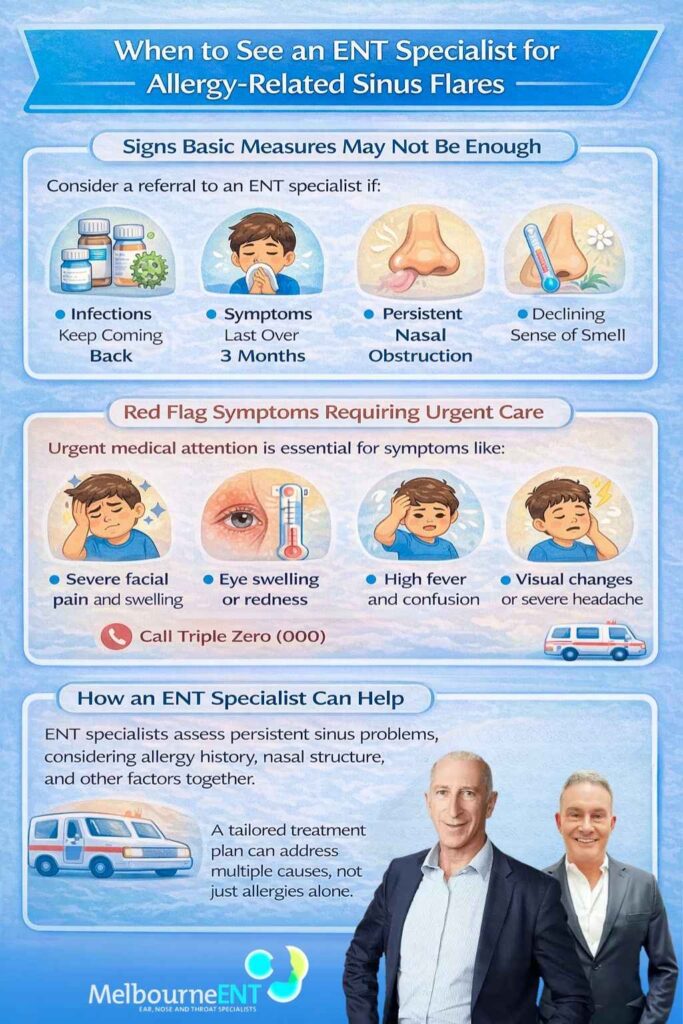
While many people achieve good control with environmental strategies and standard medical treatments, others continue to struggle. It may be time to consider a referral to an ENT specialist if nasal and sinus symptoms last longer than twelve weeks despite regular use of appropriate medicines, or if infections recur multiple times a year. Requiring several courses of antibiotics for apparent sinus infections each year is a sign that the underlying situation should be reviewed.
Persistent facial pain or pressure, ongoing nasal obstruction between acute infections and a steadily declining sense of smell also warrant specialist assessment. Sometimes the underlying problem includes structural issues such as a deviated nasal septum, nasal polyps or very enlarged turbinates that limit the benefit of medical therapy alone. These problems are best evaluated by an ENT surgeon with experience in nasal and sinus disease.
✓ Red Flag Symptoms Needing Urgent Review
Certain symptoms should prompt more urgent medical attention. Severe facial pain that worsens quickly, swelling or redness around the eye, high fever, confusion, visual disturbance or a severe headache unlike usual sinus headaches may indicate a serious complication. In these situations, immediate assessment through an emergency department or urgent care service is essential. In Australia, calling 000 for an ambulance is appropriate if someone appears very unwell, particularly if they have difficulty breathing, altered consciousness or signs of a rapidly spreading infection.
While such complications are uncommon, they underline the importance of seeking help promptly when symptoms suddenly change or escalate. Waiting to see if things improve on their own is not advisable in the presence of red flag signs.
✓ How Melbourne ENT Can Help
Melbourne ENT provides specialised assessment for patients with complex or persistent sinus and nasal problems, including those with a strong allergic component. Dr Simon Braham, ENT and Head & Neck Surgeon, evaluates each patient individually, taking into account their symptom history, previous treatments and overall health. Patients may be referred from GPs or from hospitals across Melbourne, including major centres such as the Royal Melbourne Hospital and the Royal Victorian Eye and Ear Hospital, particularly when symptoms have not responded to earlier care.
At Melbourne ENT, the focus is on understanding the full picture rather than treating isolated symptoms. This often involves looking at allergies, sinus structure, nasal airflow and other contributing factors together, then developing a treatment plan that is tailored to the individual rather than using a one size fits all approach.
What To Expect At A Sinus And Allergy Assessment At Melbourne Ent
Your First Appointment
At an initial appointment, Dr Simon Braham will take a detailed history of your symptoms. This includes when they started, how they vary over time, what seems to trigger them and which treatments have helped or failed in the past. Information from your GP, including referral letters and prior test results, is reviewed so that nothing important is overlooked. Understanding how symptoms affect your daily life, sleep, work or study helps set priorities for treatment.
You will also be asked about your general health, any other medical conditions and your regular medications. This provides context for decisions about investigations and treatments, ensuring that recommendations are safe and realistic for your situation.
Nasal And Sinus Examination
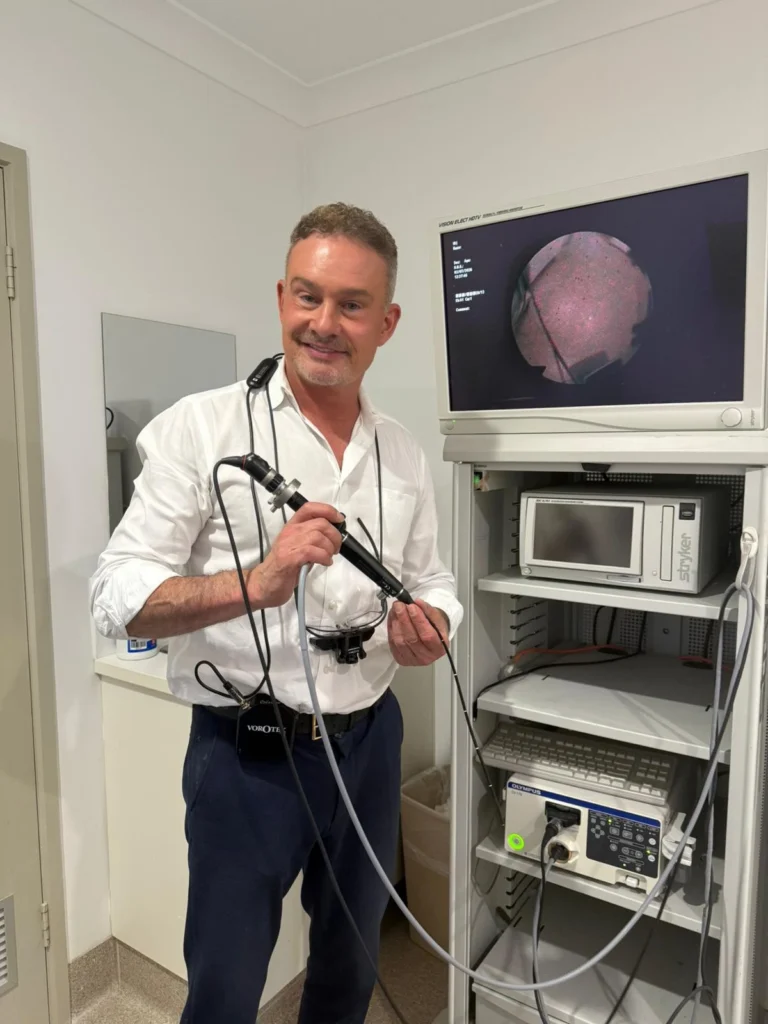
A thorough examination of the nose and throat is an important part of assessment. In many cases, this includes nasal endoscopy, which involves passing a small, thin telescope into the nose to directly view the nasal passages and the areas where the sinuses drain. This procedure is usually performed in the consulting rooms. Local anaesthetic spray is often used to make the examination more comfortable.
Nasal endoscopy allows the surgeon to see structural features such as a deviated septum, enlarged turbinates, nasal polyps or signs of infection or inflammation that cannot be seen from the outside. It helps identify where blockages are occurring and which areas are contributing most to symptoms. Understanding these details is essential when deciding between ongoing medical treatment and potential surgical options.
Imaging And Further Tests When Needed
In some situations, imaging of the sinuses using a CT scan is recommended. CT scans show the bony structure and air spaces of the sinuses in fine detail, allowing the surgeon to see areas of persistent obstruction, mucosal thickening, polyps or other abnormalities. Imaging is usually arranged when symptoms are severe, persistent or not fully explained by the findings on examination alone.
Further tests, including formal allergy testing, may also be suggested where appropriate. This is often coordinated with other specialists, such as clinical immunologists or allergy physicians, especially when broader allergic disease is suspected. Results from these tests help refine the diagnosis and guide long term management strategies.
Developing A Personalised Management Plan
Once all relevant information has been gathered, Dr Simon Braham will discuss the findings with you and outline treatment options. For many patients, the primary approach remains medical, with an emphasis on optimising nasal sprays, saline irrigation, avoidance of identified triggers and careful monitoring over time. Adjustments are made in partnership with you, taking into account your preferences, lifestyle and any other health considerations.
For others, the assessment may reveal structural issues that are unlikely to respond fully to medical therapy alone. In these cases, surgery may be discussed as a way to improve nasal airflow or sinus drainage. Melbourne ENT works closely with your GP and any other involved doctors to ensure that care is coordinated and that you have clear information about the benefits and risks of each option.
The Role Of Sinus And Nasal Surgery When Allergies Are Not The Only Problem
When Surgery May Be Considered
Surgery is not usually the first step in managing allergy related sinus flares, but it can play an important role when structural problems significantly contribute to symptoms. If there is a severely deviated septum that blocks one side of the nose, very enlarged turbinates that do not respond adequately to medical treatment, or chronic rhinosinusitis with persistent disease in the sinuses despite appropriate medication and irrigation, surgery may be considered.
The decision to recommend surgery is based on a combination of symptoms, examination findings, imaging results and the impact on quality of life. Surgeons at Melbourne ENT, including Dr Simon Braham, discuss these factors in detail with each patient so that the decision is informed and shared.
Types Of Surgery An Ent Surgeon May Discuss
Septoplasty is a procedure designed to straighten a deviated nasal septum. By improving the central structure of the nose, septoplasty can create a clearer airway and make it easier for air and medications to reach both sides of the nose. It does not directly treat allergies, but it can reduce the obstruction that worsens allergy related congestion.
Turbinoplasty or turbinate reduction surgery focuses on the turbinates, which are structures inside the nose that warm and humidify air. When they are persistently enlarged, often due to chronic inflammation, they can significantly narrow the nasal passages. Carefully reducing their size while preserving their important function can improve airflow.
Endoscopic sinus surgery involves using fine instruments and cameras passed through the nostrils to open natural drainage pathways of the sinuses. The aim is to restore ventilation and drainage, remove polyps or diseased tissue and provide better access for topical medications. This type of surgery is generally reserved for chronic rhinosinusitis that has not responded to comprehensive medical therapy, or for specific conditions identified on imaging and endoscopy.
Balanced Discussion Of Benefits And Risks
All surgery carries risks. These may include bleeding, infection, changes in sensation, scarring and, in the case of sinus surgery, rare but serious complications related to nearby structures such as the eye or brain. At Melbourne ENT, these risks are explained clearly and carefully in the context of your individual situation. Expected benefits, such as reduced nasal blockage, fewer sinus infections and better delivery of medications, are also discussed, but no guarantees can be made about specific outcomes.
It is important to understand that surgery for nasal and sinus problems does not cure underlying allergies. Most patients still need to continue some form of medical management, such as nasal sprays or saline irrigations, after surgery. The goal is to create a more favourable anatomical environment that allows allergies to be managed more effectively and reduces the tendency towards repeated sinus blockage and infection.
Recovery And Ongoing Care
Recovery from septoplasty, turbinate surgery or endoscopic sinus surgery varies between individuals and depends on the extent of the procedure. In general, there is a period of congestion, mild bleeding and discomfort that gradually improves over days to weeks. Follow up appointments are important to check healing, clean the nasal passages if needed and adjust treatment. Saline irrigation and prescribed nasal sprays often form part of the recovery plan.
Long term, ongoing care usually includes continued attention to allergy control, avoidance of significant triggers where possible and regular use of treatments advised by your doctors. At Melbourne ENT, patients are followed up as needed to monitor progress, address any concerns and adjust management as symptoms or circumstances change.
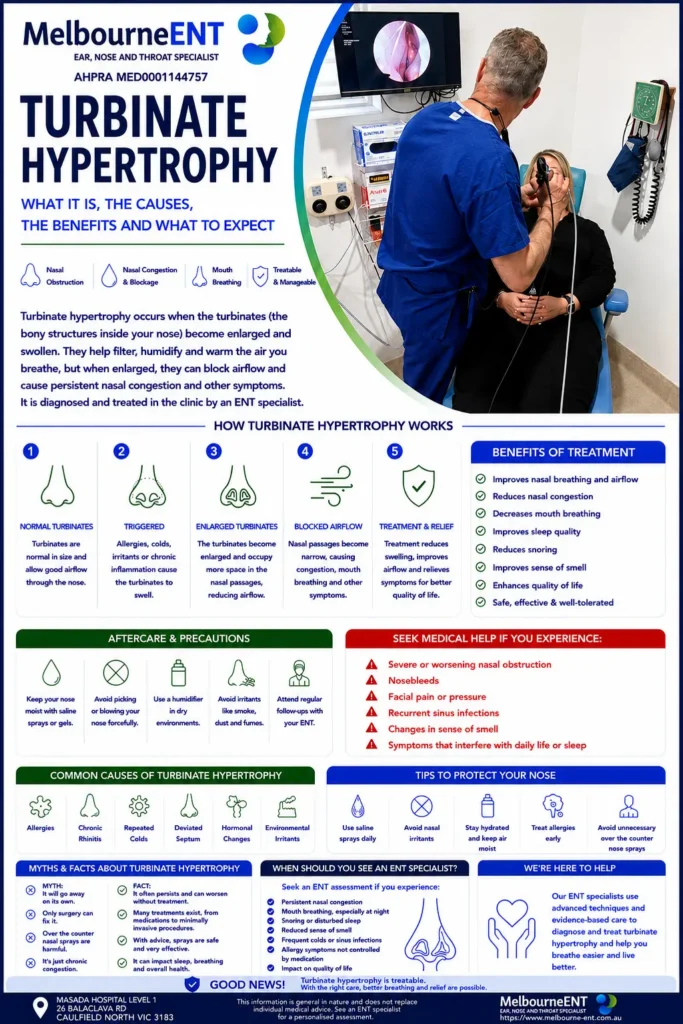
Download Turbinate Hypertrophy Brochure
Medicare Coverage And Costs For Sinus And Nasal Surgery
In Australia, many ENT procedures that are performed for medical reasons attract a Medicare rebate when patients have a valid referral from a general practitioner or another specialist. This includes operations such as septoplasty, turbinate reduction and endoscopic sinus surgery when they are undertaken to treat conditions like chronic nasal obstruction or chronic rhinosinusitis. Medicare does not usually cover procedures that are performed solely for cosmetic reasons, but functional surgery that aims to improve breathing or treat disease is generally listed on the Medicare Benefits Schedule.
For patients treated in the public hospital system, eligible procedures may be provided with no direct charge to the patient, although waiting times can vary. For those choosing treatment in the private system, Medicare rebates reduce the overall cost, but there are often additional expenses related to surgeon fees, anaesthetist fees, hospital charges and any insurance excess. Out of pocket costs, sometimes called gaps, depend on a range of factors including private health insurance arrangements.
At Melbourne ENT, patients are provided with detailed written estimates of fees before surgery so that they understand likely costs, rebates and any gaps in advance. Staff can explain how Medicare and private health insurance interact in your particular case, but it is also important to check directly with your insurer. Discussing financial aspects early allows you to make informed decisions about your care.

FAQs About Allergies, Sinuses And Melbourne Ent
Do I really have a sinus infection every time I get a cold?
It is very common for viral colds to cause temporary congestion, facial pressure and a heavy feeling in the head, and many people describe this as a “sinus infection”. In most cases, these symptoms settle as the cold improves and there is no true bacterial infection. If every minor illness seems to lead to severe pain, thick discoloured mucus and symptoms that drag on for weeks, there may be an underlying problem such as chronic rhinosinusitis or poor sinus drainage. If this is happening regularly, it is sensible to speak with your GP about whether an ENT assessment at a clinic such as Melbourne ENT would be appropriate.
Can allergies on their own cause sinus infections?
Allergies by themselves do not directly cause bacterial sinus infections, but they can set the scene for infections to develop. When the nasal lining is swollen and producing excess mucus, the narrow sinus openings can become blocked. Trapped mucus provides a favourable environment for bacteria to grow, which can then lead to an infection. For this reason, good control of allergic rhinitis using avoidance strategies, saline irrigation and appropriate medicines is an important part of reducing the risk of recurrent sinus flares.
When should my child see an ENT specialist for allergy and sinus problems?
Most children will have occasional colds and mild hay fever without needing specialist care. You should consider further assessment if your child has nasal blockage that lasts for many weeks, snores loudly, seems to stop breathing briefly during sleep, or has repeated sinus or ear infections that affect school attendance and wellbeing. If you are worried about these issues, your GP can examine your child and decide whether referral to an ENT surgeon such as Dr Simon Braham at Melbourne ENT would be helpful.
Are nasal steroid sprays safe to use long term?
Intranasal corticosteroid sprays have been used for many years and are generally considered safe when used as directed. They deliver a small dose of medicine directly to the nasal lining, with minimal absorption into the rest of the body. For many adults and children, they are an important part of long term control of allergic rhinitis and can help protect the sinuses from ongoing inflammation. Like all medicines, they can have side effects and are not suitable for everyone, so they should be used under the guidance of a GP or specialist, with regular review if they are continued over many months.
Will I definitely need surgery to fix my sinus problems?
Most people with allergy related sinus flares do not go straight to surgery. The first step is nearly always medical treatment, including sprays, saline irrigation and careful management of triggers. Many patients improve significantly without an operation. Surgery is considered when there is clear evidence that structural problems such as a markedly deviated septum, nasal polyps or chronically blocked sinus drainage pathways are contributing to persistent symptoms, and when a thorough trial of medical therapy has not been enough. At Melbourne ENT, decisions about surgery are made collaboratively after detailed discussion of the potential benefits and the risks in each individual case.
Do I need a referral and will Medicare help cover my care at Melbourne ENT?
In Australia, you need a current referral from a GP or another specialist to receive Medicare rebates for consultations with an ENT surgeon. This applies to appointments at Melbourne ENT with Dr Simon Braham. Many medically necessary ENT procedures, such as septoplasty, turbinate reduction and endoscopic sinus surgery, also attract a Medicare rebate when they are performed to treat conditions like chronic nasal obstruction or chronic rhinosinusitis. There may still be out of pocket costs, especially in the private system, so it is important to ask about fees in advance and to check details with Medicare and your private health insurer if you have one. The administrative team at Melbourne ENT can help explain likely costs and guide you on what questions to ask.
Medical References
- Sinusitis in adults – aftercare / MedlinePlus Medical Encyclopedia – NIH / https://medlineplus.gov/ency/patientinstructions/000563.htm
- Chronic sinusitis – Diagnosis and treatment / Mayo Clinic / https://www.mayoclinic.org/diseases-conditions/chronic-sinusitis/diagnosis-treatment/drc-20351667
- Chronic Sinusitis: Symptoms, Causes & Treatment / Cleveland Clinic / https://my.clevelandclinic.org/health/diseases/17700-chronic-sinusitis
- Acute sinusitis: Do over-the-counter treatments help? / Mayo Clinic / https://www.mayoclinic.org/diseases-conditions/acute-sinusitis/expert-answers/acute-sinusitis/faq-20058562
- Sinus Infection (Sinusitis): Causes, Symptoms & Treatment / Cleveland Clinic / https://my.clevelandclinic.org/health/diseases/17701-sinusitis
- What’s Up with Sinusitis? / UR Medicine – University of Rochester / https://www.urmc.rochester.edu/encyclopedia/content?contenttypeid=56&contentid=2611
- Acute Sinusitis / StatPearls – NCBI Bookshelf – NIH / https://www.ncbi.nlm.nih.gov/books/NBK547701/
Taking The Next Step In Managing Allergies And Sinus Flares
Putting It All Together
Allergy related sinus flares arise from a combination of triggers, inflammation and, in some people, structural issues within the nose and sinuses. While they can be frustrating and disruptive, there are many strategies that can help. Reducing exposure to known triggers, creating a low allergen home environment, using saline irrigation and appropriate medications, and seeking timely medical advice are all important parts of an effective plan.
Good control often requires patience and a willingness to adjust treatments over time. With support from health professionals, many adults and children in Melbourne and across Victoria experience meaningful improvements in comfort, sleep and daily functioning.
How Melbourne Ent Supports Patients And Families
Melbourne ENT in St Kilda East offers comprehensive assessment and management of nasal and sinus problems for both adults and children. Dr Simon Braham, ENT and Head & Neck Surgeon, brings extensive experience in caring for patients with complex sinus disease, recurrent infections and nasal obstruction. By considering allergies, sinus anatomy and overall health together, the team aims to provide care that is both thorough and individualised.
Patients may be referred by GPs or by other specialists, including colleagues from hospitals such as the Royal Melbourne Hospital and the Royal Victorian Eye and Ear Hospital. Where appropriate, Melbourne ENT works in partnership with allergy services, respiratory physicians and other members of the healthcare team to address all aspects of a patient’s condition.
Taking The Next Step With Your Care
If you or your child are living with frequent allergy symptoms, repeated sinus infections or ongoing nasal blockage, it may be time to seek further advice. A good first step is to discuss your concerns with your general practitioner, who can review your current treatment and arrange a referral to an ENT specialist if needed.
For those who would like a specialist opinion on allergy related sinus flares, Melbourne ENT is available to provide assessment and guidance. To learn more about the clinic, the services offered and how to arrange an appointment with Dr Simon Braham, you can contact the practice or visit related pages for further information.
Further Reading
- Read more about Nasal Congestion Melbourne
- Read more about Sinus Surgery Melbourne
- Read more about Sinus Polyps Surgery Melbourne
- Read Melbourne ENT Blog on Difficult Breathing? – Understanding Nasal Congestion and Its Causes
- Read Melbourne ENT Blog on Using the NOSE Scale Score to assess Nasal Obstruction
Sinus CT Scan Melbourne: What It Shows and When It May Be Used
Persistent sinus problems are among the most common and most frustrating conditions that patients bring…
Allergy Management Tips To Reduce Sinus Flares
Many people in Melbourne and across Victoria live with a combination of hay fever symptoms…

Summer Allergies vs Colds: How to Tell the Difference (and When to See an ENT in Melbourne)
Summer in Melbourne brings long evenings, beach days, sport and time outdoors. It also brings…
Flying This Summer? Protecting Your Ears And Sinuses From Barotrauma
Every summer, many people from Melbourne and across Victoria board flights for holidays, family visits…

What Are the Best Nasal Sprays?
For many people in Melbourne and across Victoria, blocked noses, hay fever, and sinus problems…

Techniques for Nasal Irrigation in Melbourne (Sinus Rinsing)
For many people in Melbourne, a clear nose and easy breathing are things they rarely…