

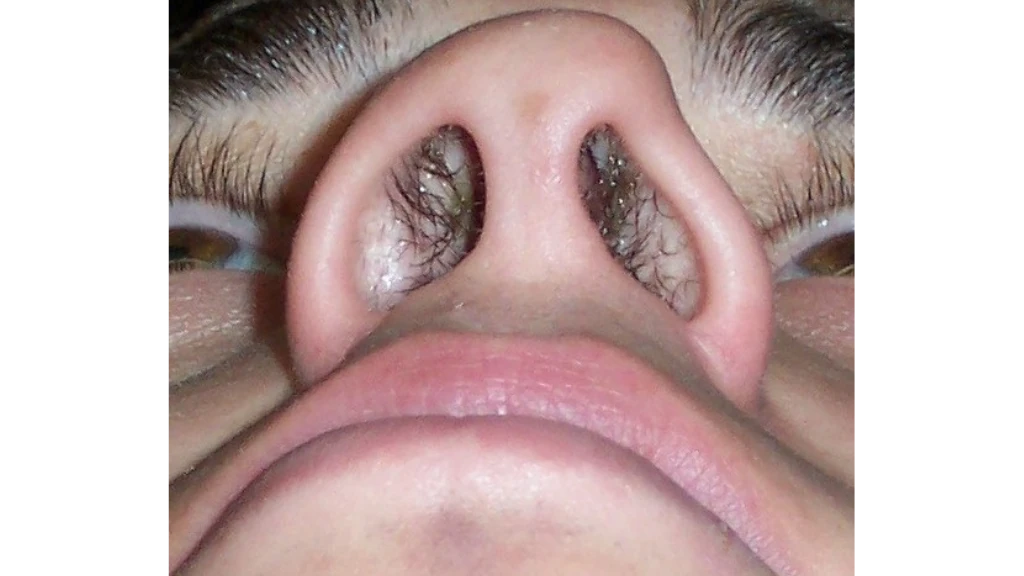
Childhood nose injuries are common. A fall in the playground, a knock during sport, a bike or scooter accident, or a collision during football, netball, basketball or gymnastics can all affect the nose. In many children, swelling and bruising settle without lasting issues. In others, the injury may change the internal structure of the nose and affect breathing later in life.
Some adults and teenagers live with nasal blockage, mouth breathing, snoring or poor sleep for years before discovering that an old childhood injury may be part of the problem. The nose may look reasonably normal from the outside, but inside there may be a deviated septum, narrowed airway, weakened cartilage or nasal valve collapse.
Functional Rhinoplasty is nasal surgery designed to improve breathing and support the nasal airway. It is different from surgery performed mainly for appearance. At Melbourne ENT in St Kilda East, Melbourne, Dr Simon Braham, ENT and Head & Neck Surgeon, assesses children and adults with nasal obstruction, past trauma, snoring and sleep-related breathing concerns.
Understanding Childhood Nasal Trauma
✓ Why Nasal Injuries Are So Common in Children
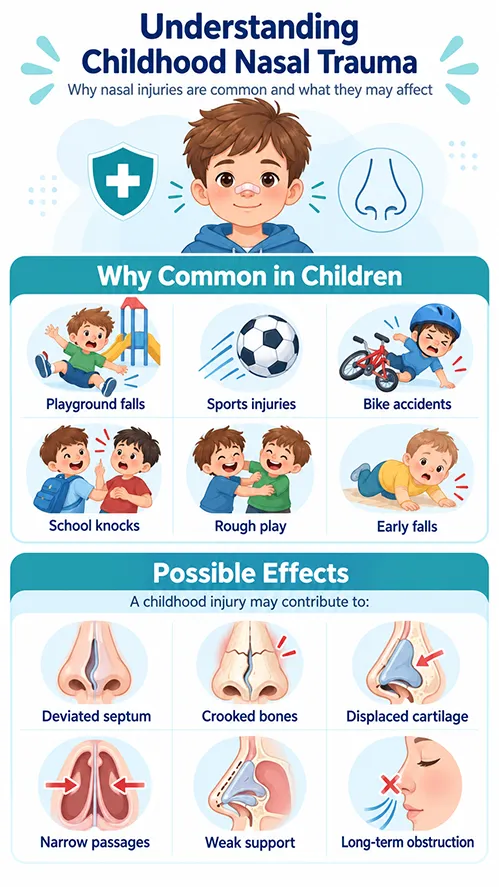
Children are active, adventurous and still developing coordination. This means the nose is often exposed to injury during everyday activities. Common causes include:
- Playground falls
- Contact sport injuries
- Bike and scooter accidents
- Accidental knocks at school
- Rough play or collisions
- Falls during early childhood
Sometimes a nasal injury is obvious. There may be bleeding, swelling, bruising around the eyes or a visible change in shape. Other injuries appear minor and may not be assessed by a specialist at the time. This can make long-term effects harder to recognise.
✓ How the Nose Develops During Childhood
A child’s nose is still growing. The nasal bones, cartilage and septum help shape the nose and support airflow. If these structures are injured during development, the effects may become more noticeable as the face grows.
A childhood injury may contribute to:
- A deviated septum
- Crooked nasal bones
- Displaced cartilage
- Narrowed nasal passages
- Weak nasal valve support
- Long-term nasal obstruction
Even a small structural change can affect airflow because the nasal airway is narrow. This is why a child who “seemed fine” after an injury may later develop breathing problems.
How an Old Nasal Injury Can Affect Breathing Years Later
✓ Structural Changes That Can Develop
Past nasal trauma can affect several parts of the nose. One common issue is a deviated septum. The septum is the wall between the left and right nasal passages. When it is bent or displaced, airflow can become restricted.
Trauma can also weaken the nasal valves. These are narrow areas inside the nose that are essential for smooth breathing. If the side wall of the nose collapses inward during breathing, the patient may feel blocked, especially during exercise or sleep.
Other structural changes may include:
- Internal scarring
- Crooked nasal alignment
- Reduced cartilage support
- Enlarged turbinates
- Narrowed internal airway space
- One-sided or two-sided obstruction
At Melbourne ENT, the focus is on identifying the real cause of nasal blockage. Not every blocked nose is due to allergies or sinus disease. In some patients, the main issue is structural.
✓ Symptoms That May Appear in Teenagers or Adults
Symptoms may not appear immediately after childhood trauma. They may become clearer during the teenage years or adulthood.
Patients may notice:
- Persistent blocked nose
- Mouth breathing
- Snoring
- Restless sleep
- Dry mouth on waking
- Difficulty breathing through one side of the nose
- Reduced exercise tolerance
- Frequent nasal congestion
- Poor response to sprays or allergy medication
Dr Simon Braham, ENT and Head & Neck Surgeon, regularly assesses patients who have lived with nasal obstruction for many years. For some, the connection to childhood nasal trauma only becomes clear after a detailed ENT examination.
Why Some Problems Don’t Become Obvious Until Adulthood
✓ Growth Can Reveal Hidden Problems
The nose and face continue to develop through childhood and adolescence. A small injury at age seven or eight may become more noticeable as growth continues. A mild septal deviation may worsen in effect as the nose matures, or weakened cartilage may become less supportive over time.
Many patients adapt to poor nasal airflow without realising it. They may become used to breathing through the mouth, sleeping with an open mouth or avoiding nasal breathing during exercise.
Some patients assume their symptoms are caused by:
- Hay fever
- Sinus infections
- Repeated colds
- Poor fitness
- General congestion
These may contribute, but they do not rule out structural obstruction. A proper ENT assessment can determine whether old trauma, allergy, sinus disease or another condition is causing the problem.
When Should You See an ENT Specialist?
✓ Signs That Shouldn’t Be Ignored
An ENT review is worth considering when nasal symptoms are ongoing, especially if there is a history of injury. This applies to both children and adults.
Signs that may need assessment include:
- Nasal blockage lasting for months or years
- One-sided nasal obstruction
- Snoring or noisy breathing during sleep
- Mouth breathing
- Poor sleep quality
- Difficulty breathing during sport
- Recurrent sinus pressure
- Visible nasal crookedness after injury
- Symptoms that do not improve with medication
Children may not always describe nasal blockage clearly. Parents may notice open-mouth breathing, restless sleep, daytime tiredness or difficulty keeping up during sport.
At Melbourne ENT in St Kilda East, Victoria, Dr Simon Braham provides specialist assessment for nasal airway concerns, including symptoms linked to previous trauma.
How Melbourne ENT Diagnoses Nasal Airway Problems
✓ Comprehensive Assessment
A detailed diagnosis is essential before treatment is recommended. At Melbourne ENT, assessment may include a careful review of symptoms, injury history, nasal function and sleep concerns.
This may involve:
- Medical history
- Review of previous nasal trauma
- Nasal examination
- Assessment of septal position
- Evaluation of nasal valve support
- Nasal endoscopy
- Allergy or sinus assessment if needed
- Imaging when appropriate
The aim is to understand exactly why the nose is blocked. Some patients may need medical treatment, while others may have a structural issue that requires surgery.
For patients with persistent or complex nose and sinus symptoms, Rhinology assessment can help distinguish structural obstruction from inflammatory, allergic or sinus-related causes.
A personalised treatment plan may include nasal sprays, allergy management, sinus treatment, septoplasty, turbinoplasty or Functional Rhinoplasty, depending on the cause of obstruction.
What Is Functional Rhinoplasty?
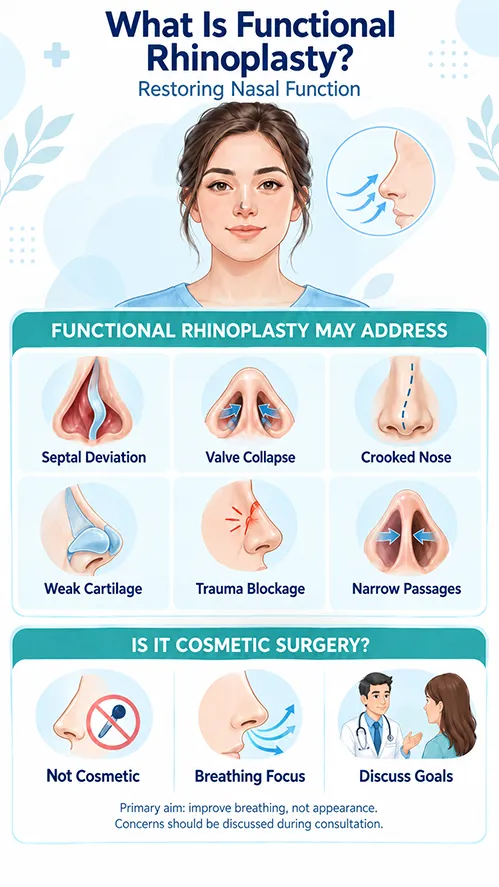
Functional Rhinoplasty may be considered when previous trauma has affected the structural support of the nose or nasal valves and is contributing to ongoing obstruction. Depending on the findings, treatment may involve the septum, nasal valves, cartilage support or other structures that influence the nasal airway.
Functional rhinoplasty is primarily intended to address breathing and structural function rather than appearance, although correcting post-traumatic changes may also alter nasal shape. Whether the procedure is appropriate depends on the patient’s symptoms, examination findings and individual anatomy.
For detailed information about the procedure, potential risks and recovery, see our Airway Rhinoplasty page.
Medicare and Functional Nasal Surgery
Medicare rebates may apply to some medically indicated nasal procedures where relevant MBS criteria are met. Eligibility depends on the procedure, symptoms, clinical findings and individual circumstances. See our ENT Medicare Item Numbers page for current information about relevant Medicare items and rebates.
Why Assessment of Post-Traumatic Nasal Obstruction
Post-traumatic nasal obstruction can involve more than one structure. A patient may have a deviated septum, reduced nasal valve support, turbinate enlargement or inflammatory nasal and sinus symptoms at the same time.
Assessment therefore focuses on identifying which structures are contributing to the obstruction before treatment is discussed. For broader information about assessment of persistent or complex nose and sinus symptoms, see Rhinology Melbourne.
DOWNLOAD GUIDE
Considering Rhinoplasty surgery? Information is just one click away.
Life After Functional Rhinoplasty
✓ What Patients Can Expect
Recovery after Functional Rhinoplasty varies. Some patients notice gradual improvement as swelling settles. Others may need time before the full benefit becomes clear.
After surgery, patients may experience:
- Temporary congestion
- Mild swelling or bruising
- Nasal tenderness
- A need to avoid strenuous activity
- Follow-up appointments
- Ongoing nasal care during healing
The goal is improved nasal airflow, better breathing comfort and improved quality of life. For some patients, better nasal breathing may also support more comfortable sleep and exercise.
Melbourne ENT provides post-operative guidance so patients understand what to expect and when to seek advice.

FAQs About How Past Nasal Trauma in Kids Impacts Breathing Later in Life
Can a childhood nose injury affect breathing even if the nose was never broken?
Yes. A nose does not need to be obviously broken for breathing to be affected. Trauma can shift the septum, weaken cartilage or narrow the internal nasal airway. These changes may become more noticeable as the child grows.
Why does my nose feel blocked on one side years after a childhood injury?
One-sided blockage may be caused by a deviated septum, narrowed nasal valve or post-traumatic cartilage change. These problems can restrict airflow and may not improve with sprays if the cause is structural.
Could childhood mouth breathing have been caused by an old nasal injury?
Yes, it is possible. If an old injury reduced nasal airflow, a child may have gradually adapted to mouth breathing. However, mouth breathing can also be caused by allergies, enlarged adenoids or other ENT conditions, so assessment is important.
Can previous nasal trauma make exercise feel more difficult later in life?
Yes. During exercise, the body needs more airflow. If the nasal passages are narrowed from old trauma, breathing through the nose may feel restricted, particularly during running, cycling or sport.
Can sinus problems and old nasal trauma happen together?
Yes. Some patients have both sinus inflammation and structural nasal obstruction. A detailed ENT assessment can identify whether symptoms are caused by sinus disease, old trauma or a combination of both.
Will improving nasal airflow also improve sleep?
It may help if nasal obstruction is contributing to poor sleep, snoring or mouth breathing. However, sleep quality can be affected by many factors, including obstructive sleep apnoea. An ENT assessment can help determine what role the nose is playing.
How do ENT surgeons decide whether Functional Rhinoplasty is suitable?
The decision is based on symptoms, examination findings, nasal endoscopy and the cause of obstruction. Functional Rhinoplasty may be considered when structural problems are significantly affecting breathing and non-surgical options have not provided enough relief.
Medical References
- The Impact of the Nasal Trauma in Childhood on the Development of the Nose in Future https://pmc.ncbi.nlm.nih.gov/articles/PMC5042625/pmc.ncbi.nlm.nih
- Management of Naso-septal Deformity in Childhood: Long-term Results https://www.sciencedirect.com/science/article/abs/pii/S0385814609000777sciencedirect
- Pediatric Nasal Bone Fractures: Does Delayed Treatment Really Lead to Adverse Outcomes? https://www.sciencedirect.com/science/article/abs/pii/S0165587613000414sciencedirect
- A Five-Year Retrospective Cohort Study Analyzing Factors Influencing Complications After Nasal Trauma https://www.mdpi.com/1943-3883/12/3/27mdpi
- Nasal Fractures in Children and Adolescents: Mechanisms of Injury and Efficacy of Closed Reduction https://www.sciencedirect.com/science/article/abs/pii/S0385814615001097sciencedirect
- Efficacy of Closed Reduction for Nasal Fractures in Children https://www.sciencedirect.com/science/article/abs/pii/S0266435613001600sciencedirect
- Pediatric Facial Fractures https://www.thieme-connect.com/products/ejournals/html/10.1055/s-0041-1735225
Take the Next Step Towards Better Breathing
Childhood nasal trauma can have lasting effects on breathing. A nose injury that seemed minor at the time may later contribute to nasal obstruction, mouth breathing, snoring, poor sleep or reduced exercise tolerance.
Functional Rhinoplasty may be an option for selected patients with structural nasal obstruction caused by old trauma, deviated septum or nasal valve weakness. The first step is a thorough assessment with an experienced ENT specialist.
If you or your child has ongoing nasal blockage after a previous injury, contact Melbourne ENT in St Kilda East, Melbourne, to arrange a consultation with Dr Simon Braham, ENT and Head & Neck Surgeon. To learn more about Functional Rhinoplasty and other ENT services, visit the website.
Further Reading
- Read more about Fractured Nose in Children
- Read more about Broken Nose / Nasal Fracture
- Read more about Deviated Septum
- Read more about Nasal Valve Dysfunction
- Read more about Airway Rhinoplasty
- Read more about Septoplasty