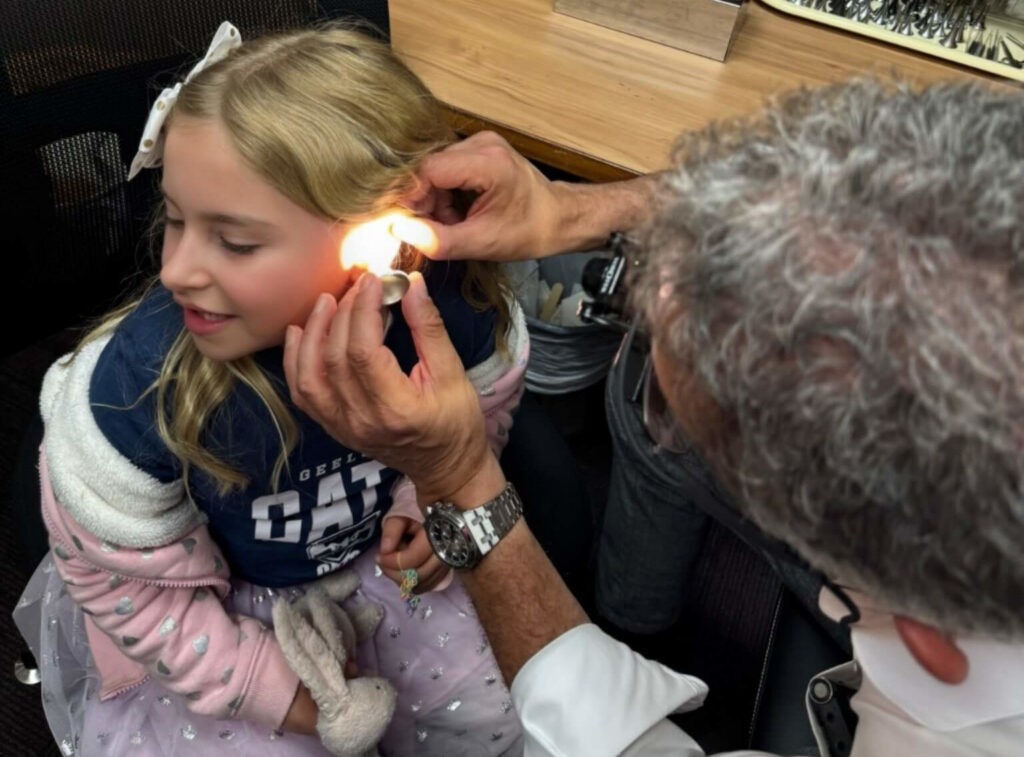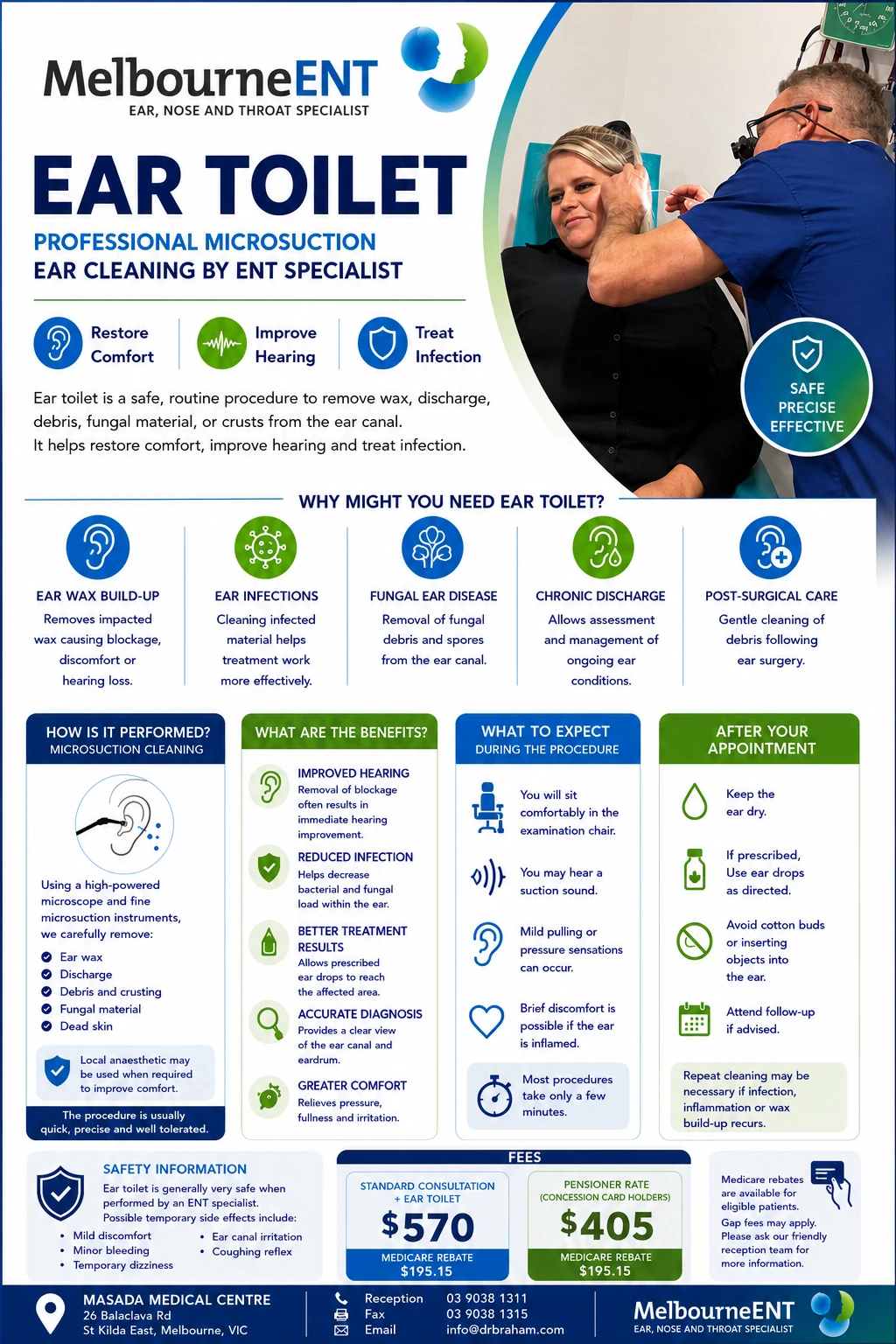

Ear toilet is a routine procedure performed in an ENT office to clean the external ear canal and, when appropriate, the surface of the eardrum. It is commonly done to remove discharge, debris, fungal material, or crusts that may interfere with hearing, cause discomfort, or prevent proper examination and treatment. The term sounds unusual, but in medical use it simply means cleansing of the ear canal.
This procedure is often recommended for patients with otitis externa, chronic ear discharge, fungal ear infection, or after ear surgery when debris needs to be cleared under direct vision. In many cases, cleaning the ear allows the doctor to inspect the canal, tympanic membrane and middle ear more accurately and helps ear drops reach the affected area more effectively.
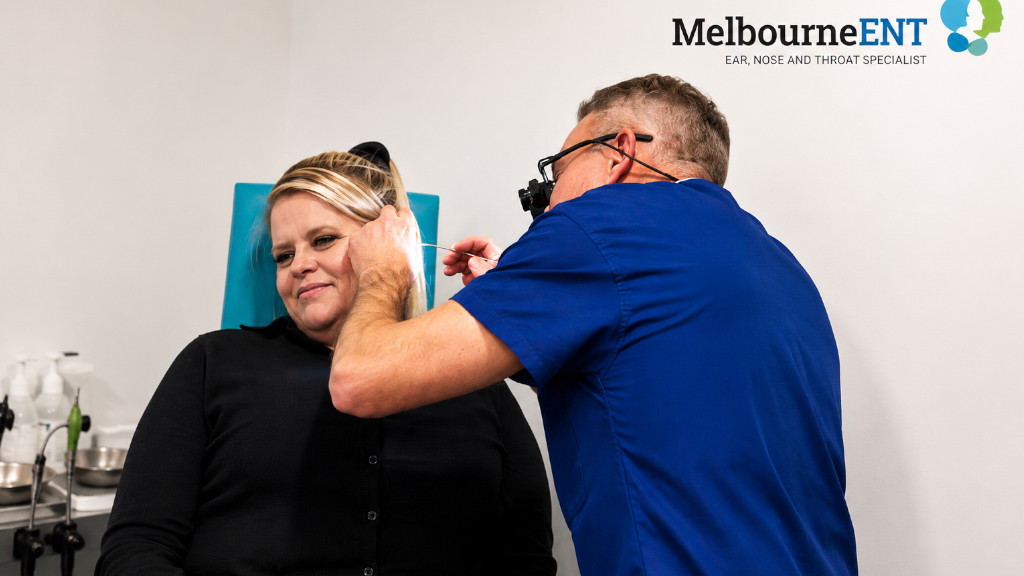
The ear toilet is performed using micro suction and instrumentation and is often done with local anaesthesia to minimise pain. Micro suction allows precise removal of material under magnification with minimal moisture. Fine suction tips or small instruments such as curettes and forceps may be used while the patient sits upright in the examination chair. The surgeon works carefully to avoid trauma to the sensitive skin of the ear canal.
Before the procedure, the clinician will ask about symptoms such as pain, hearing loss, discharge, tinnitus, dizziness, previous ear surgery, or a known perforated eardrum. The ear is then examined with an otoscope or microscope. During cleaning, the patient may hear suction noise and may feel mild pulling, fullness, or brief discomfort, especially if the canal is inflamed. The procedure is usually quick and well tolerated, though some patients with severe infection or tenderness may need it done in stages.
Ear toilet has several important benefits. It can relieve blockage, improve hearing, reduce infection load, and enhance the effectiveness of prescribed drops. In chronic ear disease, regular aural cleaning may form part of ongoing management. It also helps the ENT specialist identify underlying problems such as canal swelling, granulation tissue, fungal spores, retained foreign material, or eardrum perforation.
Although generally safe, ear toilet is not completely risk-free. Possible complications include pain, minor bleeding, canal abrasion, temporary dizziness, coughing from stimulation of the ear canal, or, rarely, worsening of symptoms. For this reason, ear cleaning in an ENT office is preferable to self-cleaning with cotton buds syringing or untrained attempts at removal.
After the procedure, patients may be advised to keep the ear dry, use prescribed eardrops, avoid inserting objects into the ear, and return for follow-up if symptoms persist. If there is infection, inflammation, or recurrence of wax buildup, repeat cleaning may sometimes be necessary.
Ear toilet may be eligible for a Medicare rebate under item number 41647, provided the procedure meets the relevant clinical criteria. The fee for this procedure is $330, with a $120 discount available for aged pensioners. Where applicable, the Medicare rebate is $109.
It is important to note that Medicare does not cover this item for earwax removal. If earwax is the main concern, patients are advised to see a local audiologist or a dedicated earwax removal service such as Crystal Clear Ears.