


Snoring is extremely common, but it is not always something to shrug off as a harmless habit. Snoring happens when air struggles to move smoothly through the upper airway during sleep, causing soft tissues in the throat to vibrate. For some people, this is light and occasional. For others, it is loud, relentless and disruptive, disturbing partners, family members and sometimes the person who snores. Over time, snoring can affect relationships, cause embarrassment and lead to people avoiding trips or shared accommodation.
When snoring is loud, frequent or associated with pauses in breathing or choking sounds, it may be a sign of something more serious called obstructive sleep apnoea. Many patients seen at Melbourne ENT in St Kilda East come because a partner has noticed worrying breathing patterns at night, or because they feel exhausted despite spending plenty of time in bed. Recognising that snoring can be a symptom rather than just a nuisance is often the first step toward getting help.
What is obstructive sleep apnoea (OSA)

Obstructive sleep apnoea, often shortened to OSA, is a condition where the upper airway repeatedly becomes partly or completely blocked during sleep. When this happens, breathing becomes shallow or stops for short periods. The brain senses the drop in oxygen and briefly wakes the person just enough to reopen the airway. These repeated arousals from sleep are usually so short that the person is not aware of waking up, but they break up deep, restorative sleep throughout the night.
Common symptoms include loud snoring, pauses in breathing, gasping or choking episodes during sleep, unrefreshing sleep, morning headaches, poor memory and concentration, irritability and daytime sleepiness. Some people find they struggle to stay awake while reading, watching television or driving. Untreated OSA can contribute to high blood pressure, heart disease, stroke and an increased risk of accidents. Because of these potential consequences, OSA is more than a simple bedtime annoyance. A proper assessment and sleep study can help confirm the diagnosis and guide safe treatment.
Why the upper airway matters
The upper airway includes the nose, the back of the throat, the soft palate and uvula, the tonsils and the base of the tongue. During the day, muscles in these areas stay active and help keep the airway open. At night, when muscles naturally relax, the airway becomes more prone to narrowing and collapse, especially if there is already limited space. Snoring and OSA usually occur when this airway becomes too narrow for air to pass quietly.
Different people have different problem areas. For some, the nose is chronically blocked. For others, a long soft palate or bulky tissues in the throat are the main issue. In some patients, large tonsils are a major contributor. In others, a large tongue, a small or set back jaw, excess weight around the neck or a combination of these factors plays the bigger role. At Melbourne ENT, the focus is on identifying which structures are causing obstruction for each individual, rather than assuming that one single structure is always to blame.
What Are Tonsils and Where Do They Sit in the Airway
The role of the tonsils
The tonsils are small pads of immune tissue that sit on either side of the back of the throat, just behind the tongue. They help the body recognise and respond to germs that enter through the mouth and nose, especially in early childhood when the immune system is learning to cope with a new environment. In many people, tonsils are small and quiet, causing no symptoms at all.
In others, tonsils can become a recurring problem. Repeated episodes of tonsillitis, with sore throat, fever and difficulty swallowing, can interfere with work or school and lead to frequent antibiotic use. Some people develop tonsil stones and chronic bad breath due to debris being trapped in small pockets in the tonsil surface. Over time, tonsils that are regularly inflamed may remain enlarged and bulky. When this happens, they do not just affect infection risk and comfort. Their position in the throat means that they can also influence how easily air flows during sleep.
How tonsils can narrow the airway
The tonsils occupy space in the side walls of the throat. In someone with small tonsils, there is plenty of room for air to pass between them. In someone with large or very large tonsils, a significant amount of that space can be taken up by tissue, especially when combined with a large tongue or a naturally narrow throat. When lying down and drifting into deeper sleep, the muscles supporting the tongue and soft palate relax. The tongue may fall back slightly, and soft tissues can sag inward. If the tonsils are already taking up room, this extra relaxation can reduce the airway size even further.
As air squeezes through a narrow passage, it becomes more turbulent and noisy, causing snoring. If the airway closes completely for brief periods, obstructive sleep apnoea events occur. Not everyone with large tonsils will have OSA, and not everyone with OSA will have large tonsils. However, in patients where tonsils are clearly bulky and examination or endoscopy shows narrowing at that level, the tonsils may be a significant contributor. At Melbourne ENT, this possibility is carefully assessed before surgery is considered.
Adult vs Child Tonsils – Why the Story Is Different
Tonsils and sleep apnoea in children
In children, enlarged tonsils and adenoids are one of the most common causes of snoring and obstructive sleep apnoea. Parents may notice loud, nightly snoring, restless sleep, mouth breathing, bedwetting, behavioural changes or learning difficulties that seem out of character. Because children are still growing and developing, poor quality sleep can have a significant effect on their health, growth and school performance.
Adenotonsillectomy, which is removal of both tonsils and adenoids, is often the first line of treatment when childhood OSA is confirmed and enlarged tonsils and adenoids are the main cause. Many children show marked improvement in snoring and sleep quality after appropriately selected surgery. At Melbourne ENT, Dr Stephen Kleid and Dr Simon Braham assess children with snoring or suspected sleep apnoea, looking not only at tonsil size but also at nasal obstruction, facial growth and other factors, and discussing the safest and most effective treatment options with families.
Tonsils and sleep apnoea in adults
In adults, the picture is more complicated. While enlarged tonsils can still be important, they are usually just one part of a wider pattern. Many adults with OSA are also affected by excess weight, a thick or bulky tongue, a small or set back jaw, nasal blockage or a long, floppy soft palate. The airway can be prone to collapse at several levels, not just around the tonsils. Removing the tonsils alone might help, but it may not fully resolve the problem.
Some adults with very large tonsils and otherwise relatively favourable anatomy do experience significant improvement in snoring and OSA after tonsillectomy. Others may notice some improvement but still require continuous positive airway pressure therapy, dental devices or further surgery at another level of the airway. At Melbourne ENT, the decision to offer tonsil surgery is based on a combination of anatomy, sleep study results, overall health and patient preference, with a strong emphasis on realistic expectations.
Other Common Causes of Snoring and Airway Obstruction
Nasal obstruction and blocked nose
The nose is designed to be the main route for breathing at rest, including during sleep. When the nose is blocked, people are forced to breathe through their mouth, which can increase turbulence and vibration in the throat and worsen snoring. Causes of nasal obstruction include a deviated septum, enlarged turbinates, chronic sinus issues, nasal polyps and allergies. Nasal sprays, allergy treatment or, in some cases, nasal surgery can improve airflow.
At Melbourne ENT, examination of the nose is a routine part of assessing snoring and OSA. When nasal obstruction is a major factor, treating it can make other therapies, including CPAP, more comfortable and effective and may reduce snoring intensity.
Soft palate, uvula and throat tissue
The soft palate and uvula form the roof of the back of the mouth and are made of muscle and soft tissue. In some people, these structures are long, floppy or surrounded by excess tissue in the throat. During sleep, they can vibrate as air passes, causing the classic rattling snore. In more severe cases, the soft palate can collapse backward to meet the back wall of the throat, blocking airflow.
Procedures on the soft palate must be chosen carefully. Not everyone benefits from palate surgery, and in some people the main obstruction is elsewhere. At Melbourne ENT, the contribution of the soft palate is assessed alongside the tonsils, tongue and nose to decide whether any palate procedure is appropriate.
Tongue, jaw shape and body weight
The size and position of the tongue and jaw have a major impact on the space available in the airway. A large tongue or small, set back jaw can crowd the back of the throat. When lying on the back in deep sleep, a relaxed tongue can fall backward, narrowing the airway. Excess body weight, particularly around the neck and upper airway, further increases the tendency to collapse.
For many adults with OSA, weight management is a key part of treatment, even if surgery is also considered. Jaw position may be helped by dental devices or, in rare cases, jaw surgery. Melbourne ENT recognises that these structural and lifestyle factors often interact with tonsil size and tailors recommendations accordingly.
Why a full airway assessment is essential
Because so many parts of the upper airway can contribute to snoring and OSA, a full assessment is essential before making decisions about surgery. Looking only at the tonsils can be misleading. A thorough examination of the nose, throat, tonsils, soft palate, tongue, jaw and neck, combined with sleep study results, helps identify where the airway is most likely to collapse.
At Melbourne ENT, this holistic approach is standard. It allows Dr Stephen Kleid and Dr Simon Braham to recommend treatments that match the underlying problem, whether that involves lifestyle measures, CPAP, dental devices, surgery or a combination of these.
How Melbourne ENT Assesses Snoring and Sleep Apnoea
Initial consultation at Melbourne ENT
At the first consultation, your surgeon will take a detailed history of your symptoms. You will be asked about the pattern and duration of snoring, any witnessed pauses in breathing, choking or gasping at night, and how refreshed you feel in the morning. Questions about concentration, mood, headaches and driving safety help gauge the impact of sleep disturbance on daily life.
Your general medical history, medications and any previous operations to the nose, throat or jaw are also reviewed. For parents bringing a child, questions will focus on night time breathing, behaviour, school performance and growth. From the outset, the aim at Melbourne ENT is to understand your concerns clearly and to provide straightforward explanations of what might be happening.
Examination of the nose, throat and tonsils
After discussion, a physical examination is performed. The nose is examined to assess the septum, turbinates and the overall space available for airflow. Inside the mouth, the size and position of the tonsils, the shape of the soft palate and uvula, the width of the throat and the position of the tongue are checked. The jaw is assessed for alignment and size, and the neck is examined.
Dr Stephen Kleid, an ENT and Head and Neck Surgeon with many years of experience in complex head and neck and airway surgery, and Dr Simon Braham, an ENT Surgeon with extensive experience in nasal and sinus surgery and paediatric ENT, bring knowledge gained from their work in major Victorian hospitals such as the Royal Melbourne Hospital and the Royal Victorian Eye and Ear Hospital. This background supports careful, anatomy based decision making.
Endoscopic airway assessment
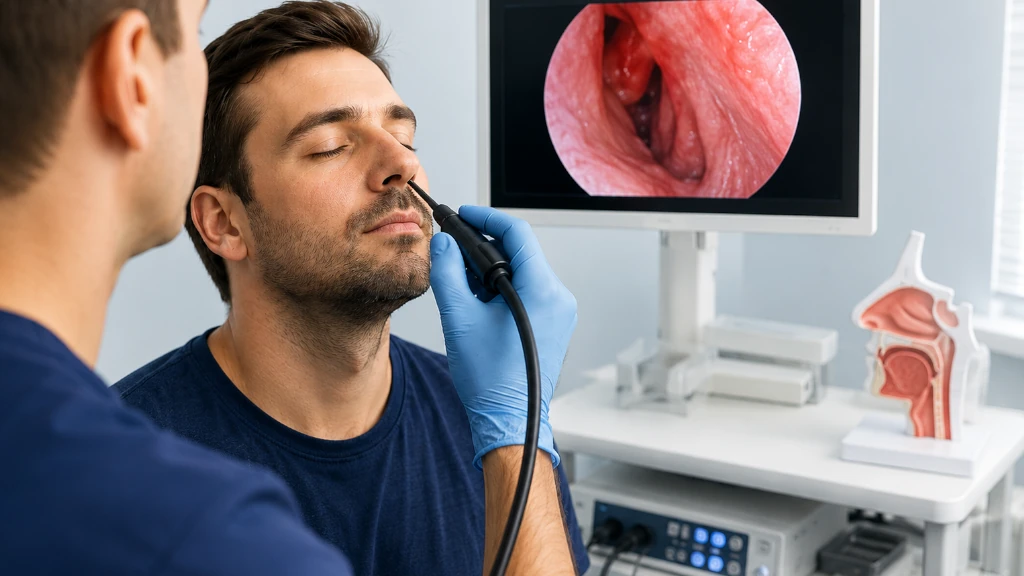
In many cases, a flexible endoscope is used to gain a more complete view of the airway. After a local anaesthetic spray is applied to the nose, a thin flexible camera is gently passed through to the back of the nose and down to the throat. This allows the surgeon to see the adenoids, soft palate, tonsils, tongue base and voice box directly.
Sometimes you may be asked to take a deep breath, say certain sounds or simulate snoring while the surgeon watches how the airway behaves. This dynamic view can reveal areas of collapse that are not obvious on simple inspection. At Melbourne ENT, endoscopic assessment is particularly helpful in confirming whether enlarged tonsils are a key contributor to obstruction or whether other levels are more important.
Sleep studies and diagnosis of sleep apnoea
If obstructive sleep apnoea is suspected, a sleep study is usually recommended. This may be done at home or in a sleep laboratory. Sensors monitor breathing, oxygen levels, snoring, heart rate and sleep stages. The resulting report includes an Apnoea Hypopnoea Index, which shows how many breathing events occur per hour and how severe the condition is.
Melbourne ENT works closely with sleep physicians who interpret these studies. Combining sleep study data with clinical and endoscopic findings helps decide whether surgery, CPAP, dental devices, weight loss or other approaches, or a combination of them, are likely to be most helpful.
When Are Tonsils a Major Contributor to Snoring and Sleep Apnoea
Signs that enlarged tonsils may be part of the problem
Certain features in your story can suggest that tonsils are involved. A long history of large tonsils in childhood, repeated tonsillitis, tonsil stones or ongoing throat irritation can all point toward tonsils that are larger or more irregular than average. Some people describe a sensation of fullness or blockage in the throat when lying flat or exercising, or the feeling that food hits the back of the throat more quickly than expected.
Partners may report deep, rumbling snoring that seems to come from the throat, often worse when the person sleeps on their back with their mouth open. When these features are present, and especially when combined with daytime tiredness and other symptoms of OSA, it is reasonable to consider whether tonsils might be part of the problem.
Findings at examination
On examination, very large tonsils that occupy much of the space at the back of the throat and almost touch in the midline are more likely to be relevant. Even moderately enlarged tonsils can be important if the throat is narrow, the tongue is large or the jaw is small. Endoscopic assessment can show whether the airway narrows or collapses around the tonsils during breathing or simulated snoring.
These findings are compared with the sleep study pattern. If both suggest that the main obstruction is around the tonsils and side walls of the throat, tonsillectomy may be considered as a key part of treatment. If, instead, the main problem lies behind the tongue or at the soft palate, other approaches may be more appropriate.
Adults for whom tonsil surgery may be more helpful
Adults who tend to gain the most from tonsillectomy for OSA often have clearly enlarged tonsils, mild to moderate sleep apnoea and relatively favourable anatomy elsewhere. They may also suffer from recurrent tonsillitis, tonsil stones or bad breath, so surgery can address multiple issues at once. Patients whose OSA is driven mainly by severe obesity or collapse behind the tongue may not see such a large benefit from tonsillectomy alone.
At Melbourne ENT, these factors are discussed openly. The surgeons will explain how much of your problem seems to be coming from the tonsils and how much from other structures, so that you can judge whether surgery is likely to give the kind of improvement you are hoping for.
Treatment Options for Snoring and Sleep Apnoea Involving the Tonsils
Non-surgical treatments

Non surgical treatments are important in managing snoring and OSA, even when surgery is being considered. Lifestyle measures such as losing weight, limiting alcohol in the evening, avoiding sedative medications where possible and adjusting sleep position can all help. Some people snore less or have fewer obstructive events when they sleep on their side instead of their back.
Medical treatment of nasal allergies or chronic nasal congestion can improve airflow and may reduce snoring volume. For many adults with confirmed OSA, CPAP is the most effective treatment and is often recommended as first line therapy. CPAP uses a mask and machine to deliver gentle air pressure that keeps the airway open. Dental devices that bring the lower jaw forward during sleep can help selected patients, particularly those with mild to moderate OSA and certain jaw patterns. At Melbourne ENT, these non surgical options are often part of the conversation, even if surgery is also discussed.
Tonsillectomy in adults
Tonsillectomy is the surgical removal of the tonsils under a general anaesthetic. In adults with enlarged tonsils contributing to snoring or OSA, the aim is to widen the airway at that level so that air passes more freely during sleep. Modern techniques are designed to remove the tonsil tissue effectively while limiting injury to surrounding structures as much as possible.
At Melbourne ENT, Dr Stephen Kleid and Dr Simon Braham will explain the proposed technique, expected operative time, immediate post operative care and likely recovery. You will be told how this surgery fits with other treatments such as CPAP or weight loss and whether further interventions might still be needed. Follow up sleep studies may be organised after recovery to measure how much the operation has changed your sleep breathing.
Combined surgery for multi-level obstruction
In some patients, obstruction clearly involves more than one level of the airway. For example, enlarged tonsils might be present together with significant nasal blockage or a long, floppy soft palate. In such cases, combining tonsillectomy with other procedures may offer a better chance of improving airflow.
Possible combinations include nasal surgery to correct a deviated septum or reduce enlarged turbinates, along with tonsillectomy, or operations that address both the soft palate and the tonsils in one session. Because every airway is different, combined surgery is planned on an individual basis. At Melbourne ENT, the surgeons draw on their experience in nasal, sinus and throat surgery to design safe and appropriate multi level procedures when these are indicated. Where the tongue base is a major contributor, this may include coblation tongue channelling.
Realistic expectations from tonsil surgery
Tonsil surgery can be very helpful for selected adults, but it is not a guaranteed cure for every case of snoring or OSA. When enlarged tonsils are clearly a key contributor, many patients notice that their snoring becomes quieter or less frequent and that their sleep feels more refreshing. Objective sleep studies often show a reduction in the number of obstructive events.
However, some people will still need CPAP, dental devices or further surgery, especially if they have other structural or weight related risk factors. At Melbourne ENT, you will be given a realistic picture of the likely benefits and the limitations of surgery so that you can decide whether the expected improvement justifies the recovery and risks in your situation.
Risks, Recovery and Follow-Up After Adult Tonsil Surgery
General risks of surgery and anaesthesia
All operations carry general risks related to anaesthesia and surgery. These include possible reactions to medications, breathing or heart problems in vulnerable patients, blood clots and infections. Before surgery, the team at Melbourne ENT will take a thorough medical history, and the anaesthetist will discuss your individual risk profile and monitoring during the operation. In some cases, your GP or other specialists may be asked to provide additional information or clearance.
Specific risks of adult tonsillectomy
Adult tonsillectomy has some specific risks that need careful consideration. Significant throat pain is common and may last one to two weeks or longer. Swallowing is often uncomfortable, and regular pain relief and good hydration are very important. Bleeding is another key risk. Bleeding can occur in the first day after surgery or around a week later when the healing tissue separates. In rare cases it can be serious and require urgent treatment in hospital. You will receive clear written and verbal instructions about what is normal, what is concerning and when to seek emergency care.
Other possible issues include temporary changes in taste, a feeling of altered swallowing and changes in voice quality while healing. These usually settle, but persistent problems, although uncommon, can occur. At Melbourne ENT, these risks are explained so that you can make an informed decision and feel prepared for the recovery process.
Recovery timeline and self-care
Most adults will need around ten to fourteen days away from work, study and strenuous activity after tonsillectomy. Some people may need longer, especially if their job is physically demanding. After the operation, you will be monitored until you are stable and comfortable, then discharged home or kept overnight depending on your circumstances and the hospital setting.
At home, you will be advised to rest, drink plenty of fluids and gradually move from soft, cool foods to a more normal diet as your comfort allows. Smoking and alcohol should be avoided, and heavy lifting or vigorous exercise should be postponed for at least two weeks. Driving is not recommended while you are taking strong pain medications or feeling unwell. The staff at Melbourne ENT will provide written instructions and remain available to answer questions during your recovery.
Follow-up, results and Medicare rebates
A follow up visit is usually arranged a few weeks after surgery to check healing, discuss how your symptoms have changed and plan any further investigations. If the operation was performed for obstructive sleep apnoea, a repeat sleep study may be suggested after the throat has completely healed to measure the impact of surgery.
Many patients understandably have questions about costs and rebates. In Australia, Medicare provides a rebate for medically necessary tonsillectomy and related ENT procedures when they are billed under the appropriate item numbers by a specialist. With a referral from your GP or another specialist, you may be eligible for Medicare rebates on your consultations and on the surgeon’s and anaesthetist’s fees. If you are treated in a private hospital, your private health insurance may contribute to hospital costs such as theatre and accommodation, depending on your level of cover. There may still be out of pocket expenses, called gaps, which vary between individuals and policies. The administrative staff at Melbourne ENT can give you information about likely fees, Medicare rebates and any expected gaps before you decide on surgery, so that financial aspects are as clear as possible.
Why Choose a Specialist ENT Assessment in Melbourne
Experience of Dr Stephen Kleid and Dr Simon Braham
Deciding whom to see about snoring, sleep apnoea and tonsil related issues is important. At Melbourne ENT, patients are assessed and treated by FRACS qualified ENT surgeons with extensive experience in both adult and paediatric care. Dr Stephen Kleid is an ENT and Head and Neck Surgeon with many years of practice in airway surgery, head and neck tumours and complex throat conditions. His work in major Melbourne institutions, including the Royal Melbourne Hospital and the Peter MacCallum Cancer Centre, underpins his careful and evidence based approach.
Dr Simon Braham is an ENT Surgeon with particular expertise in nasal and sinus surgery and paediatric ENT conditions. He consults in both public and private sectors, including Masada Private Hospital, and looks after patients with snoring, sleep apnoea, nasal obstruction and other ENT problems. Together, they bring a broad skill set and a strong focus on functional outcomes.
Melbourne ENT’s approach to snoring and sleep apnoea
Melbourne ENT places strong emphasis on thorough diagnosis before any intervention is recommended. Rather than offering a single standard operation for everyone who snores, the surgeons take time to understand each person’s airway, general health and goals. They work closely with GPs, sleep physicians, dentists and other specialists as needed, so that treatment plans are well coordinated.
Patients are encouraged to ask questions and to be actively involved in decision making. The likely benefits, risks and limitations of options such as CPAP, dental devices, tonsillectomy and other surgeries are explained clearly. This helps ensure that any decision to proceed with treatment is informed and aligned with the patient’s values and lifestyle.
Serving patients across Melbourne and Victoria
Located in St Kilda East, Melbourne ENT sees patients from across Melbourne and regional Victoria. Adults and children are assessed for a wide range of ENT problems, including snoring, sleep apnoea, tonsil disease, nasal obstruction and sinus issues. Links with major hospitals such as the Royal Victorian Eye and Ear Hospital and the Royal Melbourne Hospital help ensure that care reflects contemporary practice and that complex cases can be managed in appropriate settings when needed.
The clinic aims to provide a welcoming, respectful environment where patients can discuss sensitive issues such as snoring and tiredness without embarrassment, and where families can feel supported while decisions are made.
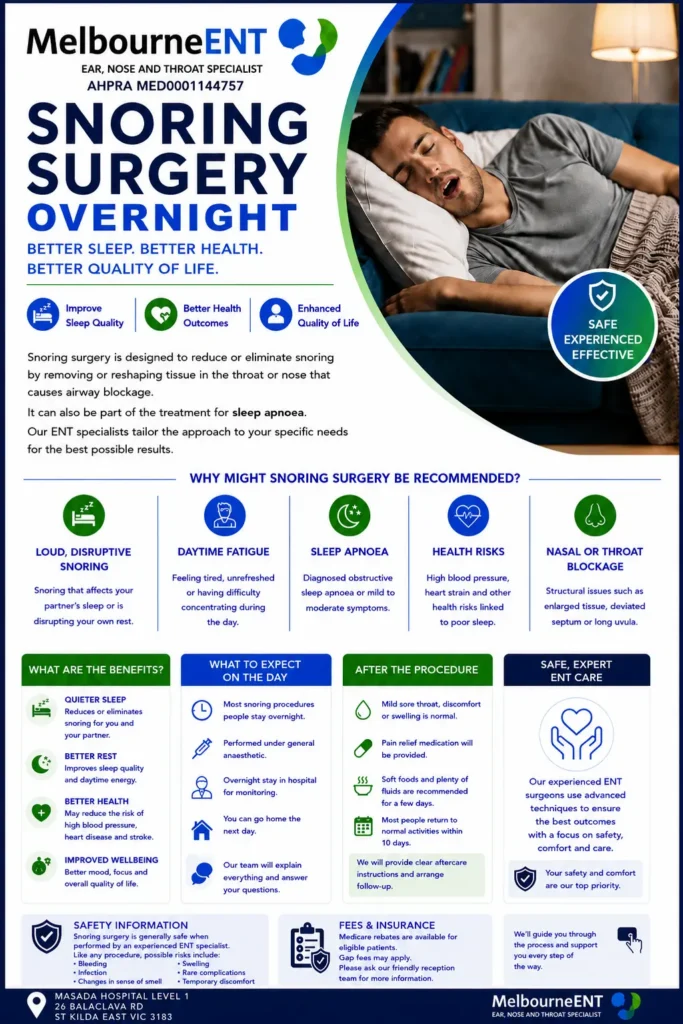
Download Snoring Surgery Overnight Brochure
Taking the Next Step – When to Seek Help for Snoring and Enlarged Tonsils
Signs it is time to see an ENT specialist
It may be time to seek a specialist opinion if you snore loudly most nights, if a partner has noticed pauses in your breathing or choking noises in your sleep, or if you wake feeling as tired as when you went to bed. Daytime sleepiness, reduced concentration, irritability and morning headaches can also indicate disturbed sleep breathing. Adults who have a long history of enlarged tonsils, frequent tonsillitis, tonsil stones or persistent bad breath should consider assessment if these issues are combined with snoring or suspected OSA.
For children, persistent loud snoring, restless sleep, mouth breathing, behavioural changes, poor school performance or growth concerns may be signs that the tonsils and adenoids are affecting breathing during sleep. In both adults and children, these signs are a reason to seek professional advice rather than hoping the problem will simply fade away.
How Melbourne ENT can help
An assessment at Melbourne ENT does not automatically lead to surgery. The first goal is to clarify the diagnosis, understand which parts of the airway are involved and gauge the severity of any sleep apnoea. In some cases, non surgical options such as lifestyle changes, allergy management, CPAP or dental devices may be the best approach. In others, particularly where enlarged tonsils or structural narrowing play a central role, surgery may be a suitable part of a broader plan.
Throughout this process, Dr Stephen Kleid, Dr Simon Braham and the team provide information in clear language and encourage questions. They aim to balance symptom relief with safety and long term health, helping you choose treatments that fit your priorities.

FAQs About Adult Snoring, Sleep Apnoea and Tonsils
Can my tonsils still be part of the problem if my GP says they look normal?
Yes, it is possible for tonsils to be part of the problem even if they do not look dramatically enlarged in a quick examination. Tonsil size is only one factor. If your throat is naturally narrow, if your jaw is small or if you have a large tongue, even moderately sized tonsils may contribute to a tight airway during sleep. A simple look with a light does not show how the airway behaves when you are lying down and deeply asleep. At Melbourne ENT, assessment often includes a more detailed view of the throat and sometimes flexible endoscopy, which allows Dr Stephen Kleid or Dr Simon Braham to see the full upper airway and judge the importance of your tonsils in context.
If I already use CPAP, is there any point considering tonsil surgery?
For some people who use CPAP, there can still be value in considering surgery. CPAP is a very effective treatment for OSA, but not everyone finds it comfortable all night, every night. If your tonsils are clearly enlarged and contributing to obstruction, removing them may allow you to use lower pressures on your CPAP machine or improve comfort and tolerance. In carefully selected cases, some patients may reduce or occasionally stop CPAP after successful surgery, although this is not guaranteed. At Melbourne ENT, your experience with CPAP, your sleep study results and your airway anatomy will all be considered before any recommendation is made.
Can tonsil stones and bad breath be related to snoring or sleep apnoea?
Tonsil stones and bad breath do not directly cause snoring or sleep apnoea, but they often indicate that the tonsils are irregular and have deep pockets that trap debris. The same bulky, pitted tonsils that hold tonsil stones can also narrow the airway and increase the chance of turbulent airflow and snoring, especially when combined with other factors such as nasal blockage. Many adults who seek help at Melbourne ENT for tonsil stones also report loud snoring or poor sleep. In these situations, both the comfort issues and the sleep related symptoms can be assessed and treated together.
Will removing my tonsils change the sound of my voice or my singing?
Most adults notice little long term change in their everyday speaking voice after tonsillectomy, although the voice can sound different for a few weeks while the throat is healing. For singers and people who rely on their voice for work, even small changes can feel significant. Removing large tonsils can slightly alter the shape of the resonating space in the throat, which may change how certain sounds feel or project. Before surgery, you should discuss your voice and any performance needs with your surgeon at Melbourne ENT. In many cases, people adapt quickly, but if your voice is particularly important to you, it is worth making this a specific part of the consultation.
Could my tonsils grow back after adult tonsillectomy and cause problems again?
True regrowth of tonsils after a complete adult tonsillectomy is very uncommon. In some techniques, small amounts of tonsil tissue may be left behind intentionally to protect deeper structures. These remnants can occasionally enlarge slightly, especially if there is ongoing inflammation, but they rarely reach the size or cause the same degree of trouble as the original tonsils. If symptoms such as snoring or throat discomfort return years later, it is more often due to changes elsewhere in the airway, such as weight gain or increasing tongue base bulk. If this happens, Melbourne ENT can reassess your airway to work out what has changed.
Why do my snoring and apnoea seem worse when I have a sore throat or a cold if my tonsils have not changed size?
When you have a cold or sore throat, the tissues in your nose and throat become swollen and congested. Even if your tonsil size is unchanged overall, this temporary swelling can make an already narrow airway significantly tighter. Mucus, postnasal drip and mouth breathing during a cold can also increase snoring. If your airway is borderline under normal conditions, the extra swelling during illness can tip you into louder snoring and more frequent obstructive events. This pattern is often reported by patients seen at Melbourne ENT and can be a clue that the airway is relatively narrow all the time.
Are there exercises or therapies that can help my tonsil related snoring so I might avoid surgery?
There is growing interest in structured exercises for the tongue, soft palate and throat muscles, sometimes called oropharyngeal or myofunctional therapy. These exercises aim to improve muscle tone and control, which may help reduce airway collapse in some people with mild snoring or mild OSA. However, exercises do not shrink tonsil tissue. If enlarged tonsils are clearly the main cause of narrowing, exercises alone are unlikely to resolve the problem, although they may still support other treatments. At Melbourne ENT, non surgical options, including exercises, weight management and positional strategies, are usually discussed, particularly for milder cases or for patients in whom surgical risk is higher. Where tonsils are a dominant cause of obstruction, surgery may still be recommended as the most direct way to create more space in the throat.
Medical References
- Diagnosis and Treatment of recurrent acute Tonsillitis] – Laryngorhinootologie – https://pubmed.ncbi.nlm.nih.gov/40168968/
- Impact of Clinical Practice Guidelines on Pediatric Tonsillectomy for Tonsillitis – Otolaryngology–Head and Neck Surgery – https://pubmed.ncbi.nlm.nih.gov/39033357/
- Treatment of recurrent acute tonsillitis—a systematic review – European Archives of Oto-Rhino-Laryngology – https://pubmed.ncbi.nlm.nih.gov/37881239/
- Validation and Clinical Adaptation of a Swedish Version of Tonsillectomy Outcome Inventory‐14 – Journal of Clinical Medicine – https://pmc.ncbi.nlm.nih.gov/articles/PMC12916258/
- Chronic Tonsillitis as a Focal Infection: A Decade-Long Case – Journal of International Medical Research – https://pmc.ncbi.nlm.nih.gov/articles/PMC12875394/
- Long-Term Efficacy and Cost-Effectiveness of Laser Tonsillotomy vs Tonsillectomy – JAMA Network Open – https://jamanetwork.com/journals/jamanetworkopen/fullarticle/2833223
- Decreasing Seven-Day Revisits After Pediatric Tonsillectomy – International Journal of Pediatric Otorhinolaryngology – https://pubmed.ncbi.nlm.nih.gov/41458343/
Next Steps and Booking an Appointment
If you are concerned about loud snoring, possible obstructive sleep apnoea or enlarged tonsils for yourself or your child, it is sensible to seek professional advice rather than waiting and hoping things will improve on their own. A good starting point is to speak with your GP about your symptoms. Your GP can provide a referral to Melbourne ENT, which helps with Medicare rebates and allows important medical information to be shared.
Once you have a referral, you can contact the rooms at Melbourne ENT to arrange a consultation at a convenient time. During your visit, Dr Stephen Kleid or Dr Simon Braham will assess your airway, review any sleep study results and discuss treatment options that are tailored to your situation. If you would like to learn more about the clinic, the surgeons or the services available before you book, you can visit the website for further information.
Further Reading
- Read more about Snoring – Sleep Apnoea
- Read more about Tonsillectomy Melbourne
- Read more about Nasal Obstruction Melbourne
- Read Melbourne ENT Blog on What Are the Best Nasal Sprays?
- Read Melbourne ENT Blog on Techniques for Nasal Irrigation in Melbourne (Sinus Rinsing)
- Read Melbourne ENT Blog on Cold Ablation Techniques for Tonsils
- Read Melbourne ENT Blog on What is Coblation Tonsillectomy ? – Cold-Ablative Tonsillectomy in Melbourne
Download Snoring Journey with Dr Braham
Endoscopic Airway Assessment for Snoring: What ENT Surgeons Look For
Snoring is often spoken about casually, but for many people, it becomes a persistent concern…
Bronchial or Nasal Surgery for Snoring – Which Is Right for You
Is nasal or throat surgery better for snoring? The most appropriate treatment depends on where…

Can Weight Loss Fix Snoring – What ENT Surgeons Want You To Know
Weight loss may help reduce snoring in some individuals, particularly where excess tissue contributes to…