

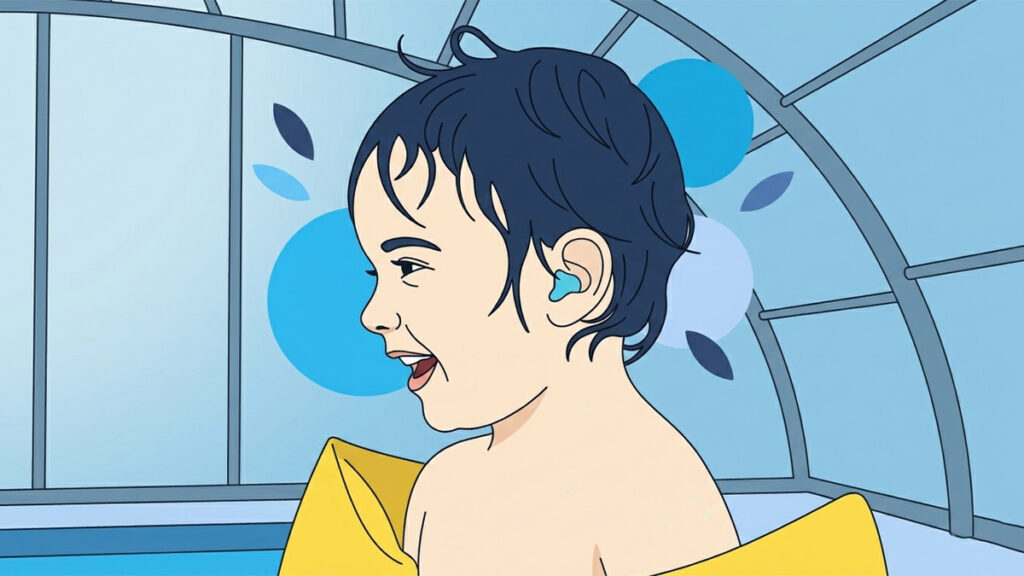
Summer in Melbourne usually means warm evenings at St Kilda Beach, endless laps at local pools, and weekends along the Victorian coast. Unfortunately, it is also the time of year when many adults and children are suddenly kept awake at night by a painful ear.
One of the most common problems is swimmer’s ear, the everyday term for otitis externa. This condition affects the outer ear canal and often appears after swimming, showering or simply being in hot, humid weather.
At Melbourne ENT in St Kilda East, ENT and Head & Neck Surgeon Dr Stephen Kleid and ENT and Facial Plastic Surgeon Dr Simon Braham regularly see patients whose summer plans have been interrupted by this type of ear infection. Understanding why it happens and how to prevent it can help you and your family enjoy the water more comfortably.
This information is general in nature and does not replace advice from your GP or specialist.
Understanding Swimmer’s Ear (Otitis Externa)
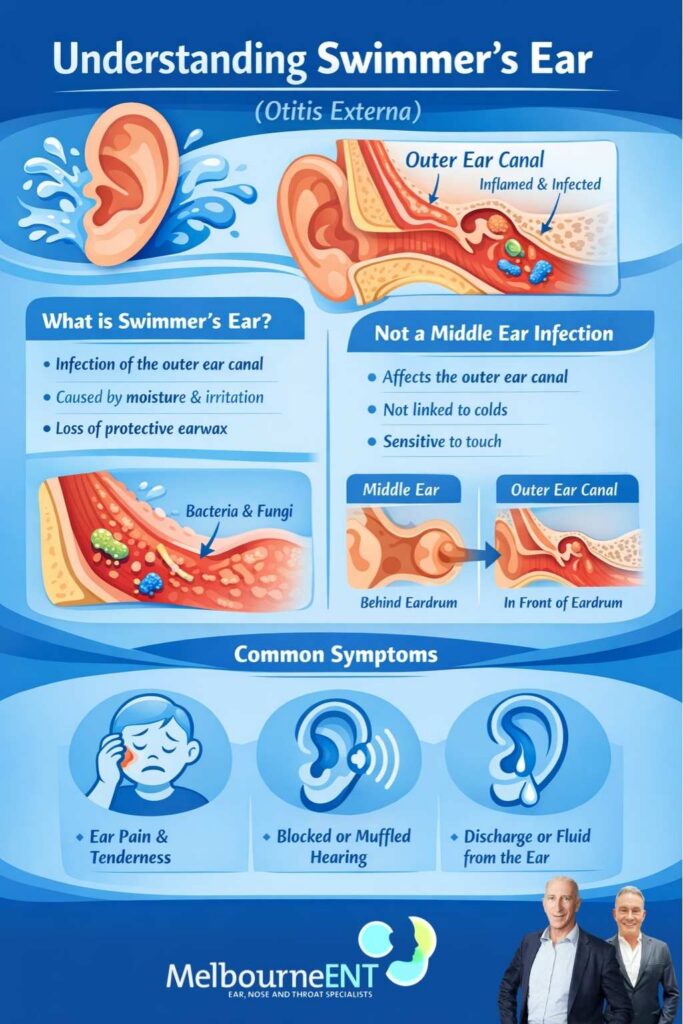
Swimmer’s ear occurs when the skin of the outer ear canal becomes inflamed or infected. The ear canal runs from the entrance of the ear through to the eardrum. Its lining is thin and delicate, and it is usually protected by a thin layer of wax.
Earwax is more than just “gunk” to be removed. It helps repel water, keeps the skin slightly acidic and creates an environment where bacteria and fungi are less likely to thrive. When that natural protection is stripped away or the skin is damaged, infection becomes much more likely.
✓ How Swimmer’s Ear Differs From Middle Ear Infections
Parents often associate ear infections with colds and fevers in children. Those illnesses usually involve the middle ear, which sits behind the eardrum. Swimmer’s ear is different in three important ways.
First, the location is different: swimmer’s ear affects the canal in front of the eardrum, not the space behind it. Second, the main triggers are moisture, irritation and local skin trauma rather than a respiratory infection. Third, the pattern of symptoms is different. Swimmer’s ear frequently causes pain when you pull gently on the outer ear or press in front of the ear, while middle ear infections often cause deep, throbbing pain that is not very sensitive to touch on the outside.
Because these conditions feel different and respond to different treatments, a proper ear examination by a GP or ENT specialist is essential.
✓ Symptoms People Commonly Notice
Most people with swimmer’s ear describe a mixture of pain, itch and blockage in one ear. The pain can be sharp, throbbing or burning. It often worsens when you talk, chew, lie on that side or press in front of the ear.
Many patients notice a blocked or “full” sensation on the affected side and feel as though sound is muffled, as if a finger or earplug is partly blocking the ear. Some also see clear or cloudy fluid, crusting or dried discharge on the pillow, especially in the morning.
These symptoms may appear quite quickly after a swim or shower, or build over a day or two. Even if they start gently, they should not be ignored, because they can progress to severe pain surprisingly fast.
Why Ear Infections Spike In Melbourne’s Summer
The pattern is very familiar to specialists: as the weather warms up, cases of swimmer’s ear increase.
✓ More Water, More Often
During the school holidays and on warm weekends, children are in pools, bays and water parks for hours at a time. Adults may be training for triathlons, swimming laps before work, or spending long periods surfing and paddle boarding along the Victorian coastline.
All of this extra water time means that the ear canal is wet far more often. Water can become trapped in bends of the canal, particularly in younger children with narrow canals or in people who already have a lot of wax buildup.
✓ Heat, Humidity And Sweating
Melbourne’s hot days create another problem. Even without swimming, sweat can collect around and just inside the ears. Many people also take more frequent showers to cool down. Instead of drying fully between water exposures, the ear canal can stay slightly damp most of the day.
Warm, moist skin is an ideal environment for bacteria and fungi. When that is combined with minor skin damage or the removal of protective wax, the risk of infection increases significantly.
Pool, Bay And Ocean Bacteria – What Is Really Happening In Your Ear
It is easy to assume that swimmer’s ear is simply the result of “dirty” water. The reality is more nuanced.
✓ Where The Germs Come From
Every environment has its own mix of bacteria. Pools rely on careful filtration and disinfection. When they are well maintained they are generally safe, but heavy use or brief lapses in water quality can increase the bacterial load. Bays and oceans, including Port Phillip Bay, naturally contain various bacteria and occasionally fungi. Lakes and rivers can be affected by run off and higher temperatures.
For most healthy swimmers, simply being in the water does not cause a problem. Infection usually arises when bacteria or fungi come into contact with softened, damaged skin and linger in a moist canal that cannot dry properly.
✓ Why Water Alone Is Not Enough To Cause Swimmer’s Ear
Swimmer’s ear tends to appear when three elements come together: prolonged moisture, disruption of the protective wax layer, and damage to the skin.
If you imagine the ear canal as a narrow hallway, the wax is like a protective coating on the walls. Water that rushes through briefly is unlikely to hurt. But if water sits in the hallway for hours, the coating softens. If you then scrape the walls with a cotton bud or fingernail, the surface becomes patchy and raw. Germs that would normally slide past now find tiny openings where they can settle and multiply.
Some people are also more vulnerable because of underlying structural issues. Narrow canals, bony changes from years of cold water exposure, previous surgery or long term skin conditions can all trap debris and moisture. These underlying factors are often only visible when an ENT specialist examines the ear using microscopic equipment. At Melbourne ENT, both Dr Stephen Kleid and Dr Simon Braham frequently identify and manage such hidden contributors in patients with recurring swimmer’s ear.
Ear Hygiene Habits That Quietly Increase The Risk
Many of the behaviours that people think of as “good ear hygiene” actually make swimmer’s ear more likely.
✓ Cotton Buds And Deep Cleaning
Cotton buds are one of the most common causes of trouble. They are often used with the intention of cleaning wax, yet they tend to push wax deeper into the canal. This can form a plug that traps water and bacteria.
At the same time, the cotton tip can scratch the delicate skin lining the canal. A few seconds of enthusiastic cleaning can remove the natural wax layer and leave microscopic grazes that bacteria can exploit. In extreme cases, cotton buds may even damage the eardrum.
In most cases, the safest approach is simple: clean only the outer ear and avoid inserting anything into the canal.
✓ Ear Candling And Home Devices
Ear candling is sometimes promoted online as a natural detox method. In practice, it offers no proven benefit and can cause burns and wax deposits. Other home suction devices and improvised tools carry similar risks.
ENT surgeons at Melbourne ENT place a strong emphasis on treatments that are backed by evidence, particularly when delicate structures such as the eardrum and ear canal are involved.
✓ Unmanaged Skin Conditions And Allergies
Eczema, psoriasis and contact dermatitis can all affect the ear canal or the skin just outside it. When the skin barrier is inflamed, cracked or peeling, it is far more vulnerable to infection.
Hair products, dyes, sprays, earrings and even certain cosmetics may trigger irritation in susceptible people. If you frequently notice redness, flaking or itch around the ears, it is worth mentioning this history to your GP or specialist. Treating the underlying skin problem can be an important part of preventing swimmer’s ear.
✓ In Ear Devices: Earbuds, Hearing Aids And Earplugs
Modern life involves many devices that sit inside or just at the entrance to the ear. Earbuds are used for music and phone calls, hearing aids restore hearing, and earplugs protect against noise or water. All of these have a place, but they can create a warm, enclosed environment where moisture and bacteria are trapped.
Problems often arise when devices are worn for many hours without a break, especially after swimming or showering. Allowing the ears to dry fully before inserting these devices, and keeping the devices themselves clean, can significantly reduce the risk of infection.
Safe Ear Care And Practical Prevention Strategies
While swimmer’s ear cannot always be avoided, there is a great deal you can do to reduce your chances of developing it.
✓ Drying The Ears Gently But Thoroughly
After swimming or showering, take a moment to help the ears dry. Tilting your head to one side and then the other can allow trapped water to run out. Gently drying around the outside of the ear with a towel helps remove surface moisture.
For people who are prone to swimmer’s ear, using a hairdryer on a cool, low setting at arm’s length can help evaporate residual moisture. The airflow should feel comfortable, not hot. There is no need to insert anything into the canal.
✓ Preventive Drops – Only With Medical Advice
Some adults and older children who experience repeated episodes are advised by their doctor to use preventive eardrops after swimming. These drops can help restore the natural acidity of the canal or dry excess moisture.
However, drops should never be used as a do it yourself solution without an examination. A doctor needs to confirm that the eardrum is intact and that there are no grommets or perforations. At Melbourne ENT, Dr Simon Braham and Dr Stephen Kleid consider each person’s history, examine the ears carefully and only recommend preventive drops when they are safe and appropriate.
✓ Protective Earplugs And Swim Caps
In some cases, physical barriers are helpful. Well fitting swimming earplugs and caps can reduce the amount of water entering the ear canal. This can be particularly beneficial for squad swimmers, triathletes and children with a history of recurrent infections.
Custom moulded earplugs can be made for people who swim frequently and have difficulty with standard plugs. These are usually considered after a specialist assessment to ensure the right style and fit.
✓ Managing Skin And Allergies To Calm The Canal
Where skin conditions or allergies are present, managing them well can dramatically reduce ear trouble. This may involve changing hair products, adjusting jewellery, using medicated creams or drops, or working with your GP, dermatologist or ENT specialist to identify and avoid triggers.
By treating the skin as carefully as you would treat the infection, you reduce the number of times bacteria and fungi get an easy opportunity to move in.
When To See Your GP Or An ENT Specialist
Swimmer’s ear is rarely life threatening, but it can be very painful and occasionally lead to more serious complications if neglected.
✓ Situations Where Seeing Your GP Is Sensible
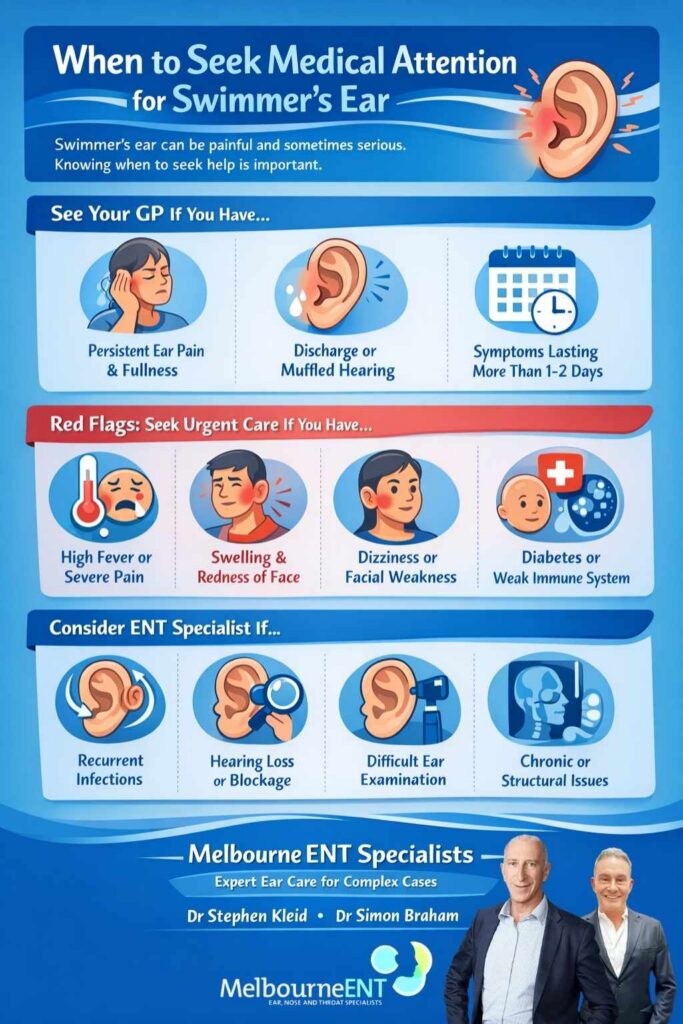
You should arrange a GP review if you or your child experiences persistent ear pain, a sense of fullness or muffled hearing on one side, or any fluid, crusting or discharge from the ear canal. Symptoms that begin after swimming and do not settle within a day or two also deserve attention.
Most uncomplicated cases can be treated effectively by a GP using prescription eardrops, pain relief and advice on keeping the ear dry. Your GP will also check that there are no signs of deeper infection or other problems.
✓ Red Flag Symptoms That Need Urgent Care
Certain symptoms suggest that the infection may be spreading or that a more serious condition is present. Seek urgent medical help if ear pain is severe and worsening, if you develop fever or feel generally unwell, or if redness and swelling spread from the ear to the side of the face, neck or scalp.
Other red flags include dizziness, facial weakness, severe headache or a very painful ear in someone with diabetes or a weakened immune system. These situations are not typical of ordinary swimmer’s ear and should be taken seriously.
✓ When A Referral To Melbourne ENT May Be Helpful
A GP may suggest a referral to Melbourne ENT when swimmer’s ear keeps returning, when hearing is significantly affected, when the ear canal is narrow or difficult to examine, or when there is concern about bony changes, chronic skin disease or other ENT problems.
Dr Stephen Kleid, with his long experience including senior roles at Royal Melbourne Hospital, and Dr Simon Braham, who holds public appointments at the Royal Victorian Eye and Ear Hospital, regularly assess complex ear issues in patients from across Melbourne and regional Victoria.
How Melbourne ENT Supports Adults And Children With Recurrent Ear Infections
Specialist care at Melbourne ENT goes beyond treating a single episode. The focus is on understanding why the problem keeps happening and how it can be reduced.
✓ What Happens At A Specialist Ear Assessment
During an assessment, the specialist will take a detailed history that includes swimming habits, work and sport, previous infections, medications and any underlying health conditions. The ear is then examined using an operating microscope. This allows a clear view of the canal and eardrum that is far more detailed than a simple torch or otoscope.
If there is wax, debris or discharge blocking the view, it can be gently cleaned under direct vision. This careful cleaning not only helps with diagnosis, but also allows eardrops to reach the skin more effectively.
✓ Building An Individualised Treatment Plan
Once the underlying factors are understood, Dr Stephen Kleid or Dr Simon Braham will outline a tailored treatment plan. This may combine prescription drops, advice on drying techniques, changes to ear hygiene habits, skin treatments, hearing tests and, in selected cases, further ENT investigations or procedures.
The plan is explained in clear language, and patients are encouraged to ask questions about swimming, work, school or sport so they understand how to balance activity and recovery.
✓ Working With Your GP And Paediatrician
Melbourne ENT maintains close communication with local GPs, paediatricians and other specialists. Reports and updates help ensure that everyone involved understands the diagnosis and treatment plan, and that patients receive consistent advice over time. This coordinated approach is particularly important for children, competitive swimmers and people with other health conditions.

FAQs About Swimmer’s Ear And Summer Ear Infections
Why do I keep getting swimmer’s ear every summer even though my friends swim in the same pool?
People in the same pool can have very different ear canals and skin. You may have narrower canals, more sensitive skin, a history of eczema, or a habit of using cotton buds that removes protective wax. These factors combine with water exposure to make your ears more vulnerable, even when others around you stay well. A review with your GP or an ENT specialist at Melbourne ENT can help identify exactly which factors are affecting you.
If my ear still feels a bit blocked after an infection, is it safe to go back to swimming lessons or training?
A mild blocked sensation can sometimes linger after the main infection has settled, especially if there has been swelling or debris in the canal. Before returning to regular swimming, it is wise to have your ear rechecked. Your doctor can confirm that the infection has cleared, that the eardrum looks healthy, and that it is safe to resume lessons or training. In some cases, a gradual return with extra care in drying the ears is recommended.
Can earbuds, headphones or hearing aids soon after swimming increase the risk of swimmer’s ear?
Yes, they can. In ear devices create a small enclosed space that traps warmth and any remaining moisture. If you put them in straight after swimming or showering, the ear canal may stay damp for longer, encouraging bacteria and fungi to grow. It is usually better to let the ears dry fully first, then reinsert earbuds or hearing aids. Your specialist can offer personalised advice on timing and cleaning routines.
Are there signs that my itchy ears after swimming might be eczema rather than a simple infection?
Itchy ears do not always mean infection. If you notice dry, flaky skin around the entrance to the ear, redness that extends onto the outer ear, or similar patches of eczema elsewhere on your body or scalp, a skin problem may be part of the picture. Infection and eczema can also occur together. Your GP or an ENT specialist such as those at Melbourne ENT can examine the ear canal and surrounding skin to distinguish between these conditions and plan treatment for both if needed.
If one ear is always the troublemaker, could the shape of my ear canal or bony growths be involved?
When the same ear is affected repeatedly, underlying structure is often important. A narrow or curved canal, previous surgery, or bony growths (sometimes linked with years of cold water exposure) can all make it easier for water, wax and debris to become trapped. These changes are usually not visible without specialised equipment. Examination under the microscope at Melbourne ENT allows Dr Stephen Kleid or Dr Simon Braham to assess the shape of the canal and discuss whether it is contributing to your symptoms.
Do hair products, sunscreen or styling sprays have a role in triggering swimmer’s ear?
For some people they do. Hair sprays, gels, dyes, sea salt sprays and sunscreen can irritate the skin around the ears or drip into the canal. In someone with sensitive or allergic skin, this irritation can break down the natural barrier and make infection more likely after water exposure. If you notice that your ears are itchy or red on days when you use certain products, keeping a diary and discussing this with your doctor can be very helpful.
If I use custom earplugs or a swimming cap, how do I know whether they are helping or trapping moisture?
Well fitted earplugs and caps can reduce the amount of water entering the ear and are often useful for frequent swimmers. They may cause problems, however, if they are too tight, worn for long periods after swimming, or if they are not dried and cleaned properly. As a general guide, plugs and caps should feel comfortable, not painful or excessively tight, and your ears should be allowed to air once you are out of the water. If you develop pain or discharge despite using them, a specialist review can assess fit, technique and whether another strategy would be better for you.
Medical References
- Swimmer’s ear – Diagnosis & treatment / Mayo Clinic / https://www.mayoclinic.org/diseases-conditions/swimmers-ear/diagnosis-treatment/drc-20351688
- Swimmer’s ear – Symptoms & causes / Mayo Clinic / https://www.mayoclinic.org/diseases-conditions/swimmers-ear/symptoms-causes/syc-20351682
- Swimmer’s Ear / UR Medicine – University of Rochester Medical Center / https://www.urmc.rochester.edu/conditions-and-treatments/swimmers-ear
- What is swimmer’s ear and how should I treat it? / UAB News – University of Alabama at Birmingham / https://www.uab.edu/news/news-you-can-use/what-is-swimmer-s-ear-and-how-should-i-treat-it
- Mayo Clinic Q and A: Ear infections after swimming / Mayo Clinic News Network / https://newsnetwork.mayoclinic.org/discussion/mayo-clinic-q-and-a-ear-infections-after-swimming/
- Swimmer’s Ear (Otitis Externa) / American Academy of Otolaryngology—Head and Neck Surgery / https://www.enthealth.org/conditions/swimmers-ear-otitis-externa/
- Otitis Externa / NCBI Bookshelf – National Center for Biotechnology Information / https://www.ncbi.nlm.nih.gov/books/NBK556055/
Ear Healthy Summer Tips And Next Steps
Swimmer’s ear is common in Melbourne’s warmer months, but it does not need to become a routine part of every summer. Taking time to dry the ears gently, avoiding deep cleaning with cotton buds, managing skin conditions and seeking early advice when symptoms appear can all reduce your risk.
If you are concerned about your own ears or your child’s ears, start by making an appointment with your GP. They can examine the ear, begin treatment if appropriate, and arrange a referral to Melbourne ENT for expert assessment with Dr Stephen Kleid or Dr Simon Braham if infections are frequent, severe or slow to improve.
To learn more about ear conditions, treatment options and specialist care with Melbourne ENT, please contact the rooms or visit the website for further information and booking details.
Further Reading
- Read more about Otitis Media With Effusion (OME)
- Read more about Ear Ache
- Read more about Ear Concerns In Children Melbourne
- Read Melbourne ENT’s Blog on Middle Ear Aeration Methods: How Can They Help?
- Read Melbourne ENT’s Blog on What is Otitis Externa? (Swimmer’s Ear)
- Read Melbourne ENT’s Blog on Summer Ear Health Tips for Children Who Swim

Decision-Making for Grommet Surgery – Factors ENT Surgeons Consider
When is grommet surgery recommended? Grommet surgery may be considered when fluid in the middle…
Coping With Recurrent Glue Ear Even After Grommets
Why does glue ear come back after grommets? Glue ear can return after a grommet…

Diving and Water Sports with Grommets
Grommets, also called ear tubes or ventilation tubes, are very common in both children and…